
Original briefings. Zero spin.
Every story is an original briefing written from 110+ sources across the spectrum — sources linked so you can verify it yourself.
 health
Major Story (7/10)
August 11, 2026 at 03:52 AM
health
Major Story (7/10)
August 11, 2026 at 03:52 AM
France Puts 70% of the Country Under Water Restrictions as Fifth Heatwave Hits Britain and France
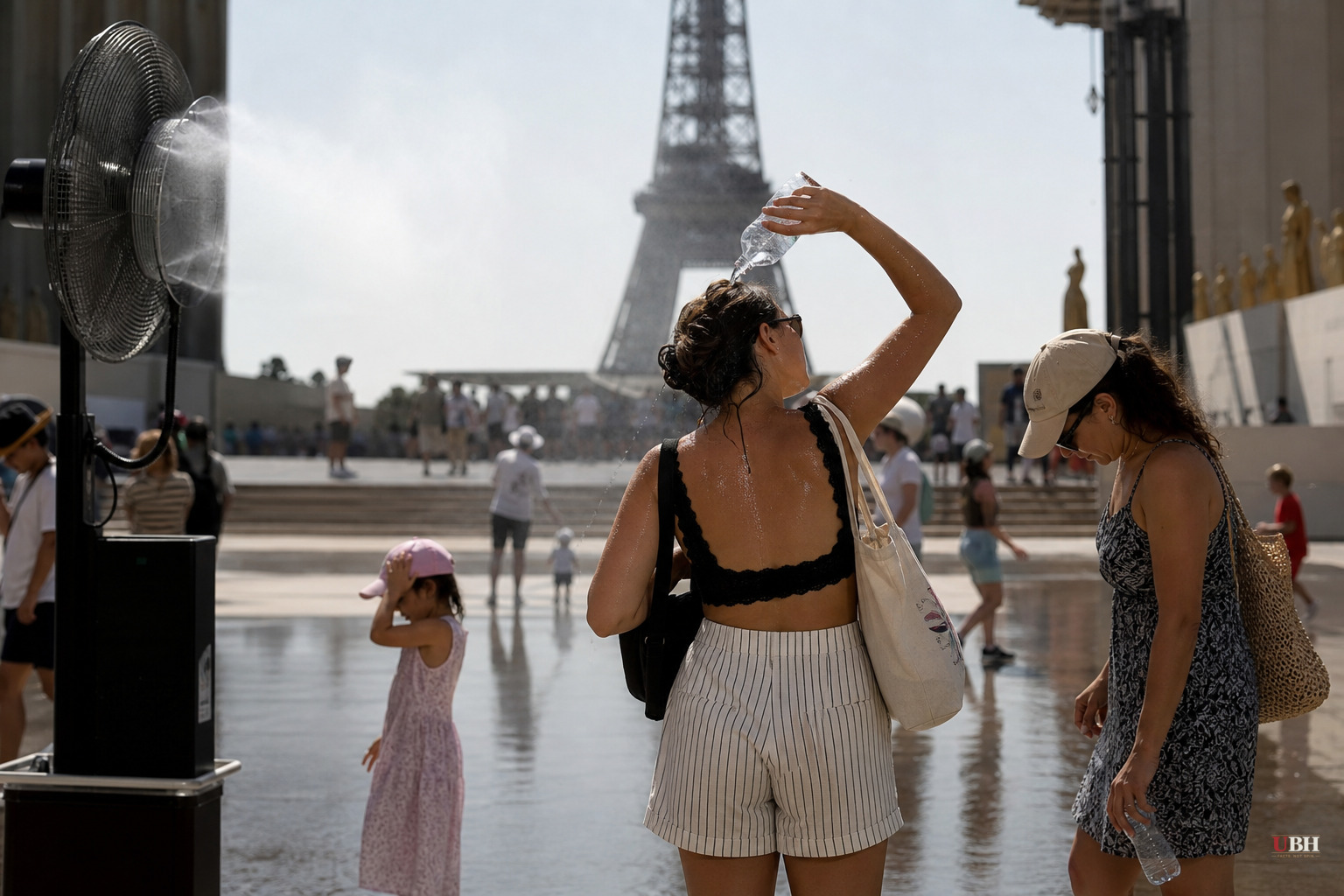
France's drought crisis has escalated fast. As of Sunday, August 9, nearly 70% of French territory sits under some level of water-use restriction, with 67 of the country's 101 departments at the highest crisis alert, according to the French ecology ministry and reported by Euronews.
It's not just surface water. Two-thirds of the aquifers that supply most of France's drinking water have dropped below normal levels, France's Bureau of Geological and Mining Research (BRGM) said Monday. The agency blamed the shortfall on a combination of scarce July rainfall and rising water demand from agriculture and tourism.
July 2026 was the hottest month France has ever recorded, and its third-driest July on record, with a nationwide rainfall deficit of nearly 70%, according to national weather agency Météo-France. Ecology minister Monique Barbut said on July 27 that drinking water supplies were "under strain in several areas," with more than 30,000 people already relying on tanker trucks or bottled water instead of tap water. Barbut is set to convene a crisis meeting on the drought on Wednesday, August 12.
Under the highest alert level, water is reserved for priority uses: healthcare, civil protection, drinking water and sanitation. Lower alert levels restrict garden watering, pool filling, car washing and crop irrigation.
Fifth heatwave incoming
Britain and France are now bracing for their fifth heatwave since May, according to the Associated Press, via PBS. Météo-France is warning of temperatures approaching 40C (104F) from Tuesday onward in southeastern France. In the UK, an amber heat health alert covering most of England takes effect Tuesday, with forecasts climbing to 36C (96.8F) later this week.
More than 27 million people in Britain are already living under water-use restrictions, including hosepipe bans in some regions, according to Al Jazeera. Tony Grayling, the Environment Agency's Director of Sustainable Business and Development, said the hot, dry weather "is taking a real toll on farming" with "long-lasting impacts on our environment."
Central Europe smashed records this month
While France and Britain brace for what's coming, central Europe is already dealing with fallout from a heat dome that broke records in early August, according to the Guardian. Austria hit 41.2C (106.2F). Slovakia reached 42.2C. Hungary hit 41.8C, breaking a record set in 1905. Overnight temperatures in some areas stayed above 28C, a tropical night that keeps bodies from cooling down.
The heat has hit energy infrastructure directly. Low water levels in the Danube reduced cooling efficiency at nuclear plants in Slovakia and Serbia, and forced Hungary to shut one plant down entirely because there wasn't enough water for cooling, the Guardian reported. The receding Danube has also exposed archaeological and wartime debris, including woolly mammoth bones, sunken World War II ships and remains tied to the Roman-era Constantine's Bridge.
Wildfires tied to the drought have burned across Italy, France, Serbia and Bulgaria, forcing evacuations. In Spain, national weather agency AEMET said Monday the country recorded its joint-hottest July since records began in 1961, with just 4.3 millimeters of rain falling, 26% of normal for the month. That dryness fueled Spain's largest wildfire in recent history. In Andalusia, emergencies chief Antonio Sanz told reporters that fighting fires near the medieval town of Niebla was like "a long-distance obstacle race" expected to last several days, with nearly 500 people evacuated.
The bigger climate picture
Globally, 2026 is currently the third-hottest year on record, behind 2024 and 2025, according to the European climate agency Copernicus, cited by PBS. But scientists say the year still has time to catch up, given accelerated warming combined with a strong El Niño. Last month produced the highest average sea-surface temperature ever recorded for July across the ice-free oceans, per Copernicus, and Western Europe's June-July average of 21.62C (70.92F) broke the previous 2022 record.
Samantha Burgess, strategic lead for climate at the European Centre for Medium-Range Weather Forecasts, said persistent high-pressure systems trapped heat over western Europe, and that the dried-out soil amplified the effect by losing its natural cooling capacity. "This is a clear example of how climate change is intensifying heat extremes, with heat and drought increasingly reinforcing one another," she said.
France's public health agency recorded at least 5,700 more deaths than usual during June alone, according to PBS. Reuters has separately estimated roughly 10,000 excess deaths across Europe tied to June's heatwave, cited by the World Economic Forum. These are excess-mortality estimates, not confirmed causes of death for every case, and methodologies vary by country.
The open question now is whether France's Wednesday crisis meeting produces anything beyond restrictions already in place, and whether the incoming heatwave forces the government to escalate more departments to the highest alert level before the aquifers have any chance to recover heading into autumn.
Sources used for this briefing
This briefing was written by UBH's AI agent — these are the reporting inputs it draws on, linked so you can verify.


