
Unbiased headlines. Facts, not spin.
Unbiased Headlines is an independently owned news organization. We bring you the facts, not opinions, written fresh from 110+ named sources. Sources linked so you can verify it yourself.
 health
Low Interest (3/10)
health
Low Interest (3/10)
Fourth Rabbit Fever Case Confirmed in Suffolk County, One Linked to Cat Bite
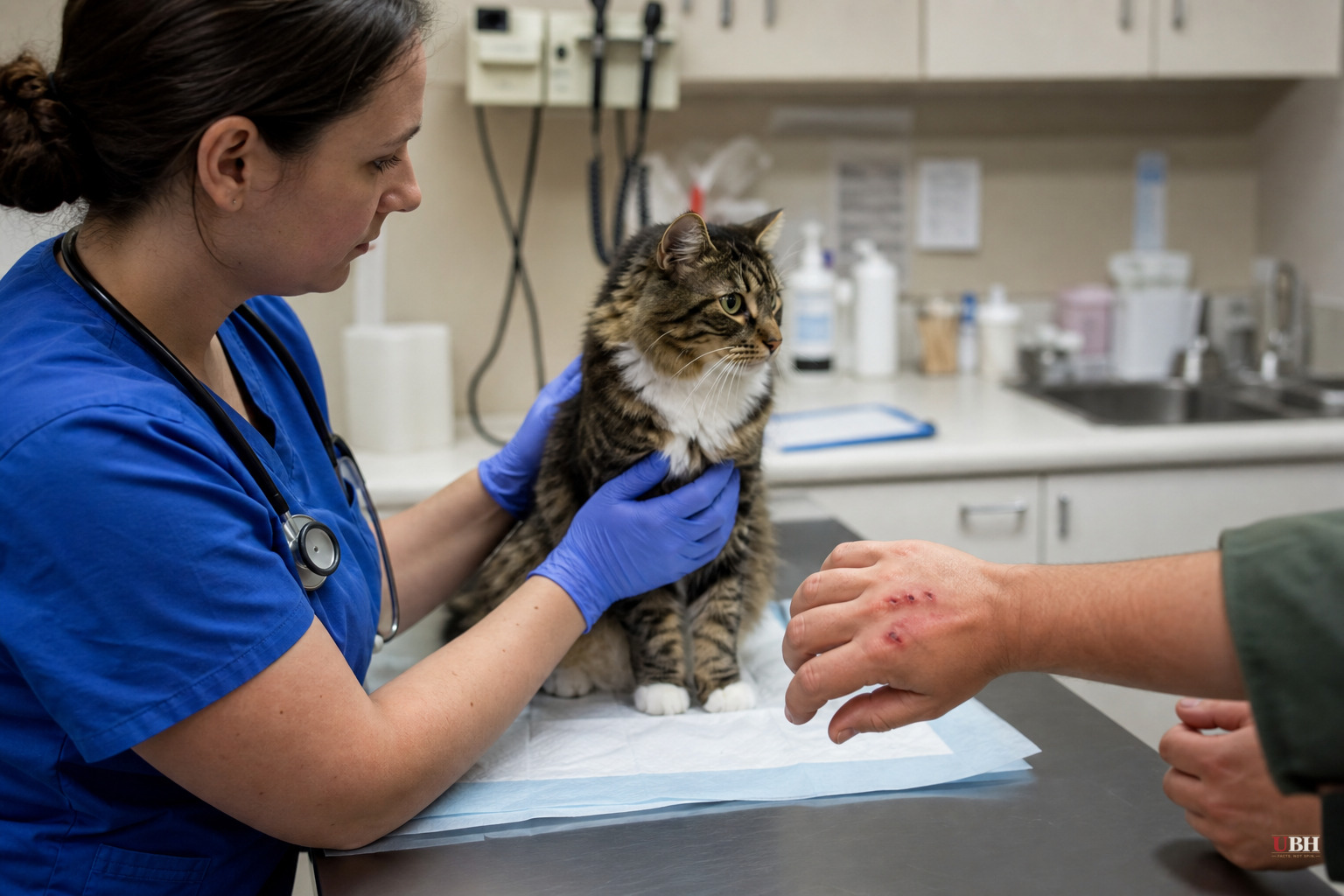
Suffolk County has its fourth confirmed case of tularemia, the tick-borne illness known as rabbit fever, for 2026. Dr. Gregson Pigott, commissioner of the Suffolk County Department of Health Services, confirmed the case Thursday, according to CBS News and Patch.
This one didn't come from a tick bite. It came from a cat.
Newsday reported that a Riverhead woman, described as a senior citizen, is being treated at Peconic Bay Medical Center after her outdoor cat bit her finger while she tried to give it medication. Dr. Michael Huang, chief of infectious diseases at Peconic Bay Medical Center, told Newsday the woman's finger "looked horrible." She was initially treated and sent home for what looked like a routine cat bite, then called back in after blood cultures came back positive for Francisella tularensis, the bacterium behind tularemia. The cat died from the disease.
Suffolk County health officials confirmed to Newsday that there have been four cases total this year but would not say whether the Riverhead cat-bite case is one of the four. Patch reported the same gap: neither Peconic Bay Medical Center - Northwell Health nor county health officials would officially tie the two stories together, even though the timing and details line up.
Huang told Newsday he's personally treated two other tularemia patients this year, both landscaping workers, on top of the cat-bite case. That's a detail largely missing from the CBS News and NY Post coverage, which focused on the tick-borne route without mentioning the occupational exposure Huang described.
How people actually get this
Tularemia mainly lives in wild rabbits, hares and rodents. Ticks and deer flies pick up the bacteria from those animals and pass it to people through bites, according to the CDC. Outdoor cats can also get infected, either from tick bites or from hunting sick small animals, and can pass it to humans through bites or scratches. A 2024 study cited by Newsday noted cats are "notably susceptible to tularemia," with outdoor, young adult cats at the highest risk because of regular exposure to ticks and small-mammal prey.
People can also catch it through skin contact with infected animals, drinking contaminated water, or inhaling contaminated dust from agriculture or landscaping work, according to the CDC. That last route lines up with Huang's landscaping patients.
The disease does not spread person to person. Every outlet in this story agrees on that point, and it matters because "rabbit fever" sounds like something that should trigger outbreak-level panic. It doesn't work that way.
The numbers, and why this isn't actually new
Suffolk County's case counts: one in 2022, three in 2023, four in 2024, six in 2025, according to state Health Department data cited by Newsday. That's four confirmed so far in 2026. Dr. Pigott told Patch that despite the recent headlines, tularemia cases have been showing up in Suffolk County every year since at least 2023. This isn't a new threat. It's a small, recurring one that's getting more press attention this summer.
Nationally, the CDC has reported anywhere from 150 to 300 cases a year over the past several years, depending on which report you check. Newsday cited the lower five-year range of 150 to 200, while the NY Post and CBS News cited the CDC's broader 200 to 300 figure. Either way, it's a small number for a country of 340 million people, and most infections respond to antibiotics.
The case for not panicking is straightforward: this is a rare disease, it's treatable, and it doesn't spread between people. But it's also true that a rare disease showing up more often locally is worth taking seriously, especially when doctors on the ground, like Huang, are seeing multiple unrelated cases in the same season.
The case that got missed early
The earlier 2026 case involved a 9-year-old Riverhead boy, John, whose mother Tracey Detmer told Patch and Newsday that doctors initially dismissed a tick bite as the cause of his fever and swollen lymph nodes. He wasn't put on doxycycline, the antibiotic typically given for suspected tick-borne illness, and the tick itself was thrown away before it could be tested. He ran a fever for about 11 days and, according to Newsday, still had low energy and stamina months later.
That delay in diagnosis is the practical takeaway here. Tularemia's symptoms—fever, swollen lymph nodes, ulcers at the bite site—mimic other common illnesses, and Suffolk County health officials themselves acknowledge it's hard to catch early. Suffolk County's health department recommends the standard tick precautions: insect repellent, long sleeves and pants in wooded or grassy areas, and tick checks after being outdoors. For cat owners, the practical lesson from the Riverhead case is straightforward. Outdoor cats that hunt small mammals carry real infection risk to the humans who handle them.
Sources used for this briefing
4 links from 4 independent newsrooms (syndicated copies of the same report count once)
These are the sources it draws on, linked so you can verify.


