
Original briefings. Zero spin.
Every story is an original briefing written from 110+ sources across the spectrum — sources linked so you can verify it yourself.
 health
Major Story (7/10)
Event date: September 2, 2026
health
Major Story (7/10)
Event date: September 2, 2026
Four Medical Groups Issue Fall Vaccine Guidance After CDC's Advisory Panel Stays Dark
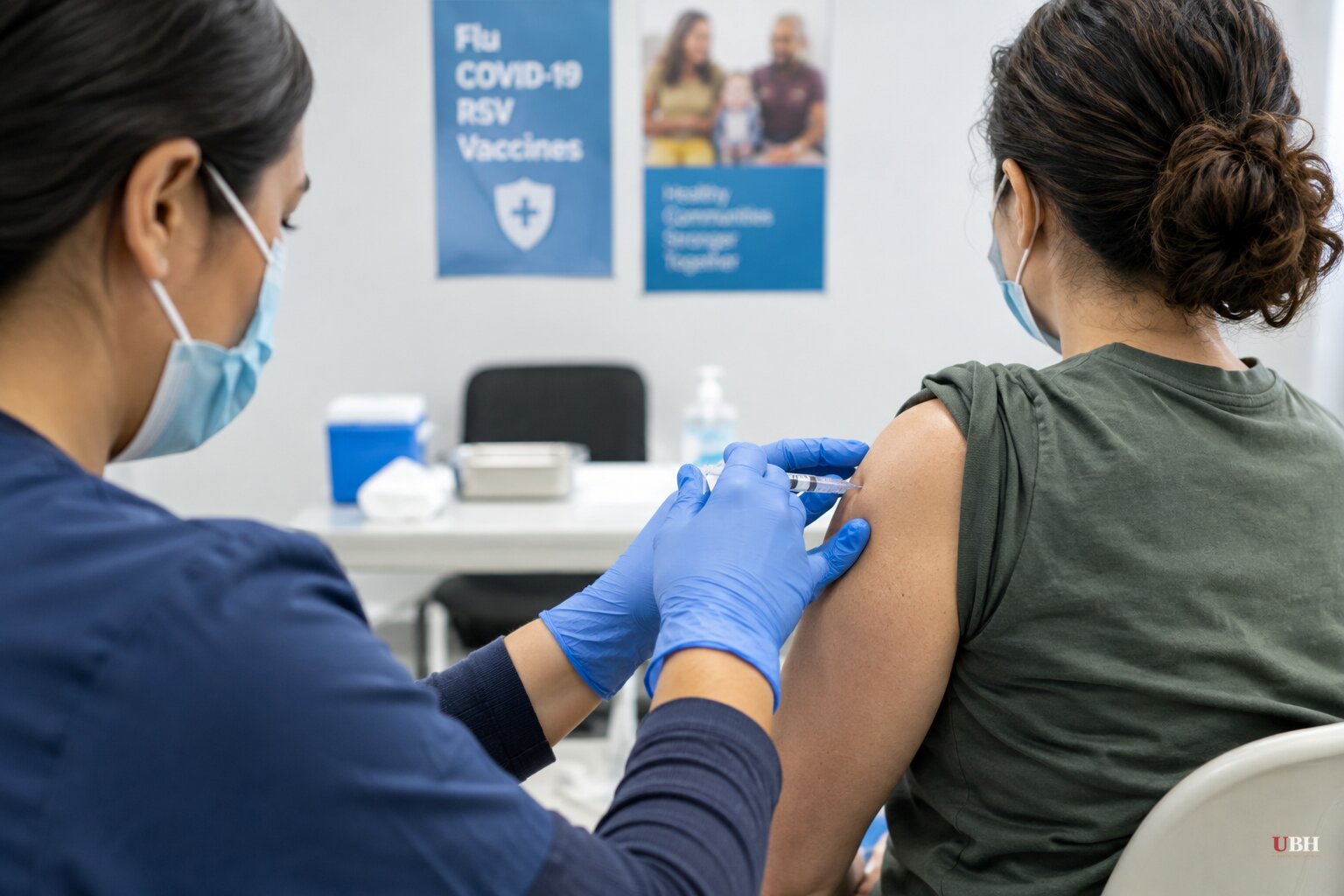
Since a federal judge stayed the appointments of 13 members of the reconstituted CDC vaccine advisory committee in March, blocking implementation of HHS's childhood immunization schedule, the federal government's usual vaccine recommendation process has been frozen. That freeze is now stretching into a second respiratory virus season with no sign of thawing before an appeals court hears oral arguments on October 6.
Into that gap stepped four of the country's largest medical societies. On September 9, the American Academy of Pediatrics, American Academy of Family Physicians, American College of Obstetricians and Gynecologists, and Infectious Diseases Society of America simultaneously released 2026-27 recommendations for flu, COVID-19, and RSV immunization, according to NPR and CNN.
The groups built their guidance on an independent evidence review led by the Vaccine Integrity Project, an initiative based at the University of Minnesota, in collaboration with the American Medical Association. That review was published in JAMA, per CNN.
"For more than 60 years, the United States has benefited from an established federal process for evaluating vaccine evidence," said Dr. Bruce Gellin, board chair of the Vaccine Integrity Project and a Georgetown University medicine professor, at a briefing reported by both CNN and NPR. "Unfortunately today, the federal government is not fulfilling that responsibility in the way that it historically has."
The review found no new safety concerns, according to MedPage Today. The recommendations diverge from current federal advice in one notable way: the medical groups recommend routine COVID vaccination for healthy younger adults, young children, and pregnant people, while current federal guidance says those groups should consult a provider first rather than get a blanket recommendation, per NPR.
The CDC has not gone silent entirely. On Tuesday, the agency updated its clinical guidance for flu shots to carry over last year's recommendations for the 2026-2027 season, CNN reported, though that update doesn't address the first mRNA flu vaccine the FDA approved last month for older adults. No new CDC recommendations have been issued for RSV or COVID-19 this season.
HHS Wants to Rewrite the Rulebook
Compounding the uncertainty, HHS published a Federal Register notice in August asking the public to weigh in on whether the government should change the categories it uses to sort vaccine recommendations, according to MedPage Today and The Guardian. The current system sorts vaccines into routine, risk-based, and shared clinical decision-making categories.
Dorit Reiss, a vaccine law expert at UC Law San Francisco, told The Guardian that public comment periods are generally "appropriate and right" and that HHS should do more of them. But she called this particular notice "strange" because vaccine category structure has historically been worked out by the CDC's advisory committee, not solicited from the general public.
Wendy Parmet, a public health law scholar at Northeastern University, told The Guardian a review of the categories "may be appropriate" since the existing "shared clinical decision-making" label is genuinely confusing to patients and providers. But she said it's "troubling" that HHS, rather than the CDC or its advisory committee, is driving the process, warning it "raises the possibility that the final decision will be made without the benefit of relevant expertise."
The MMR Split and the Measles Death Dispute
Separately, President Trump has pushed to split the combined MMR vaccine into three standalone shots, an idea Merck has said could take up to a decade to bring to market, according to the Epoch Times. Dr. Michael Segal, a neurologist, told the Epoch Times that giving three vaccines simultaneously can produce peak inflammation that, in rare cases involving a gene variant called SCN1A, may trigger neurological deterioration, citing research from 2007. Dr. Monique Yohanan of the Independent Women's Forum told the outlet that offering separate shots could win back parents who dropped out of vaccination during pandemic-era school closures.
Those are the strongest arguments for the split. Critics, including the medical societies behind the new fall guidance, counter that there is no evidence the combined shot itself is dangerous, and Trump's own claim last month that the MMR vaccine could be "quite lethal" has no supporting evidence, according to MedPage Today.
The dispute has taken on real stakes during Pennsylvania's worst measles outbreak in decades. Instead of pressing vaccination, HHS Secretary Robert F. Kennedy Jr. spent days disputing the state's reported measles deaths, and the CDC pulled two measles deaths, including a newborn, from its national tally, according to MedPage Today and Ars Technica.
Major insurers have agreed to keep covering the previously CDC-recommended shots, including flu, COVID, and RSV vaccines, at no charge through the end of 2027, Ars Technica reported, which is likely to keep most patients' out-of-pocket costs unchanged this fall regardless of which agency's name is on the recommendation. The unresolved question is whether that coverage commitment survives if HHS's category overhaul, still open for public comment, reclassifies any of those vaccines before insurers' 2027 agreements come up for renewal.
Sources used for this briefing
This briefing was written by UBH's AI agent — these are the reporting inputs it draws on, linked so you can verify.


