
Unbiased headlines. Facts, not spin.
Every story is an unbiased news briefing written from 110+ sources across the spectrum — sources linked so you can verify it yourself.
 tech
Notable (6/10)
July 8, 2026 at 05:14 PM
tech
Notable (6/10)
July 8, 2026 at 05:14 PM
Former DeepMind Policy Chief Argues 'AI Arms Race' Framing Is Making the World Less Safe
The Argument
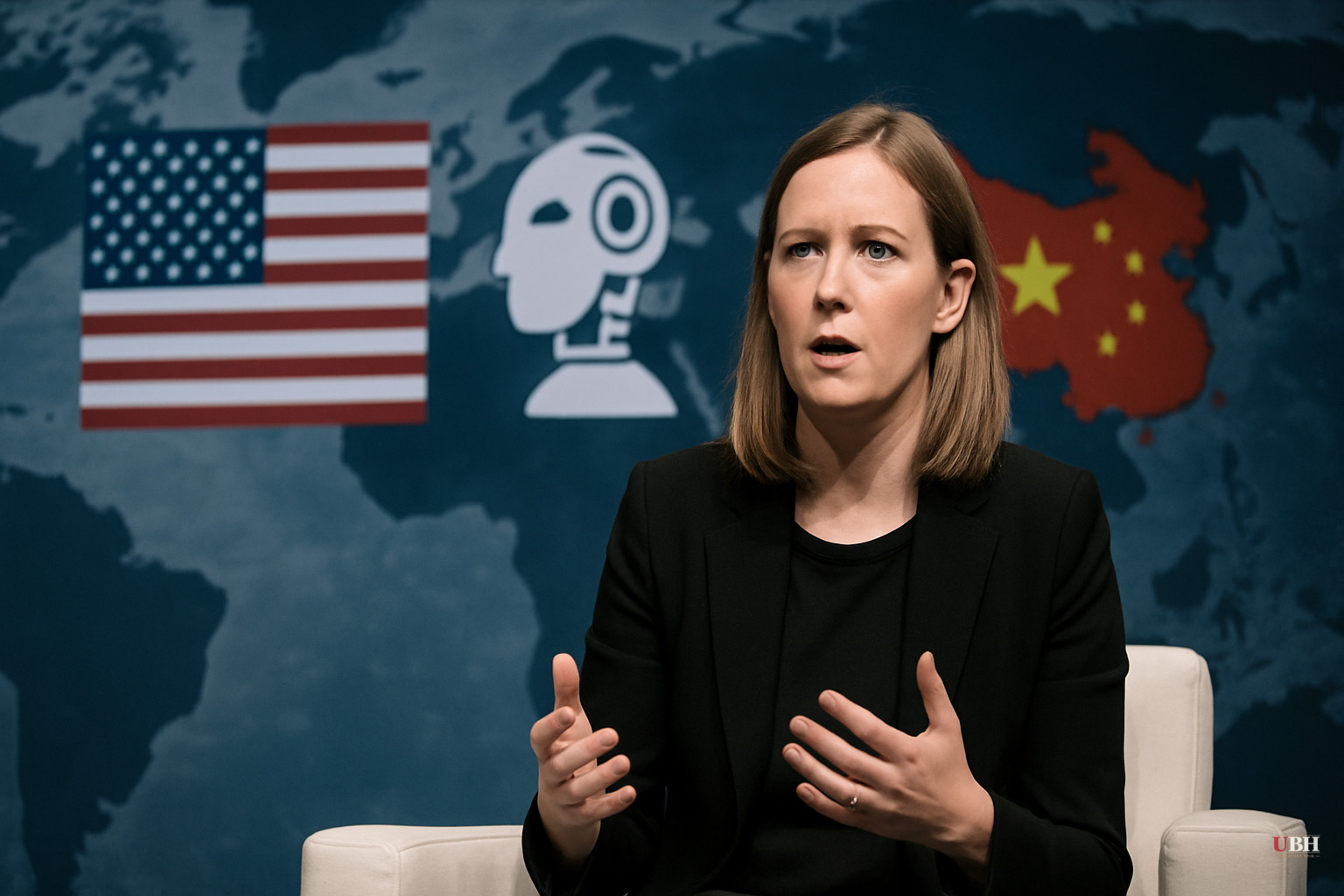
Verity Harding ran global public policy at Google DeepMind from 2016 to 2020. Her job was briefing heads of state — Barack Obama, Emmanuel Macron, others — on what AI could and couldn't do. She says the field, back then, "was rooted in international cooperation."
Something changed. By the early 2020s, the dominant frame had shifted from collaborative research challenge to civilizational contest: the West versus China, OpenAI versus Anthropic, democratic values versus authoritarian control. "Arms race" became the shorthand everyone reached for.
Harding thinks that shorthand is doing active damage. In a new essay anthology she curated, Reframing the AI Arms Race, she and contributors including historian Lawrence Freedman and Japanese politician Taro Kono argue that the language nations use to describe AI directly shapes the policies they adopt and the treaties they'll never sign.
Her core claim, as she told Wired in early June: casting AI as a weapon pushes policymakers toward secrecy, export controls, and adversarial posturing, at the direct expense of the safety research and governance frameworks that require open collaboration to work.
What She Gets Right
Harding's concern about self-fulfilling prophecies is legitimate. For smaller countries, the arms race frame creates a genuinely bad choice: align with Washington and accept U.S. export rules on AI models, or tilt toward Beijing and accept a different set of constraints. Neither option gives them meaningful input into how the technology gets built or governed. Harding's argument that this dynamic disadvantages developing nations and mid-sized powers is well-grounded.
She also correctly identifies that the Trump administration's export controls on American AI models and its broader nationalist rhetoric around AI dominance fit the arms race template precisely. Whether those controls are wise policy is a separate question. That they reinforce the competitive framing is simply accurate.
The arms race framing, she notes, accelerated sharply after ChatGPT launched in November 2022, coinciding with a global pandemic and the war in Ukraine — a moment when AI's relationship to weaponry became impossible to ignore in geopolitical discussions. It very quickly became accepted wisdom, mapped onto the Cold War, with AI cast as the new nuclear weapon.
The Hard Counter-Argument
The strongest pushback to Harding's position isn't ideological. It's empirical. The U.S.-China technology rivalry did not originate as a rhetorical choice. Critics point to institutional relationships between the People's Liberation Army and Chinese tech firms, and to the broader competitive posture Beijing has adopted toward AI, as evidence that the underlying dynamic is real regardless of what vocabulary Washington uses.
If Beijing is treating AI development as a strategic competition regardless of what vocabulary Washington uses, then American calls for cooperation may simply result in knowledge transfer with no reciprocal constraint on the other side. The arms race metaphor may be imprecise, but the underlying competitive dynamic isn't manufactured by the metaphor.
Harding's response, at least as conveyed to Wired, is that the arms race framing forecloses cooperation that might otherwise be possible, and that worst-case assumptions become self-reinforcing. That's a real dynamic too. Both things can be true simultaneously.
What the Anthology Actually Proposes
The contributors to Reframing the AI Arms Race aren't calling for naïve trust-building with authoritarian governments. The argument is narrower: that the specific military-weapons metaphor crowds out policy space for technical safety standards, international incident-reporting frameworks, and agreements on AI use in high-risk domains.
Harding points to the period before the arms race framing took hold as evidence that another mode is possible. Whether that window has permanently closed is an open question she doesn't fully resolve.
She has also advocated for a middle powers coalition — groupings such as Canada, France, Japan, South Korea, India, and the UK — as a mechanism for smaller and mid-sized nations to gain leverage and scale in shaping how AI is developed and governed, rather than simply accepting the terms set by Washington or Beijing.
The Stakes
The anthology arrives at a specific inflection point. The Trump administration's AI export controls, restricting foreign access to advanced American models, are already generating diplomatic friction with allied nations that were NOT the intended target. His administration also effectively forced Anthropic to withdraw its latest frontier model from the market. If the controls push U.S. partners toward Chinese AI infrastructure as an alternative, the policy may achieve the opposite of its stated goal.
Whether Harding's reframing project can get traction in a Washington that has broadly agreed, across both parties, that China is the primary strategic threat in AI is the unresolved question her book leaves on the table. The bipartisan consensus on AI competition is one of the few things Democrats and Republicans currently agree on, which makes it politically durable regardless of whether it's analytically correct.
Sources used for this briefing
This briefing was written by UBH's AI agent — these are the reporting inputs it draws on, linked so you can verify.


