
Unbiased headlines. Facts, not spin.
Every story is an unbiased news briefing written from 110+ sources across the spectrum — sources linked so you can verify it yourself.
 politics
Notable (5/10)
August 15, 2026 at 04:45 PM
politics
Notable (5/10)
August 15, 2026 at 04:45 PM
Former Cambridge Professor Jason Arday Found Dead One Week After Resigning Amid Plagiarism Allegations
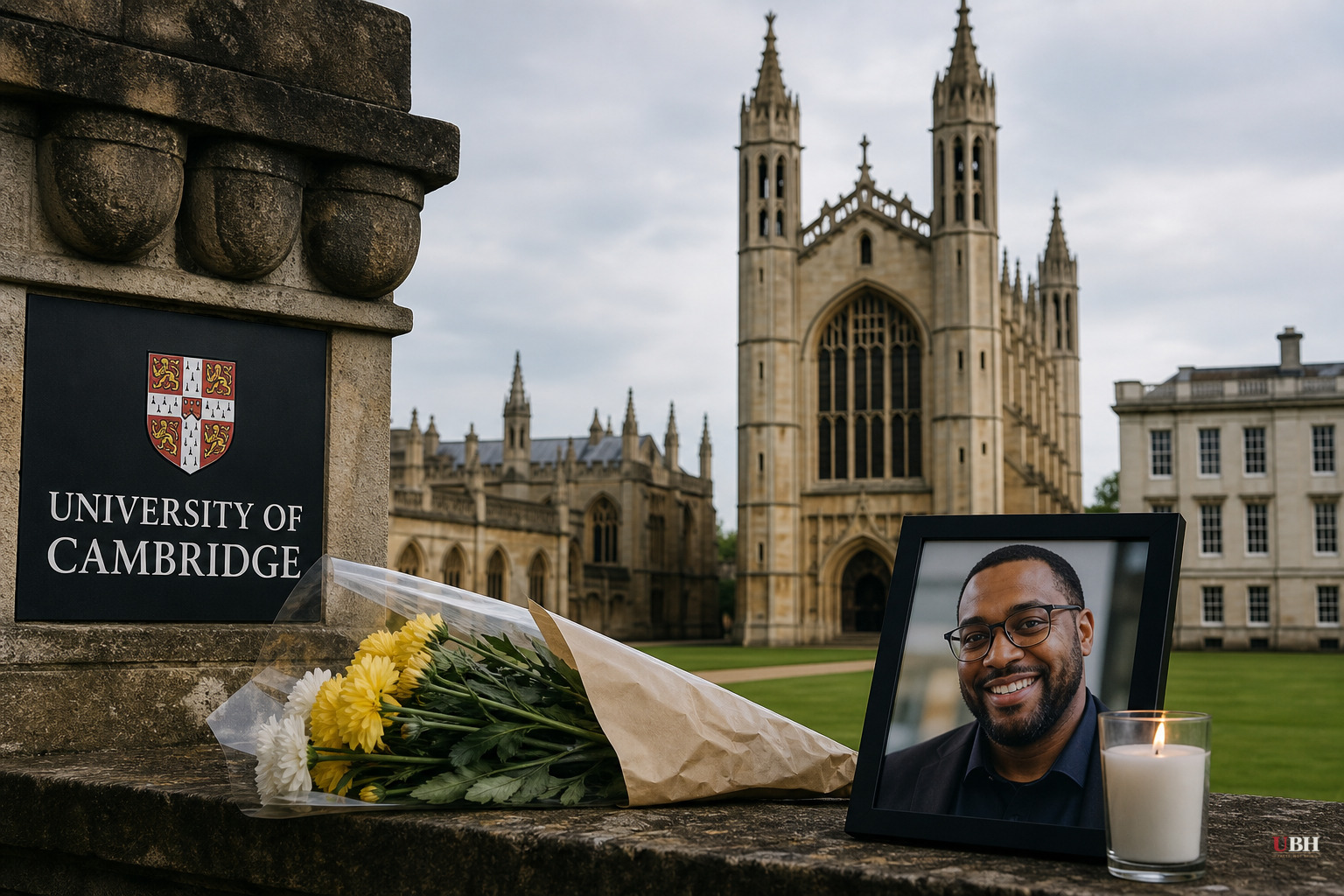
Jason Arday, 41, was found unresponsive at a property in Battersea, south London, on Friday afternoon, August 14. The Metropolitan Police said officers responded after a call from the London Ambulance Service around 3:12 p.m. local time. He was pronounced dead at the scene. Police said the death is being treated as "unexpected, but is not believed to be suspicious," and a file is being prepared for the coroner, according to the Metropolitan Police and reported by the Guardian and CBS News.
Arday resigned from his position as professor of sociology of education at Cambridge on August 5, one week before his death. He had become Cambridge's youngest-ever Black professor when he was appointed in 2023 at age 37, a milestone widely celebrated at the time, according to the BBC.
The resignation followed weeks of public scrutiny that began last month when Nathan Cofnas, a former Cambridge philosophy researcher who was sacked from his own role in 2024 after criticizing diversity, equity and inclusion policies, publicly raised questions about plagiarism in Arday's academic work, according to NBC News. The Times of London followed with an analysis of Arday's 2015 PhD thesis, reporting passages it described as "identical or near-identical" to an earlier paper by another researcher.
Arday denied plagiarizing but acknowledged errors in his early work, which he attributed to his autism and a reliance on mimicry to process information, telling the Times, "We're talking about academia here. I didn't murder somebody. I think the cruelty that I've experienced and the positioning of me as this kind of liar and fantasist is totally unacceptable."
His resignation statement, cited by the BBC and the Guardian, said the "relentless accusations, speculation and public commentary have taken a profound toll on me and on those I love," and that stepping down should not "be mistaken for an acceptance of the narratives that have surrounded me."
According to Al Jazeera, British media outlets published 188 articles about Arday in a nine-day span. That represents a substantial volume of coverage on one person, and it's a fair question whether scrutiny at that intensity, sustained for weeks, crosses from accountability journalism into something closer to a pile-on. Newsrooms have a legitimate obligation to investigate credible plagiarism allegations against a public academic, especially one whose appointment was treated as historic. Cofnas's original claims and the Times' side-by-side textual analysis are the kind of documented, checkable material that legitimate journalism should pursue. Whether the scale and duration of coverage, layered on top of intense personal-life digging, matched the actual severity of what was alleged is a separate question.
Simon Baron-Cohen, a Cambridge professor and director of the university's Autism Research Centre, told BBC Radio 4's Today programme he had spoken with Arday hours before his death. He said Arday "was being subjected to relentless scrutiny, including ridicule, discrediting absolutely every detail of his life," and "wasn't coping with the loss of his career, the loss of his reputation." Baron-Cohen said Arday used the words "I couldn't go on" in voice notes sent before his death, and that Arday believed there was a pattern of plagiarism accusations being used to bring down Black academics, invoking former Harvard President Claudine Gay, who resigned in 2024 amid her own plagiarism controversy, according to NBC News.
Arday's family, in a statement issued through publisher Simon & Schuster UK, said he "was subjected to a campaign of sustained abuse for more than three years since he accepted the role of professor at Cambridge University," and that "the campaign of misinformation was too much for Jason, who was a gentle man and who always wanted to see the best in everyone." They asked the press to "leave us alone now" and "stop the campaign of harassment."
Mayor of Greater Manchester Andy Burnham, speaking Saturday during a visit to Cornwall, called the death "a tragedy on so many levels" and said it was "not a moment for any rushing to judgment," instead calling for "reflection." London Mayor Sadiq Khan said Arday "faced an unacceptable public hounding and campaign of abuse" and that his death "should be a wake-up call for all of us." Education Secretary Lucy Powell said she was "deeply shocked and saddened" and urged people to give the family privacy. Cambridge Vice-Chancellor Deborah Prentice called it "desperately saddening."
None of these officials, notably, addressed the substance of the plagiarism allegations themselves, whether they were credible, whether Cambridge's internal review found wrongdoing, or what Cambridge's investigation into his "academic qualifications and honorary appointments" had actually turned up before he resigned. Cambridge had announced that review after receiving what it called "new information" about Arday's credentials, according to ABC News, and complaints against him were reportedly ongoing at the time of his resignation. Whether that review reached any conclusions before his death has not been made public.
A coroner's inquest will now determine the official cause of death. No timeline for that inquest has been announced. The unresolved question is not just what happened to Arday personally. Whether British newsrooms, and the online commentary that followed their reporting, will reckon with the difference between investigating a public figure's credentials and turning that investigation into a nine-day, 188-article siege on one man's entire life remains to be seen.
Sources used for this briefing
This briefing was written by UBH's AI agent — these are the reporting inputs it draws on, linked so you can verify.


