
Unbiased headlines. Facts, not spin.
Unbiased Headlines is an independently owned news organization. We bring you the facts, not opinions, written fresh from 110+ named sources. Sources linked so you can verify it yourself.
 finance
Notable (6/10)
finance
Notable (6/10)
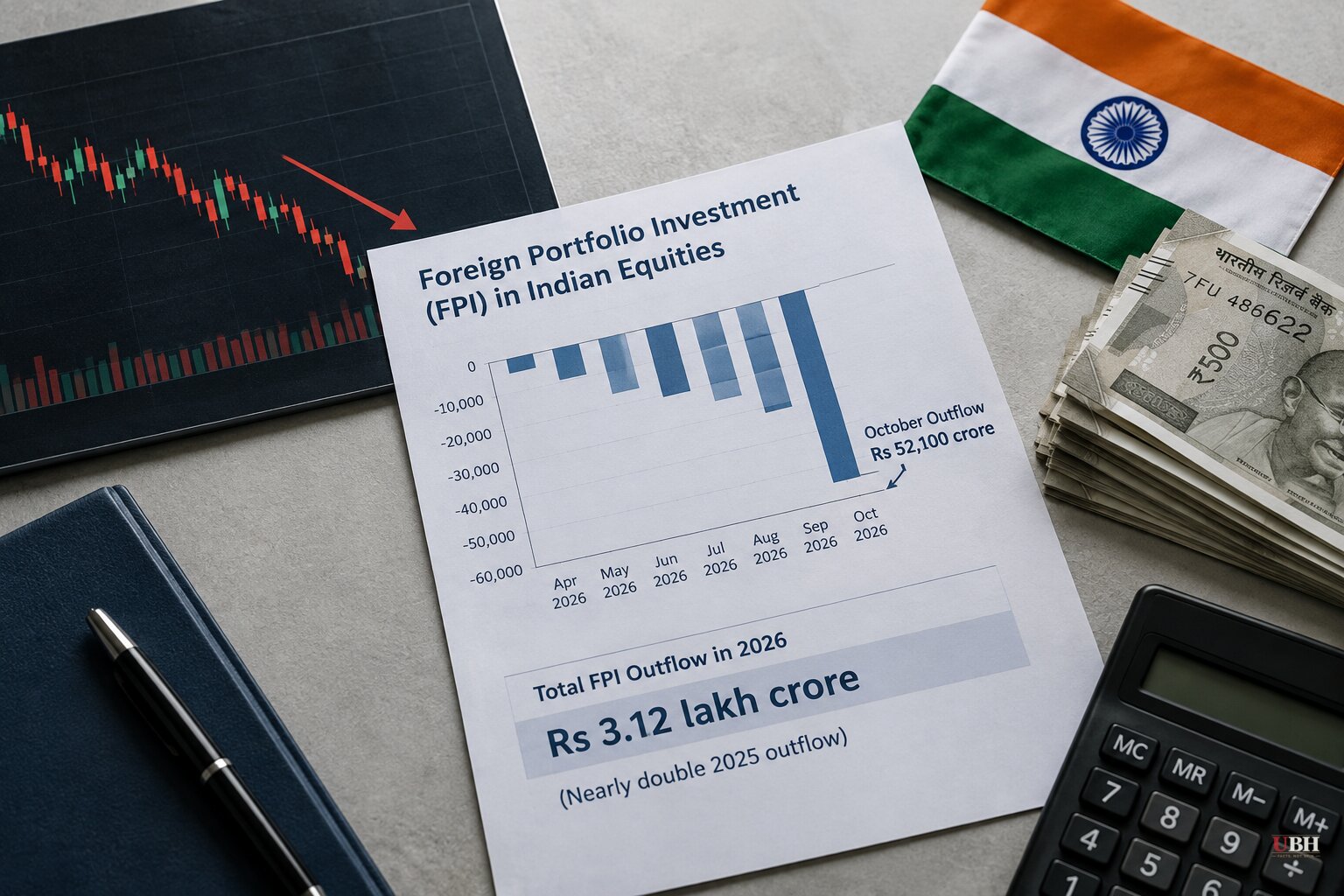
Foreign Investors Pull Rs 52,100 Crore From Indian Stocks in October, Taking 2026 Outflow to Rs 3.12 Lakh Crore
Foreign money keeps leaving India's stock market.
Foreign portfolio investors (FPIs) have pulled Rs 52,100 crore out of Indian equities in October so far, according to Central Depository Services Ltd (CDSL) data. That takes total 2026 withdrawals to Rs 3.12 lakh crore.
For comparison, FPIs withdrew Rs 1.66 lakh crore during all of 2025. This year's selling is already nearly double that.
A reversal from the summer
The monthly numbers show how sharply the mood turned. FPIs were net buyers in July (Rs 20,200 crore) and August (Rs 29,631 crore). Then they sold Rs 35,861 crore in September and have sold Rs 52,100 crore this month.
October's pace is already well above September's full-month figure.
The selling also reached the debt market in September, though flows varied by route. Foreign investors withdrew Rs 1,620 crore through the Fully Accessible Route and Rs 772 crore through the Voluntary Retention Route, while investing Rs 3,387 crore through the general route.
What analysts blame
Dheeraj Gaur, chief investment strategy officer at Choice Wealth, pointed to three drivers: elevated US bond yields, a stronger dollar and rising crude oil prices. Persistent US inflation has also raised expectations of a Federal Reserve rate hike, he said, which makes US assets more attractive to global money.
Gaur said expensive crude oil is adding to economic pressure in India. He also said the artificial intelligence-led rally in North Asian markets is drawing foreign funds away from Indian stocks.
That is a stock-picking story as much as a macro one. Money is chasing AI exposure elsewhere in Asia.
A pause on October 16
FPIs turned marginal net buyers on October 16, according to provisional market data. That ended a 15-session selling streak.
V K Vijayakumar, chief investment strategist at Geojit Investments, said the shift was likely tactical rather than structural. He cited two triggers: the US 10-year yield easing from above 5.3% to 5.08%, and a stronger rupee.
Pabitro Mukherjee, deputy vice president for research at Bajaj Broking, read it more optimistically. The slowdown in selling and Friday's reversal suggested sentiment was stabilising, he said. He added that high crude prices remained a risk to any recovery.
The two analysts agree on the facts but disagree on what one day of buying means. One session is not a trend, and neither of them claimed it was.
Where the money is going
The sector split is clear. FPIs kept selling financial services and oil-related stocks. They bought consumer services, including digital platforms, entertainment, restaurants and healthcare services, according to Vijayakumar.
Financial services and oil-related stocks continue to face foreign selling. The buying is concentrated in consumer-facing businesses.
Domestic money is the cushion
Indian equities have shown resilience in recent trading sessions, supported by domestic institutional investors and selective buying in sectors such as information technology. Domestic institutional investors' net investment has crossed Rs 5 lakh crore for the third consecutive calendar year in 2026.
That offset is significant: Rs 3.12 lakh crore of foreign selling has been met by domestic institutions putting in more than Rs 5 lakh crore.
Foreign capital is moving away from Indian equities, but domestic investment flows are cushioning the immediate impact. That is a source of stability while it lasts, and it depends on domestic inflows staying strong.
What comes next
Investors are watching Brent crude prices, US-Iran relations and India's September-quarter (Q2 FY27) corporate earnings, Mukherjee said.
The US side is just as important. If the 10-year yield, which eased to 5.08% from above 5.3%, climbs again, or if Fed rate-hike expectations firm up, the pressure Gaur described stays in place. The next test is whether the October 16 buying repeats when markets reopen on Monday, October 19.
Sources used for this briefing
7 links from 7 independent newsrooms (syndicated copies of the same report count once)
These are the sources it draws on, linked so you can verify.


