
Unbiased headlines. Facts, not spin.
Unbiased Headlines is an independently owned news organization. We bring you the facts, not opinions, written fresh from 110+ named sources. Sources linked so you can verify it yourself.
 energy
Major Story (7/10)
Event date: October 19, 2026 ·
Ford Starts Making Battery Cells at Michigan Plant Using Chinese CATL's Licensed Technology
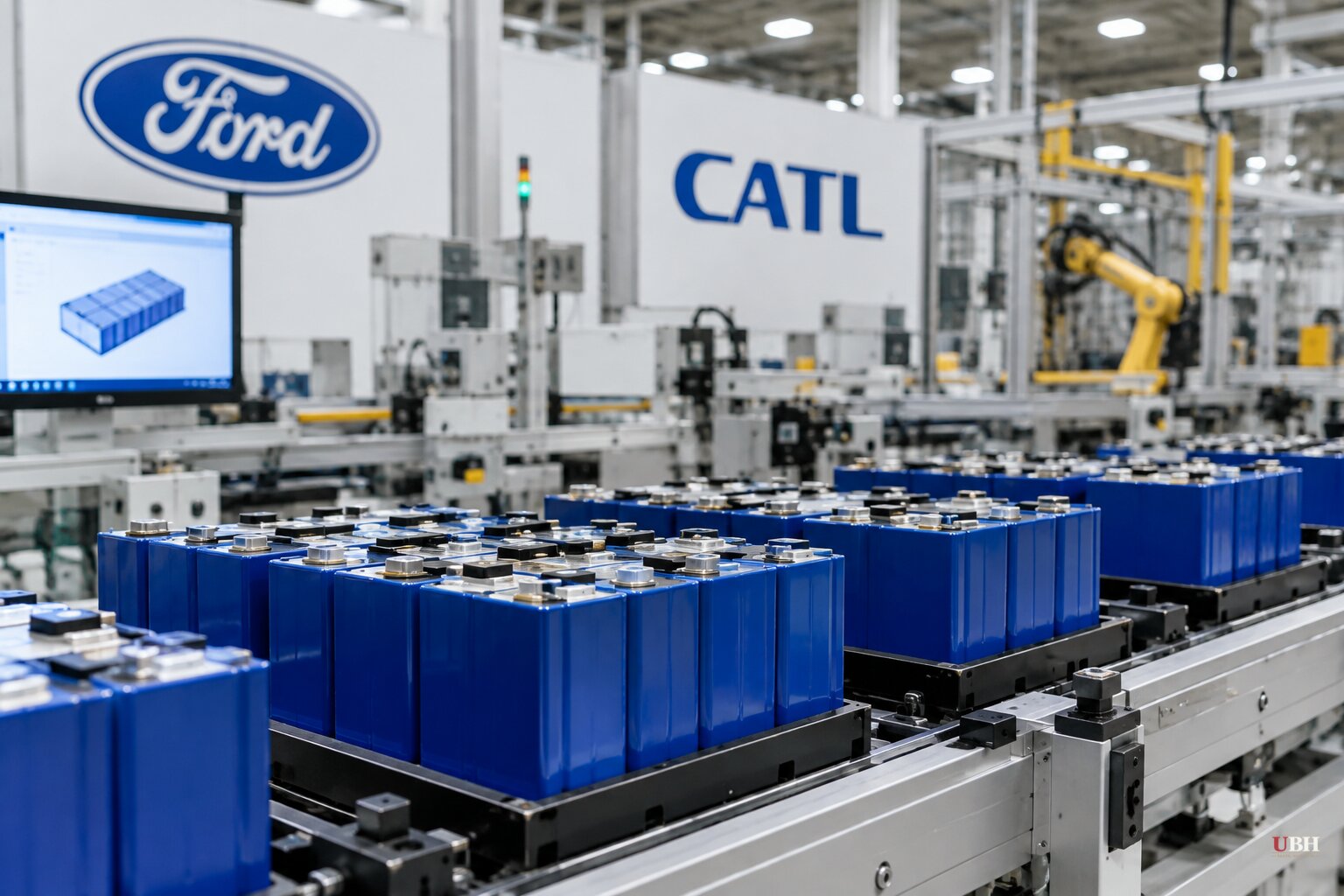
Ford Motor is making battery cells in Michigan with Chinese technology, and it is shipping them.
The automaker said Wednesday, Nov. 18, that cell production at its $3 billion plant in Marshall, Michigan, about 100 miles west of Detroit, started last month. The cells are headed to Ford's Louisville Assembly Plant in Kentucky for prototypes of the Fathom, a small electric pickup.
The plant is owned by Ford. The technology inside it is licensed from CATL, the Chinese battery giant.
What Ford is building
The cells use lithium iron phosphate (LFP) chemistry in a prismatic format. LFP skips nickel and cobalt, which lowers cost, and is generally considered more durable than nickel-based cells. The chemistry was invented in the U.S. but commercialized largely in China.
The roughly 2 million-square-foot facility is designed to turn out 40 cells a minute, or 20 gigawatt-hours a year. That is half the up to 40 GWh Ford originally planned, a cut that tracks with the company's pullback on EVs and a broader industry slowdown.
Ford says the plant is still in the early stages of certifying its processes. It plans to ramp cell production next year. The battery pack plant in Michigan is slated to open in 2027, which Ford describes as ahead of schedule.
The Fathom is the first vehicle on Ford's Universal Electric Vehicle platform. Preorders open in early 2027 at $28,350 for the standard-range version. CEO Jim Farley said on the third-quarter earnings call last month that the truck remains on track for a Q4 2027 launch.
The CATL problem
The licensing deal is the sore spot. In a September letter to Farley, Transportation Secretary Sean Duffy said his agency was "deeply alarmed" by Ford's reliance on CATL technology at the Marshall plant. Some lawmakers have raised similar objections.
Ford fired back. The company called the letter a "wrongheaded attempt to capture headlines." It pointed out that it is building a U.S. battery plant while other automakers keep importing batteries from China.
The White House followed Duffy's letter a day later by praising Ford for its domestic jobs and manufacturing.
Alan Clarke, Ford's vice president of advanced development projects, made the company's case during a plant tour Tuesday. "If we want to get to being able to produce affordable EVs in the United States, we need to also do it the fastest way possible," he said. "CATL being the biggest in the world, it means that they're the best supplier to get us that technology and help us learn how to produce LFP cells."
That is a straightforward argument. Ford wants a cheap EV, the cheap chemistry is dominated by China, and a license was the quickest route. Duffy and the lawmakers see the dependence on a Chinese company as the risk. Both positions are on the record. Neither has been tested yet by a finished product or a policy ruling.
Tax credit still in play
A Ford spokesperson said the company still expects to be eligible for the federal battery manufacturing tax credit. The company has not detailed how the CATL license fits with the credit's requirements, and no agency has announced any action on Ford's eligibility.
That money matters. A plant running at half its original capacity, built for a product line the company has been scaling back, leans on every dollar of federal support it can get.
Korean equipment, and a separate project
Separately, South Korea's The Elec reported on Nov. 16, citing industry sources, that Ford plans a pilot line for prismatic energy-storage batteries at its Ion Park R&D facility in Michigan. According to those sources, Korean equipment makers DH and Hana Technology are supplying winding and formation equipment, and Ford engineers visited South Korea late last month to discuss delivery schedules. Ford has not publicly confirmed those details.
The same report says the Marshall line relies on equipment from CATL partners, including China's Wuxi Lead Intelligent Equipment, and on cans and caps from China's Red Fairy. Ford has not commented on that supplier list. If accurate, it means the Chinese footprint at Marshall goes beyond the license itself.
Ford has said the knowledge gained in Michigan will support its new battery energy storage business, Ford Energy, in Kentucky.
What comes next
The cells are now shipping for use in prototype trucks. The test comes in 2027, when Ford has to certify its processes, ramp the line, open Fathom preorders under $30,000 and show that a Chinese-licensed plant can deliver American-built EVs at that price. Whether Washington leaves the arrangement alone, or acts on Duffy's concerns, is still open.
Sources used for this briefing
7 links from 6 independent newsrooms (syndicated copies of the same report count once)
These are the sources it draws on, linked so you can verify.


