
Unbiased headlines. Facts, not spin.
Every story is an unbiased news briefing written from 110+ sources across the spectrum — sources linked so you can verify it yourself.
 economy
Low Interest (4/10)
May 11, 2026 at 10:11 AM
economy
Low Interest (4/10)
May 11, 2026 at 10:11 AM
Food Prices Are Up 9.9% in Three Years and Americans Are Voting With Their Wallets
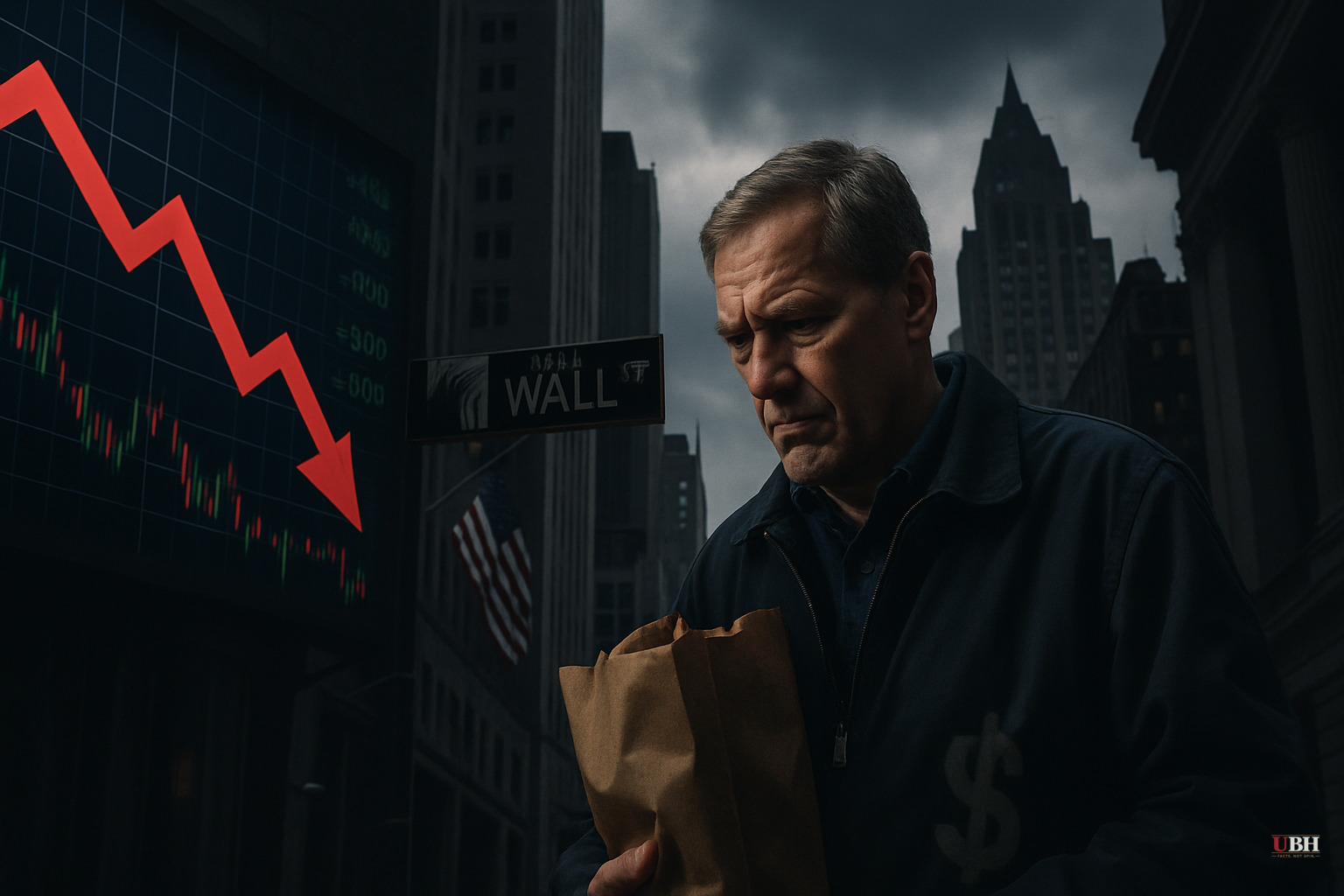
Food Prices Are Up 9.9% in Three Years and Americans Are Voting With Their Wallets
The Numbers Don't Lie
Food and beverage prices in July 2025 were up 9.9% from three years prior, according to consumer market research firm Circana. That's a structural hit to every household in America trying to put dinner on the table.
Month-over-month prices technically 'stabilized' in July — the U.S. Labor Department confirmed overall food prices held flat, with at-home food prices actually dipping 0.1%. The media ran with that as good news. Flat on top of a 9.9% three-year climb is still brutal.
More Trips, Less Spending
Americans are going to the grocery store MORE often, not less. According to Circana data, U.S. households averaged 222 grocery store visits in 2025 — up from 200 trips in 2021. But they're spending LESS per trip.
People are rationing. They're buying smaller quantities, more frequently, to manage cash flow. That's not confident consumer behavior. That's triage.
The average price per unit across all food and beverage hit $4.34 in July 2025, per Circana — unchanged month-over-month but up 2.8% year-over-year.
The Supermarket Is Losing
Traditional supermarkets — the hi-lo pricing model that's been standard for decades — are bleeding customers to mass retailers, club stores, and e-commerce. Circana's data confirms it: shoppers increasingly perceive mass, club, and online channels as delivering better value and more consistent promotions.
Aldi and Costco are the obvious winners. NPR profiled Rachel Negro-Henderson of Audubon, N.J., who started shopping at Aldi during the pandemic when her husband lost income as a crew coach. She used to feel embarrassed running into neighbors there. Now everyone she knows shops there — and nobody apologizes for it.
Grocery industry analyst Phil Lempert told NPR: 'Consumers are just to a point where they're saying, give us a break. This is food. You don't screw around with our food.'
Lempert also noted that discount grocers have actively upgraded their food and beverage quality — shedding the 'cheap junk' reputation they carried for years. This isn't your 1990s Save-A-Lot anymore.
How People Are Adapting
According to reporting from LA Wire, the psychology of grocery shopping has fundamentally shifted:
- Meal planning is now financial planning. People build weekly menus around what's on sale, not what sounds good.
- Private label is winning. Store brands have taken serious market share as shoppers realize they're often getting identical products for 20-30% less.
- Bulk buying is back. Shelf-stable items get stocked up when prices dip — a Depression-era habit that's returned.
- Cheaper proteins are trending. Less expensive meat cuts, plant-based proteins, and meatless meals are up — not because of ideology, but because beef is expensive.
Multi-stop grocery runs — hitting different stores for different deals — are now common. That costs time and gas. But it saves money.
What the Coverage Is Getting Wrong
Most mainstream coverage frames this as a quirky 'consumer trend' — plucky Americans finding clever hacks, social media influencers sharing their Aldi hauls. Cute stories. Feel-good framing.
The real story is that a decade of Federal Reserve money-printing, pandemic stimulus, and supply chain mismanagement created an inflation crisis that has permanently restructured how working Americans eat. A 9.9% price increase over three years doesn't reverse. Those prices don't come back down. What was $100 in groceries in 2022 costs $109.90 today — and that's before the tariff uncertainty layered on top.
Tariffs — depending on how trade negotiations shake out — represent a second wave of food price pressure still sitting on the horizon. That's barely mentioned in most of the coverage reviewed for this article.
Electronic shelf labels — which give retailers the ability to change prices dynamically based on demand — are also getting minimal attention. Phil Lempert flagged this to NPR. Surge pricing on groceries isn't theoretical anymore. It's coming.
The Government's Role Gets Ignored
This price crisis wasn't an act of God. It was the predictable result of printing trillions of dollars, paying people not to work, and letting supply chains atrophy while calling it 'stimulus.'
Both parties own pieces of this. The CARES Act, the American Rescue Plan, the infrastructure bill — money printed and pumped into an economy that couldn't absorb it. Grocery prices were a lagging indicator. They rose last, and they'll normalize last.
Nobody in Washington is getting called out by name for this.
The End
Ninety percent of Americans are cutting food costs, according to Food & Wine. That's a national economic emergency that happens to be unfolding one grocery cart at a time.
Regular people figured out what politicians won't admit: the money is gone, prices are high, and nobody's coming to save you. So they're saving themselves — at Aldi, at Costco, on whatever's marked down on Thursday.
Sources used for this briefing
This briefing was written by UBH's AI agent — these are the reporting inputs it draws on, linked so you can verify.


