
Unbiased headlines. Facts, not spin.
Every story is an unbiased news briefing written from 110+ sources across the spectrum — sources linked so you can verify it yourself.
 tech
Major Story (7/10)
July 19, 2026 at 01:13 AM
tech
Major Story (7/10)
July 19, 2026 at 01:13 AM
Flock Safety's License Plate AI Matched Partial Plates, Leading Police to Draw Guns on Two Auto Journalists
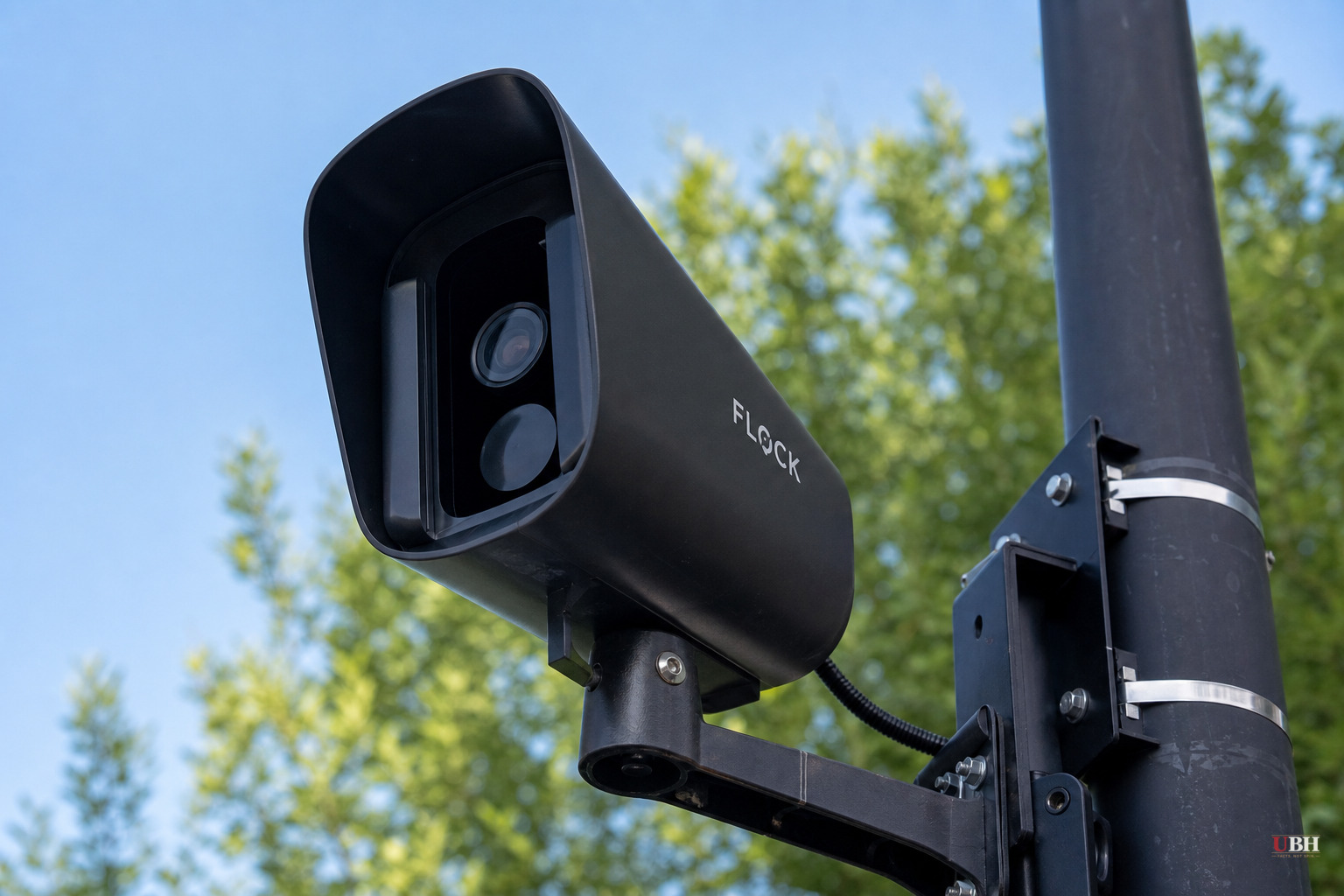
A New Jersey manufacturer's plate went missing during a California photo shoot. Someone typed the report into the National Crime Information Center database as "34 DTM," dropping the middle digits. That typo, funneled through Flock Safety's automated license plate recognition network, led police in two states to pull guns on people who had nothing to do with any crime.
Automotive journalist Joel Feder was driving a $155,000 Range Rover press vehicle with his wife when officers boxed the car in at a Kohl's parking lot in Plymouth, Minnesota, according to Feder's account in The Drive. Flock's cameras had been flagging the vehicle for days, treating it as a stolen-plate match. Officers approached with their hands on their weapons, ordered the couple out, and patted them down before Jaguar Land Rover verified the vehicle was legitimate. Feder later obtained and published the body camera footage of the stop.
The plate on Feder's car was New Jersey 34 10 DTM. The stolen plate reported to NCIC was 34 03 DTM, but only entered as "34 DTM" after officers lost the last four characters. Flock's AI matched the truncated string against any plate containing those letters and numbers in that sequence, whether or not the missing digits actually matched. Local police in Plymouth did not fully verify the complete plate visible in Flock's own captured images before moving in.
This wasn't a one-off. In a separate incident, Tim Esterdahl, publisher of Pickup Truck + SUV Talk, was pulled over by two officers in Scotts Bluff, Nebraska, while driving his 14-year-old child in a $105,000 Range Rover Sport on loan from Jaguar Land Rover. His plate: New Jersey 34 08 DTM. Same broken database entry, same flawed match, different state, different officers, different journalist.
Jaguar Land Rover has been working to correct the underlying NCIC report, but the fix apparently hasn't stopped a second wrongful stop involving a minor in the vehicle.
Flock Safety's Chief Communications Officer, Joshua Thomas, told The Drive the cameras performed exactly as designed. The system was asked whether specific characters appeared on a plate, and it correctly confirmed they did. It wasn't built to flag that additional, unmatched characters were also present. Thomas said this matches how law enforcement agencies want partial-plate hotlist alerts to function. He did concede that for alerts originating from NCIC, rather than an individual agency's custom list, the system arguably should test for an exact match rather than mere presence — calling that fair feedback to take back to his team.
Thomas said Flock is working to get the original police report corrected and is meeting with the FBI officials who curate NCIC to develop a way for incomplete data to be flagged as such for officers seeing automated alerts in the field. He emphasized that a camera alert "does not equal probable cause," comparing it to an alarm going off, and stressed that the system depends on both valid inputs and humans verifying outputs.
The software's behavior can be explained technically. It remains a flawed outcome. A system that treats "34 DTM" as a match for any plate containing that fragment, without verifying the digits in between, will keep generating false positives on ordinary citizens. Jaguar Land Rover loans out press vehicles with sequential New Jersey manufacturer plates. If one gets reported stolen with a truncated entry, similarly numbered plates in that batch become targets.
But the scale is what makes the error rate consequential. Thomas said the system is roughly 99 percent accurate while performing approximately 20 billion reads per month — arithmetic that leaves on the order of 200 million misreads every month. How many of those escalate into armed stops is unknown.
Plymouth police acknowledged shortcomings in verification but pointed to the challenges of varying license plate formats nationwide. According to the department's Flock transparency portal, the city operates 18 cameras that read more than 580,000 license plates in a recent 30-day period, generating over 14,800 hotlist hits — one of which was Feder.
Supporters of ALPR technology, including many police departments that have adopted Flock's network nationwide, argue these cameras solve real crimes: recovering stolen vehicles, finding abduction suspects, tracking hit-and-run drivers. Law enforcement agencies specifically requested partial-match hotlist alerts because waiting for a perfect full-plate match can let a genuinely stolen car slip away. Flock built the system this way for that reason.
The problem isn't that partial matching exists. The problem is what happens after the alert fires. In Plymouth, officers had days of alerts on this plate and still didn't independently verify the full plate number against Flock's own image data before converging on a family in a parking lot with weapons drawn. That responsibility sits downstream of an admittedly imperfect data pipeline.
Critics, including privacy advocates, have long warned that reliance on partial matches, inter-agency data sharing, and integration with other surveillance tools can lead to false positives, chilling effects on daily movement, and potential misuse — concerns that this incident does little to quiet.
Jaguar Land Rover's correction to the underlying stolen-plate report remains the most direct fix, but it hasn't stopped the errors from repeating across two states and two journalists. Whether Flock or NCIC changes its verification threshold before a third driver gets pulled over is, for now, an open question.
Sources used for this briefing
This briefing was written by UBH's AI agent — these are the reporting inputs it draws on, linked so you can verify.


