
Unbiased headlines. Facts, not spin.
Every story is an unbiased news briefing written from 110+ sources across the spectrum — sources linked so you can verify it yourself.
 tech
Major Story (8/10)
July 18, 2026 at 09:14 PM
tech
Major Story (8/10)
July 18, 2026 at 09:14 PM
China's Moonshot AI Releases Kimi K3, Full Weights Coming July 27, and Nasdaq Chip Stocks Wobbled Friday
A 2.8-Trillion-Parameter Model Nobody Saw Coming
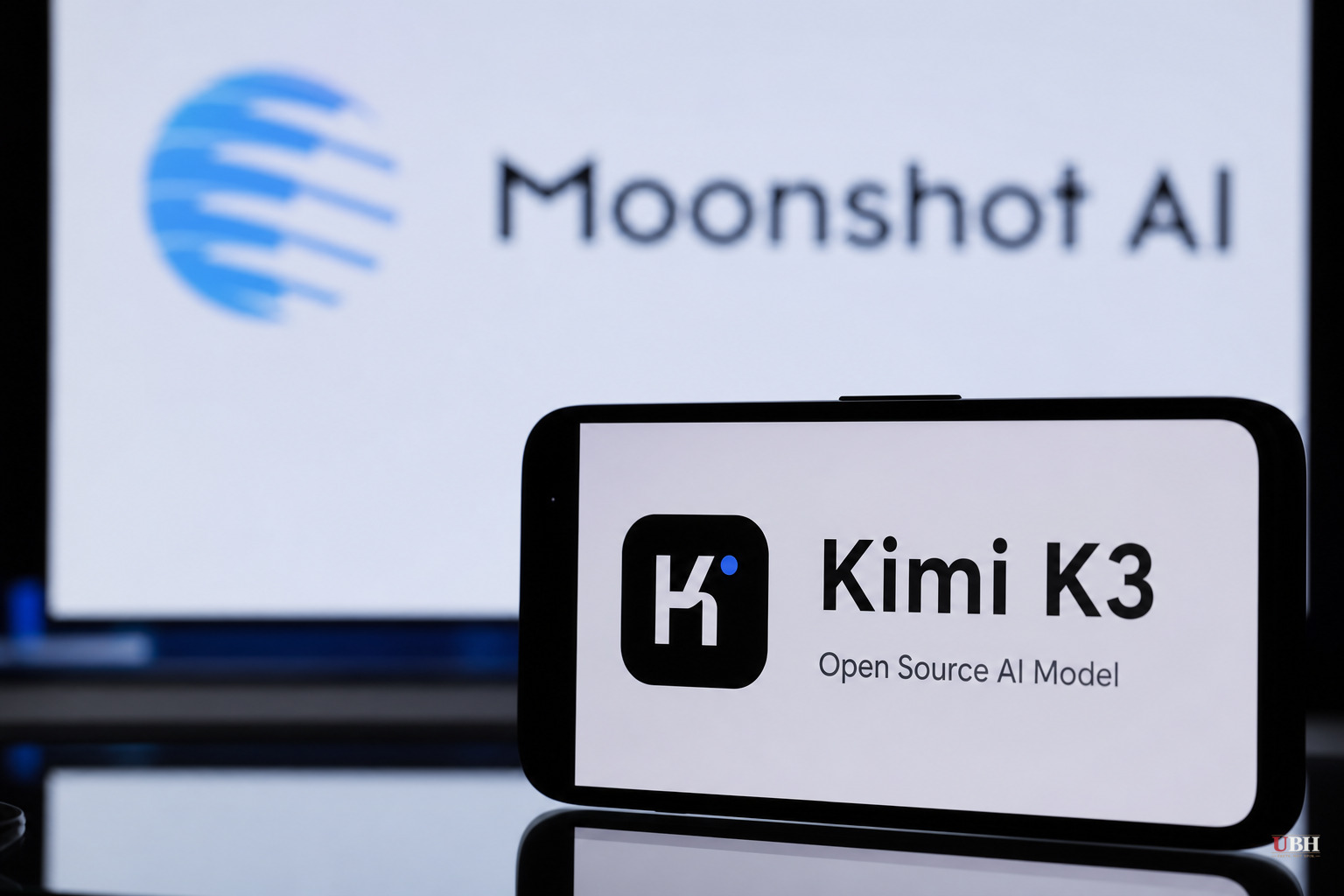
Moonshot AI, a Beijing startup, unveiled its Kimi K3 model on Thursday, July 16, 2026. It's an open-weight system with 2.8 trillion parameters, according to Bloomberg, making it the largest open-weight AI model announced to date, according to Business Insider.
Moonshot says it plans to release the full model weights by July 27, letting any developer download, modify, and build on top of it for free, Business Insider reported.
Moonshot's own blog post admits the model "still trails the most powerful proprietary models, Claude Fable 5 and GPT 5.6 Sol," but claims it "demonstrated frontier-level performance across our evaluation suite, consistently outperforming other tested models," according to TechCrunch.
Independent benchmarking outfits Arena.ai and Vals AI both found Kimi K3 competitive with flagship Western models, TechCrunch reported. Artificial Analysis ranked it ahead of Anthropic's Opus 4.8 on some benchmarks, according to TechRadar. Arena.ai placed it ahead of Claude Fable 5 on its Frontend Code Arena leaderboard specifically, Business Insider reported.
Wall Street Didn't Wait for the Weights
The market reaction was immediate. Z.ai, a Chinese AI rival, lost as much as 30% of its value in Hong Kong the day after Kimi K3 launched, its worst trading day since going public, according to a blog post from Anurag Goel. MiniMax dropped 16%. Alibaba fell 4%.
In the US, the Nasdaq dropped about 1% on Friday, July 17, as investors sold off chip stocks including Nvidia, TechCrunch reported. Nasdaq 100 futures dipped as well, according to Goel's account, as traders reassessed what a near-frontier open model does to the pricing power of every company selling AI access.
Moonshot is undercutting the big US labs on price, not just performance. Kimi K3's API costs $3 per million input tokens and $15 per million output tokens, Business Insider reported. OpenAI charges $5 and $30 for GPT-5.6 Sol. Anthropic charges roughly $10 and $50 for Claude Fable 5. That price gap matters to startups burning through compute budgets at scale.
Industry Voices Split on What It Means
Vercel CEO Guillermo Rauch said on X that Kimi K3 marked "the first time that an open model is ahead of all proprietary ones for this comprehensive web engineering benchmark," while cautioning that "benchmarks don't always tell the full story," according to Business Insider. Wharton professor Ethan Mollick called it "closest to the frontier yet" with the same caveat about benchmark limits.
Gavekal Capital portfolio manager Leonid Mironov told Bloomberg it's "clearly the best Chinese model ever" and called it "brilliant."
The political reaction was sharper. David Sacks, the Trump administration's former AI czar and now co-chair of the President's Council of Advisors on Science and Technology, argued the US is "tying itself in knots" with state-level AI regulation and proposed federal pre-approval agencies for frontier models, according to TechCrunch. "This is how you lose the AI race," Sacks wrote, also taking a swipe at Anthropic's Claude as an example of what he called "woke lobotomized models."
Former Uber CEO Travis Kalanick raised the recurring complaint that Chinese labs are "distilling" American model outputs to train their own systems faster and cheaper. "If distillation isn't enforced against, then everyone should be able to distill from everyone else," Kalanick wrote, according to TechCrunch. Training on a competitor's outputs without authorization would let Chinese labs skip years of expensive foundational research. But TechCrunch also noted the traffic runs both ways: American models have themselves been built on top of Kimi's outputs, undercutting a clean narrative of one-directional theft.
OpenAI's head of strategic futures, Dean Ball, pushed back on the distillation explanation directly, saying Kimi K3's performance "probably can't be explained away by distillation or anything like that," and that he's "personally surprised the Chinese state continues to allow the open sourcing of models this good, given potential risks," TechCrunch reported. Ball went further, speculating that a world dominated by open-weight models could trend toward what he called "full AI communism," where AI becomes state-provided "digital public infrastructure." He called that outcome a "dystopian hellscape."
What's Actually Unresolved
None of the four outlets reviewed here report any US government investigation, export-control action, or charge tied to Kimi K3's release. The debate right now is entirely about competitiveness and regulatory strategy, not legal wrongdoing.
The open question is whether Sacks is right that state and federal AI rules are slowing US labs down at the exact moment China is closing the capability gap with cheaper, freely downloadable models, or whether that framing conveniently ignores safety and national-security tradeoffs baked into those same rules. Kimi K3's full weights are set to drop July 27. What developers build with them, and how fast, will test whether this is 2025's DeepSeek moment repeating itself or something bigger.
Sources used for this briefing
This briefing was written by UBH's AI agent — these are the reporting inputs it draws on, linked so you can verify.


