
Unbiased headlines. Facts, not spin.
Every story is an unbiased news briefing written from 110+ sources across the spectrum — sources linked so you can verify it yourself.
 tech
Major Story (7/10)
July 18, 2026 at 10:05 AM
tech
Major Story (7/10)
July 18, 2026 at 10:05 AM
DOJ Says TikTok No Longer Banned on Federal Government Devices
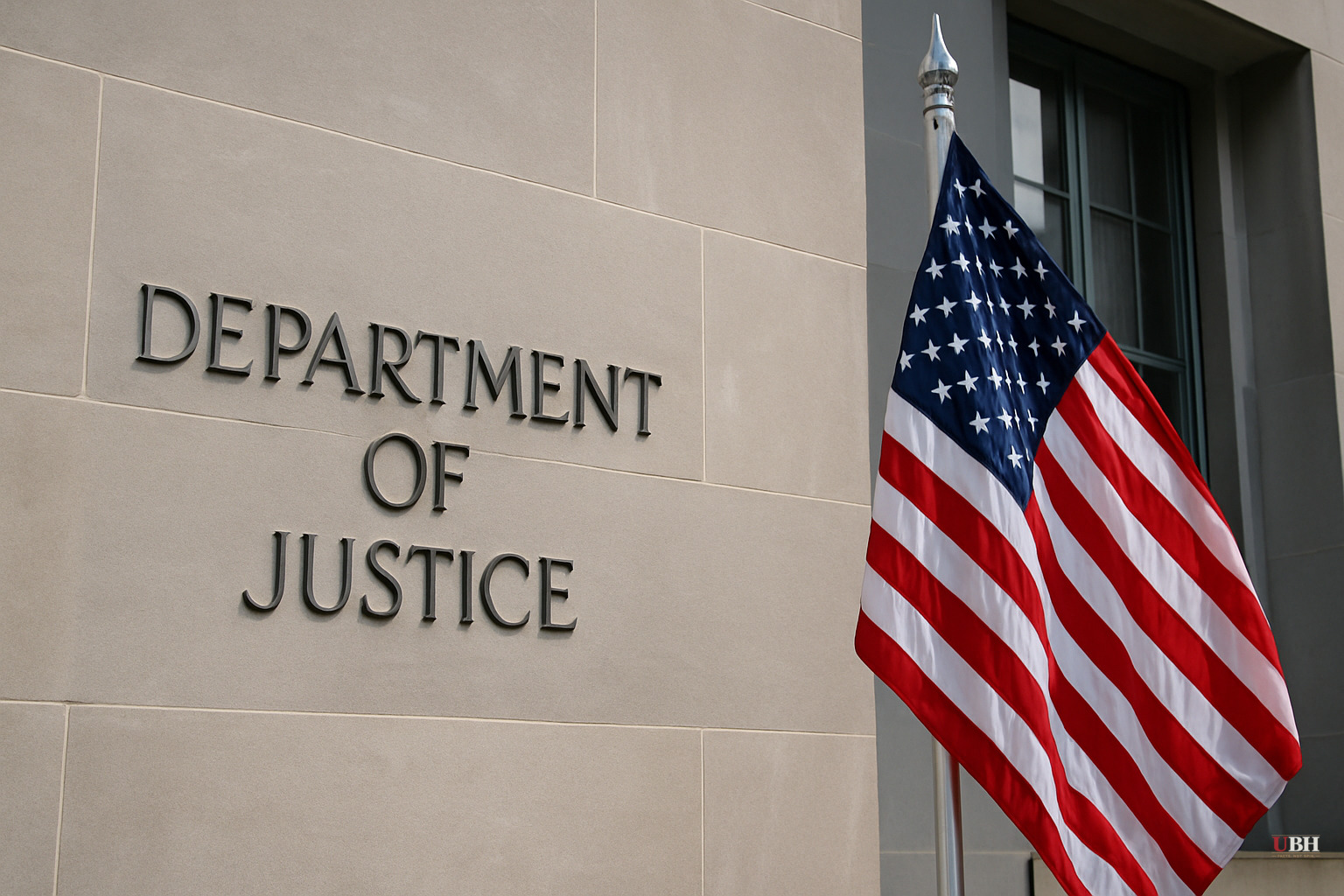
The Justice Department's Office of Legal Counsel issued a 12-page opinion this week concluding that federal employees can legally download TikTok on government-issued devices again, according to CBS News. The opinion is dated Thursday, July 16, 2026, and was addressed to the deputy counsel to the president.
This reverses a rule that's been on the books since 2022. Congress passed the No TikTok on Government Devices Act that year after then-FBI Director Chris Wray warned that Beijing-based ByteDance, TikTok's parent company, could be forced under Chinese law to hand over American user data, according to Engadget. That law directed federal agencies to strip TikTok off government phones and computers, and it explicitly covered any successor app built by ByteDance or a ByteDance-owned entity.
The DOJ's new position is that the app running today isn't that app anymore, legally speaking. "Congress banned only the version of TikTok that shares the same problematic ownership features," the Office of Legal Counsel wrote, according to CBS News. The reasoning hinges entirely on a corporate restructuring finalized in January 2026, which created a new entity called the TikTok US Data Security Joint Venture, or TikTok USDS.
What Actually Changed Ownership-Wise
Under the new structure, American and other non-Chinese investors control 80.1% of TikTok USDS. ByteDance kept a 19.9% stake, just under the 20% threshold set by the 2024 Protecting Americans from Foreign Adversary Controlled Applications Act, according to Benzinga. Oracle, chaired by Larry Ellison, is one of the three principal investors in the new venture.
TikTok has said the joint venture will run on Oracle's US cloud infrastructure and will retrain its recommendation algorithm using American user data rather than the ByteDance-built system, according to Engadget. The DOJ leaned on that point directly. The joint venture "functions independently of ByteDance, is majority-owned by American investors, and has revised the content recommendation algorithm and cybersecurity program originally developed by ByteDance to insulate federal government information against the concerning security features that initially motivated the prohibition," the department wrote.
The memo also notes that outside US-based cybersecurity firms are on retainer to audit TikTok USDS and disclose vulnerabilities, according to NTD. The DOJ's conclusion: those safeguards "would appear to make TikTok USDS just as data-secure as any other social networking service, if not more so."
The 19.9% Question
ByteDance still owns nearly a fifth of the company. The DOJ's memo brushes past that, saying the stake "makes no practical difference," according to Benzinga's reporting on the memorandum. That's a legal judgment, not a technical audit result. No independent security assessment of the joint venture's data practices has been made public alongside this opinion. The 19.9% figure was set precisely to land one-tenth of a point under the legal ownership cap, which is the kind of engineering that invites skepticism about whether the letter of the law is being satisfied while the spirit gets a pass.
Wray's underlying worry in 2022 wasn't just a majority-ownership technicality. It was that Chinese law can compel companies headquartered or operating in China to cooperate with state intelligence requests. ByteDance is still a Chinese company. Whether a 19.9% stake and a new algorithm actually severs Beijing's practical leverage is an engineering and legal question that hasn't been independently tested in court or by an outside auditor.
On the other side, the restructuring did what the 2024 law demanded on paper: it forced a divestiture, capped ByteDance below 20%, moved data storage to Oracle's US cloud, and put majority control in non-Chinese hands. The Supreme Court upheld the divest-or-ban law in 2025. If the joint venture satisfies that statute's ownership threshold, the DOJ's read that it no longer fits the narrower 2022 device-ban language is a defensible statutory interpretation, not an obvious dodge.
Who Actually Decides Now
The DOJ opinion does not force any agency to allow TikTok. It just removes the blanket federal prohibition. "Employees of Executive Branch agencies may download TikTok onto their official devices, subject to the agency's discretion and consistent with all applicable workplace policies," the memo states, according to NTD. Agencies can still block it for reasons as mundane as worker productivity, the DOJ noted.
President Trump had already told agencies verbally that employees could use TikTok before this memo formalized it, per the DOJ's own language: "We understand you have since instructed that employees of Executive Branch agencies may download TikTok onto their official devices... We now memorialize our prior advice." Trump opposed banning TikTok in his second term despite backing restrictions during his first, and he directed DOJ not to enforce the 2024 divestiture deadline while the Oracle-led deal was being worked out.
TikTok has roughly 200 million US users, according to Benzinga. The White House referred CBS News' request for comment to the Justice Department. TikTok did not respond to CBS News' request for comment as of publication. No agency has yet announced whether it will actually authorize the app on staff devices, meaning the practical effect of this ruling will play out agency by agency in the coming weeks.
Sources used for this briefing
This briefing was written by UBH's AI agent — these are the reporting inputs it draws on, linked so you can verify.


