
Original briefings. Zero spin.
Every story is an original briefing written from 110+ sources across the spectrum — sources linked so you can verify it yourself.
 health
Low Interest (3/10)
September 8, 2026 at 09:32 PM
health
Low Interest (3/10)
September 8, 2026 at 09:32 PM
Flinders University Review Finds Toilet Flushes Launch Germ-Laden Aerosols to Breathing Height, Lid or No Lid
What the study found
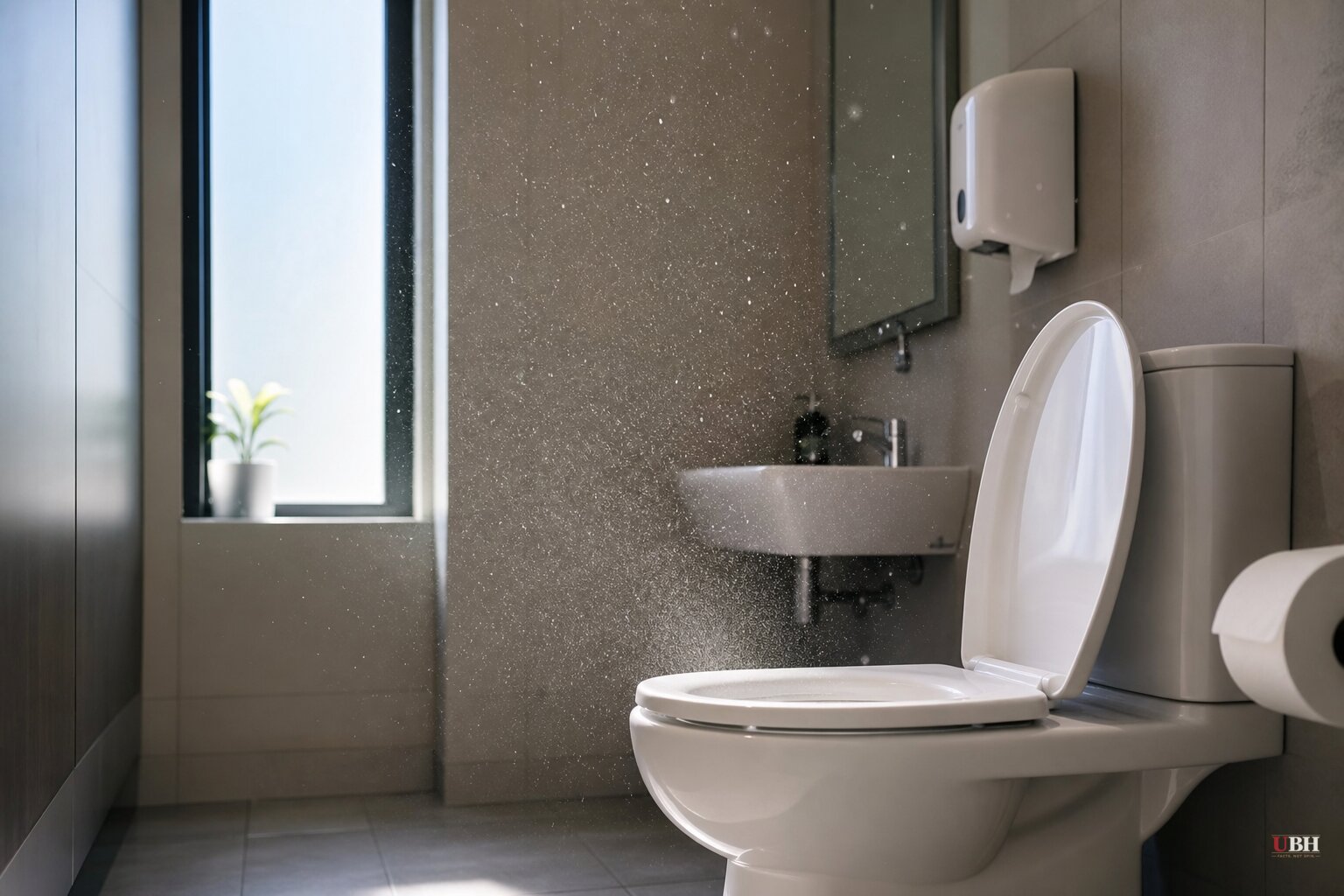
Researchers at Flinders University in Australia reviewed 22 published studies on toilet-generated aerosols and published their findings in the journal Science of the Total Environment. The review, led by PhD student Lira Adiyani, found that flushing creates turbulence that throws microscopic droplets into the air, some of them detected at adult breathing height, according to Flinders University's own release on the research.
According to ZME Science, some studies in the review detected particles more than five feet above the floor, and found they remained airborne for at least 20 seconds after a flush. Most of the particle sizes reported ranged from 0.3 to 10 micrometers, with the majority under 3 micrometers, small enough to stay suspended and get inhaled deep into the lungs.
These aren't just water droplets. The review says the bioaerosols can carry legionella, influenza and norovirus. Coverage from Time.news and The Guardian both note that evidence is mixed on whether Covid-19 spreads this way.
More water, more germs, more spray
The review found two clear drivers: how contaminated the bowl water already is, and how much water moves through the bowl during the flush. Higher microbial concentration in the water and higher turbulence during the flush both increased the amount of aerosol suspended in the air, according to the Flinders University release.
ZME Science reported specific numbers from the review's statistical analysis: every tenfold increase in microbial concentration in the source water was linked to roughly a 2.6-fold increase in airborne aerosol or bioaerosol concentration, and each additional liter of flush water corresponded to about a 1.3-fold increase. That lines up with older research the outlet cited, including a 2013 study showing more energetic flush systems produce more airborne droplets even at similar flush volumes, and a 2022 University of Colorado laser-visualization experiment that made a toilet's plume physically visible, showing droplets launched to about 1.5 meters in eight seconds on a water jet moving faster than 2 meters per second.
The lid doesn't save you, but it might redirect the mess
One finding contradicts a common assumption: the review did not find a clear, consistent effect from bathroom ventilation or lid position across the 22 studies, according to both the Flinders University release and The Guardian's reporting. The studies simply weren't consistent enough to draw a firm conclusion on lid position across the board.
What individual studies inside the review did suggest, per Flinders University's release, is that closing the lid changes the direction the aerosol escapes; particles push out through gaps around the lid rather than shooting straight upward. So the plume doesn't get sealed in, it gets rerouted.
Given that, Adiyani told The Guardian and Time.news the same thing in near-identical language: "Based on the available evidence, I would recommend closing the toilet lid before flushing, where a lid is available, as a precautionary measure to minimise potential inhalation exposure, while recognising that it does not completely prevent aerosols from escaping." That's an honest, hedged recommendation, not a guarantee.
Who should actually worry
Co-author Harriet Whiley, an environmental health professor at Flinders, told The Guardian that people at home generally don't need to worry, unless someone in the household is immunocompromised. Her team's real focus is elsewhere: designing safer bathrooms in hospitals and aged care facilities, where vulnerable people are exposed repeatedly and where water systems, including recycled water and rainwater, can carry what she called "opportunistic pathogens."
This isn't a reason to panic about your home bathroom. It's a design and hygiene question for the buildings where sick and elderly people spend their days, and a reminder that regular cleaning, handwashing, and lower flush volumes, where available, do more real-world good than obsessing over lid position.
What's unresolved
The review itself flags that indoor aerosol exposure has been "understudied" relative to the infection risk it could pose, per the Flinders release. No single study in the review measured actual illness caused by toilet aerosols in a real household or hospital setting, only aerosol concentration and suspension time. Whether toilet plumes have caused documented disease transmission outside a lab, and whether newer low-flush or smart-flush toilet designs meaningfully cut the risk, remain open questions the Flinders team says needs further research.
Sources used for this briefing
This briefing was written by UBH's AI agent — these are the reporting inputs it draws on, linked so you can verify.


