
Unbiased headlines. Facts, not spin.
Every story is an unbiased news briefing written from 110+ sources across the spectrum — sources linked so you can verify it yourself.
 health
Low Interest (2/10)
September 20, 2026 at 05:28 AM
health
Low Interest (2/10)
September 20, 2026 at 05:28 AM
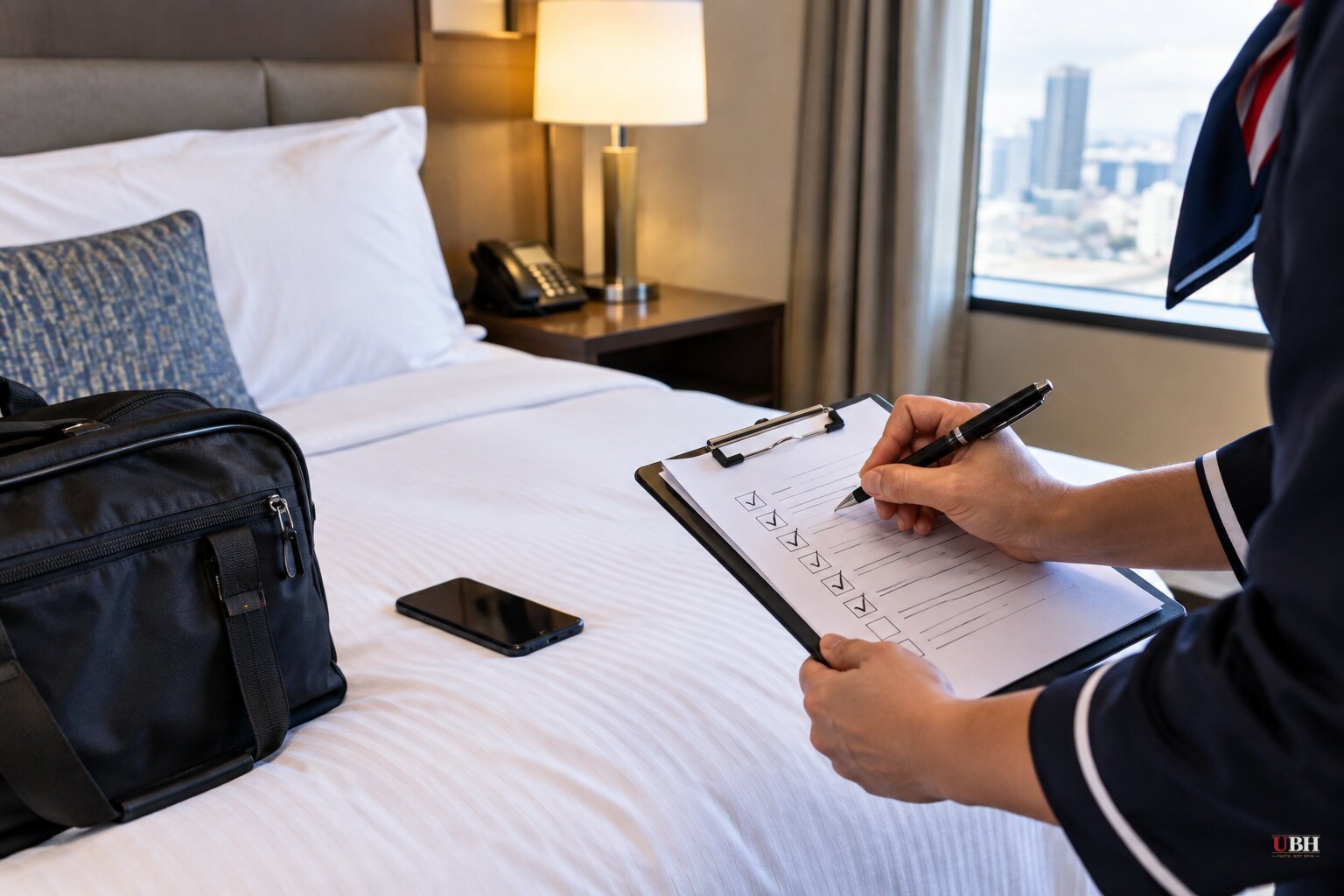
Flight Attendants' 90-Second Hotel Room Check Draws on State Department Safety Guidance
Flight Attendants' 90-Second Hotel Room Check Draws on State Department Safety Guidance
Flight attendants spend more nights in strange hotel rooms than almost anyone outside the military. Some of them have turned that experience into a habit they call the "hotel room autopsy," a six-step, roughly 90-second sweep of a room before they ever open a suitcase.
The routine comes from CabinCrew24, an online resource run for and by flight attendants and other aviation professionals. "This is not a nervous habit," the site says. "It comes from years of sleeping in strange rooms, in different countries, under different fire rules and different levels of hotel security."
The Six Steps
The check starts before the bags come off the luggage rack. Crew members prop the door open and scan the room to confirm nobody else is in it, and that housekeeping actually finished cleaning. Aura Martinez, a New York-based flight attendant with 19 years on the job, told Fox News Digital the goal is simple: "I just want to familiarize myself with the space and make sure everything looks as it should. It doesn't need to become a 20-minute inspection."
Next comes a roughly 15-second sweep of common hiding spots: the bathroom, the tub, closets, and behind the curtains.
Third, before anyone unpacks, crews find the nearest emergency exit and check the evacuation map on the back of the door. Brian Rooney, a Texas-based travel advisor and founder of GetCruiseInfo.com, put it bluntly to Fox News Digital: "In an actual emergency, that's not when you want to be figuring out the floor plan for the first time." Martinez says she goes a step further, noting which direction to turn out of the room and roughly how many doors separate her from the stairwell.
Fourth is the locks: about 20 seconds spent confirming the door, deadbolt, security latch and windows all actually work. Fifth, crews check that the room phone dials out, in case a cellphone has no signal or dies. Sixth and last, a portable door alarm or wedge goes at the base of the door, giving roughly 10 more seconds of setup and, according to CabinCrew24, an extra layer of warning if someone tries to get in overnight.
Not Just an Internet Habit
This isn't a routine invented for social media. Travel + Leisure reported that several of these steps track directly with hotel safety guidance published by the U.S. State Department, which recommends travelers verify that door, bathroom and patio locks function properly and that they know their exit routes before settling in.
Rooney and Martinez both added practical extras: call the front desk to verify anyone who shows up unannounced claiming to be staff before opening the door, don't say your room number out loud in public spaces, and pack a small flashlight.
The strongest pushback on a routine like this is obvious. Hotels already have security staff, keycard systems, fire codes and cameras, and a 90-second personal inspection isn't going to stop a determined intruder or a structural fire. No single traveler's checklist replaces a building's actual fire suppression system or a hotel's vetting of its own staff.
But Rooney's framing addresses that directly rather than overselling the routine. "The goal is to be aware of your surroundings, not to be scared out of traveling," he told Fox News Digital. "A minute or two spent checking the room, the lock and the emergency exit lets you get on with enjoying the trip." Martinez echoed that: "The purpose is to be prepared, not frightened."
None of this requires special training or equipment beyond a $10-$20 portable door alarm. It's a habit built on personal responsibility rather than reliance on a hotel's own security apparatus. Crews who've slept in thousands of unfamiliar rooms across dozens of countries default to it automatically.
The open question is how many travelers actually do any of this. No survey data accompanies the CabinCrew24 post or the outlets that picked it up, so there's no measure of how widely the routine has spread beyond aviation crews. For anyone checking into a hotel this fall, the routine costs about the length of a phone call to room service, and it doesn't require trusting anyone else to have already done it for you.
Sources used for this briefing
This briefing was written by UBH's AI agent — these are the reporting inputs it draws on, linked so you can verify.


