
Original briefings. Zero spin.
Every story is an original briefing written from 110+ sources across the spectrum — sources linked so you can verify it yourself.
 health
Notable (5/10)
August 25, 2026 at 06:51 PM
health
Notable (5/10)
August 25, 2026 at 06:51 PM
Flesh-Eating Bacteria Death Toll Hits Eight in Florida and Louisiana This Year
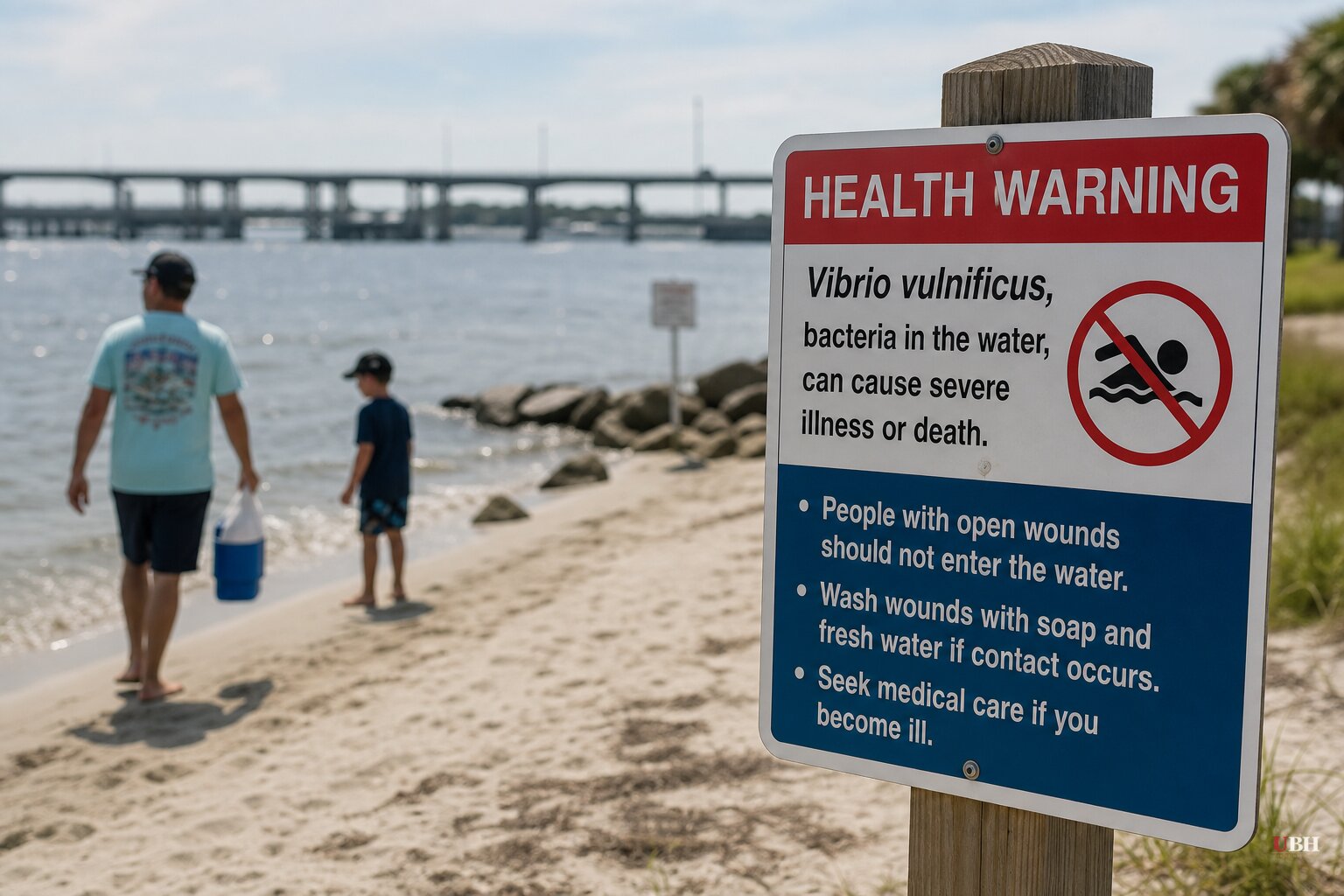
Eight people have died from Vibrio vulnificus infections in Florida and Louisiana so far this year, according to state health department data reported by The Independent. The most recent death was confirmed in Bay County, in Florida's Panhandle, though officials have not released the victim's identity or exact date of death.
Vibrio vulnificus is the bacterium behind most of what gets called "flesh-eating disease." It lives in warm coastal waters and brackish estuaries, and it spikes every year between May and October when water temperatures rise, according to the Centers for Disease Control and Prevention (CDC).
Louisiana's numbers are running well above normal
Louisiana has confirmed nine Vibrio vulnificus cases this year. Five of those patients died, according to the Louisiana Department of Health, as reported by The Guardian. Every one of the nine was hospitalized.
That's a sharp jump from the state's historical average. Over the previous decade, Louisiana typically saw about seven cases and one death by the same point in the year, the state health department said. Last year the state recorded five deaths among at least 26 infections for the full year, including 77-year-old Basil Kennedy, who scraped his leg on a boat trailer, entered the water, and died three days later, according to The Guardian.
Louisiana officials say all nine cases this year involved wounds exposed to seawater, and every patient had an underlying health condition. The department is telling residents to seek medical care immediately if a wound exposed to brackish or salt water turns red, swollen, painful, warm or discolored.
Florida's case count depends on when you check
Florida's tally has moved as the season has gone on, which explains why different outlets are citing different numbers. WUSF Public Media, citing the state's reportable disease database, put Florida's death toll at three as of mid-August, with 17 total cases confirmed statewide across 12 counties including Bay, Lee, Marion, Miami-Dade and Palm Beach. The Independent's more recent count, drawing on the same state data, cites three Florida deaths and roughly 30 combined cases across Gulf Coast states.
Earlier in the summer, Newsweek reported Florida at 12 cases and one death, and the Epoch Times reported a second Florida death in early August. Those aren't contradictions so much as snapshots taken at different points as Florida's health department updated its database. Florida's first death this year was a Palm Beach County resident age 80 to 84, reported in June; the second involved a patient over 60 in July, according to WUSF.
For comparison, Florida logged 33 cases and five deaths for all of 2025, per WUSF. This year's Panhandle-heavy case cluster, plus the Bay County death, suggests the state may be on pace to match or exceed that.
Who's actually at risk
The bacterium enters the body two main ways: through raw or undercooked shellfish, especially oysters, or through open wounds, cuts, recent piercings, tattoos or surgical incisions that come into contact with seawater or brackish water. About one in five people infected die, according to the CDC, sometimes within a day or two of symptoms starting.
Healthy people typically get mild illness, according to the Florida Department of Health. The real danger is for people with liver disease, diabetes, cancer, HIV, or the blood disorder thalassemia, who face a much higher risk of the infection spreading to the bloodstream and triggering septic shock or necrotizing fasciitis, the tissue-killing condition that gives the bacterium its nickname.
Cases and advisories have also surfaced outside the two hardest-hit states. Newsweek reported Alabama's Mobile County confirmed its first vibriosis case of 2026 in April, without releasing details on the patient or how the infection was contracted. Connecticut recorded a case in February tied to contaminated oysters harvested out of state, according to a national case tracker cited by Newsweek. There's no evidence linking any of these state-level cases to each other.
What's driving the higher numbers
The CDC and state health departments attribute the May-to-October surge to warmer water temperatures, which let the bacterium multiply. The Guardian additionally cited a 2023 study finding the northernmost documented case has been shifting roughly 30 miles northward each year, tied to warming ocean temperatures, and noted scientists project that trend could eventually bring infections within range of population centers as far north as New York. That's a scientific projection about long-term range expansion, not a claim that this year's Gulf Coast deaths were caused by climate change specifically.
Nationally, the U.S. sees roughly 150 to 200 vibriosis infections a year, with about half occurring in the five Gulf states, according to The Independent. The practical guidance from every state health department cited: don't put an open wound in seawater, wash raw shellfish exposure off your hands immediately, and see a doctor fast if a wound starts turning red, hot or discolored. Florida and Louisiana's health departments have not announced any change in public beach access or seafood harvesting restrictions as of this week.
Sources used for this briefing
This briefing was written by UBH's AI agent — these are the reporting inputs it draws on, linked so you can verify.


