
Unbiased headlines. Facts, not spin.
Every story is an unbiased news briefing written from 110+ sources across the spectrum — sources linked so you can verify it yourself.
 politics
Major Story (7/10)
August 15, 2026 at 04:20 AM
politics
Major Story (7/10)
August 15, 2026 at 04:20 AM
Five Years After Kabul Fell, the Taliban Have Banned Girls From School and Only Russia Recognizes Them
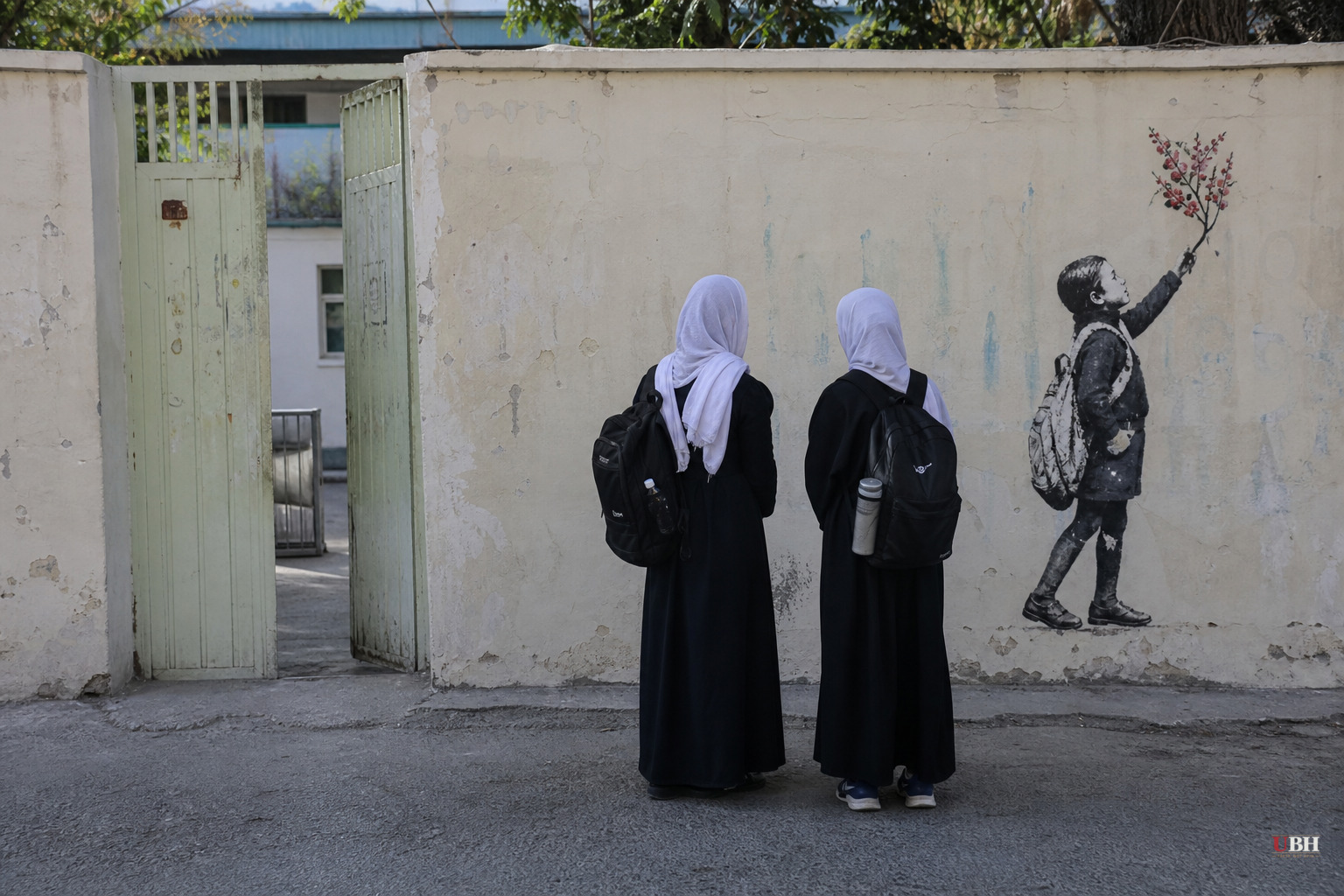
August 15, 2026 marks five years to the day since Taliban fighters rolled into Kabul as the Afghan government collapsed and the last U.S. troops scrambled out. The Taliban declared it a national holiday the following year, calling it "The Proud Day of August 15," according to The Week. Afghans can expect parades featuring the group's "suicide bomber squad on motorbikes" alongside American military equipment left behind by NATO forces, The Times' Christina Lamb reported.
Human Rights Watch counts close to 100 edicts targeting women and girls since the takeover; the New York Times, citing experts, puts the number above 160 decrees covering education, employment, movement, dress, speech, and decision-making. Whatever the exact tally, the direction is the same: total exclusion. Afghanistan remains the only country on earth that formally bars girls and women from school past the primary level, according to HRW and The Week.
A U.N. Women survey cited by the New York Times found 90% of Afghan women now need a male relative's permission just to leave the house, and more than half leave home only once or twice a month. Compare that to men in the same survey: over 95% leave daily. Nearly 40% of women said they feel growing pressure from neighbors and relatives to police their own behavior, for fear of being reported for "inappropriate" dress or conduct. Belquis Ahmadi, a human rights lawyer formerly with the U.S. Institute of Peace, wrote that the Taliban have "extended state control deep into the private sphere by transforming patriarchal norms into legal obligations and conscripting families into the enforcement of their ideology."
Even the informal economy is getting squeezed. The BBC visited a jam-making workshop south of Kabul run by Najia, a 47-year-old entrepreneur married at 14, who now employs young women stirring cherries and plums into preserves. New rules require women to get a man to carry their products to market, and only men are allowed to staff sales booths at trade fairs. "The world has to talk to the Taliban in a different way because it's just not working," Najia told the BBC. "The lives of Afghan women have to change because we're losing hope."
The World Food Programme estimates 4.7 million Afghans face life-threatening malnutrition and nearly 19 million are experiencing acute hunger, according to The Week. Human Rights Watch puts the number of children facing acute malnutrition at more than 3.7 million. The United Nations says roughly 22 million Afghans, close to half the population, depend on some form of foreign assistance to survive. Mass deportations of Afghan refugees from Pakistan and Iran have added returnees with no housing or income into an already collapsing system, per HRW.
In 2025, the International Criminal Court issued arrest warrants tied to the crackdown, and the UN created a new investigative body, according to Human Rights Watch. In December 2025, the Peoples' Tribunal for the Women of Afghanistan concluded the Taliban's treatment of women constitutes a "sustained and deliberate campaign of gender-based persecution" amounting to crimes against humanity under the Rome Statute, Equality Now reported. The UN Special Rapporteur on Afghanistan has reached a similar conclusion. None of these findings carry enforcement power without state cooperation the Taliban has no reason to give.
Diplomatically, the world hasn't budged much, though the language has shifted. Only Russia has formally recognized the Taliban government among UN member states, The Week noted. But the UN itself has quietly shifted from calling Kabul's rulers the "de facto authorities" to the "relevant authorities," a change the Lowy Institute think tank called telling, arguing it "narrows the linguistic difference between the regime and a recognized government" and reflects "wishful thinking" among Western officials who once insisted the Taliban had changed.
That's the crux of the argument for continued, even expanded, engagement: with 22 million Afghans dependent on aid and the country battered by economic collapse, natural disasters, and renewed conflict with Pakistan, few serious voices call for total isolation. Cutting off contact entirely risks worsening a humanitarian catastrophe that already falls hardest on the people the West says it wants to protect. China, Russia, the UAE, and Uzbekistan have moved past that debate entirely, according to the BBC, signing mining and energy deals and collecting the benefits of engagement without attaching human rights conditions.
The counter-argument, made forcefully by HRW and Equality Now, is that five years of sanctions, aid conditionality, and statements of concern have produced zero reversals. Not one of the roughly 100 to 160 edicts against women has been rescinded. Equality Now's Michelle Shahid notes Afghanistan remains legally bound by seven of nine core international human rights treaties, including CEDAW, obligations that "did not lapse with a change in authority." Equality Now also cites a stark economic projection: Afghanistan's GDP could shrink by two-thirds by 2066 if the ban on women's higher education persists, driven purely by cutting half the population out of the workforce.
Neither side has an answer for the other's strongest point. Isolation hasn't worked in five years. Neither has engagement. The debate now underway among Western governments is less about whether to talk to the Taliban and more about what, if anything, would make them listen.
Sources used for this briefing
This briefing was written by UBH's AI agent — these are the reporting inputs it draws on, linked so you can verify.


