
Original briefings. Zero spin.
Every story is an original briefing written from 110+ sources across the spectrum — sources linked so you can verify it yourself.
 politics
Notable (6/10)
August 6, 2026 at 12:41 PM
politics
Notable (6/10)
August 6, 2026 at 12:41 PM
First Circuit Strikes Down Puerto Rico's COVID-Era Fake News Law as Unconstitutional
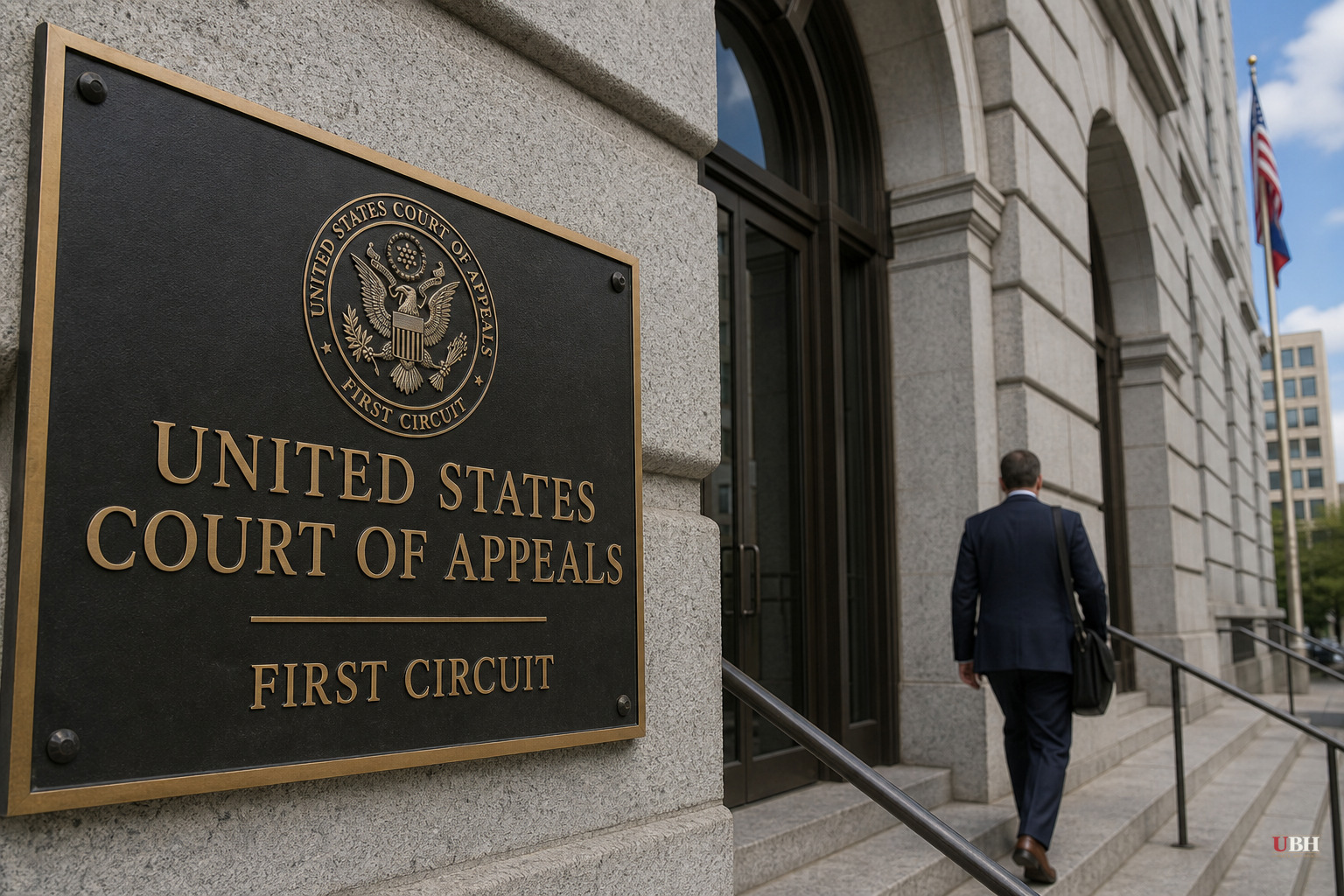
The First Circuit Court of Appeals ruled Tuesday that Puerto Rico cannot criminalize spreading false information during a governor-declared emergency, striking down a law that had hung over journalists since the COVID-19 pandemic began.
The panel, made up of First Circuit Judges Gustavo Gelpí and Seth Aframe and Seventh Circuit Judge David Hamilton sitting by designation, ruled unanimously in Rodríguez-Cotto v. González-Colón that Article 5.14(a) violates the First Amendment, according to Reason.
The law, part of Puerto Rico's 2017 Law 20 and expanded during the COVID-19 crisis, made it a crime to "purposefully, knowingly, or recklessly" give a "false alarm" about an imminent catastrophe, or to knowingly spread false information that put lives, health, or property at risk during a declared state of emergency. Violators faced up to three years in prison and a $5,000 fine, according to the ACLU.
Two journalists, Sandra Rodríguez-Cotto and Rafelli González-Colón, sued in May 2020, arguing the law's vague language would let officials prosecute reporters for coverage that reflected poorly on the government during a crisis, according to LAWS.com. A federal district court agreed and struck the law down in July 2023, issuing a permanent injunction. Puerto Rico's government appealed. The First Circuit just affirmed.
Why the Court Said the Law Failed
The core problem was that the law is content-based. It only restricts speech because it's false, which means courts have to apply the toughest constitutional test there is: strict scrutiny, according to Reason. Under that standard, the government has to prove the law serves a compelling interest and is the least restrictive way to achieve it.
Puerto Rico couldn't clear that bar. The court noted that plenty of statements the law would cover aren't "easily or quickly verifiable" in real time, pointing to examples like debates over mask efficacy during COVID or predictions about damage from an offshore storm. Those are exactly the kinds of judgment calls a reporter or a citizen might get wrong in good faith, not deliberate lies designed to cause panic.
The court also flagged that because the law is tied to a governor's emergency declaration, it operates in a "political context," the kind of speech that gets the strongest First Amendment protection, not less.
The judges pointed out that other false-reporting statutes survive constitutional review because they're narrowed with things like proof-of-injury requirements. Puerto Rico's law wasn't. It was broad enough to sweep in good-faith mistakes, not just deliberate falsehoods meant to cause real harm.
The Government's Side, and Why It's Weaker Here
Puerto Rico's stated interest, protecting public safety during emergencies, is legitimate. Nobody disputes that panic-inducing hoaxes during a hurricane or a pandemic can get people hurt or killed. That's a real concern, and it's the same interest that justifies laws against yelling fire in a crowded theater or making bomb threats.
But the court found the law reached far beyond that narrow category. It didn't require proof that a false statement was made with intent to cause the specific harm, and it didn't limit itself to statements that were easily checkable. Other false-reporting or hoax statutes are narrowly tailored, while this law lets the government decide after the fact whose emergency reporting counts as "true enough."
The court noted the government could have used less restrictive alternatives, including counter-speech and correcting the record itself, rather than threatening critics with jail time, according to LAWS.com's summary of the ruling.
Who's Cheering, and What Comes Next
The ACLU, which brought the case alongside its Puerto Rico affiliate, called it a win for "every citizen in Puerto Rico," with Rodríguez-Cotto saying the law had hung over her reporting "like a constant threat." Brian Hauss, deputy director of the ACLU's Speech, Privacy, and Technology Project, said the ruling protects the press "precisely when the public needs it most."
Free Press, the Electronic Frontier Foundation, FIRE, the Freedom of the Press Foundation, PEN America, and the University of Georgia's First Amendment Clinic had filed a joint amicus brief in August 2025 urging this outcome, warning that similar laws in other countries have become tools for silencing dissent. Nora Benavidez of Free Press called it "a win for free speech and press freedom" while acknowledging governments have legitimate reasons to want to rein in misinformation during a crisis.
LAWS.com reported that Puerto Rico's government may seek Supreme Court review, though it's unclear whether the Justices would take the case given the unanimous panel and the straightforward application of existing precedent, including the plurality and concurring opinions in United States v. Alvarez (2012).
For now, the permanent injunction stands. Puerto Rico cannot enforce Article 5.14(a) against anyone, journalist or otherwise, for spreading false statements during a declared emergency. The ruling doesn't touch defamation law, fraud statutes, or true threats, all of which remain fully enforceable. One very broad tool the commonwealth built specifically for emergency-era speech policing is now off limits.
Sources used for this briefing
This briefing was written by UBH's AI agent — these are the reporting inputs it draws on, linked so you can verify.


