
Unbiased headlines. Facts, not spin.
Every story is an unbiased news briefing written from 110+ sources across the spectrum — sources linked so you can verify it yourself.
 politics
Major Story (7/10)
July 10, 2026 at 09:49 AM
politics
Major Story (7/10)
July 10, 2026 at 09:49 AM
Fifth Circuit Rules 2-1: Texas In-State Tuition for Undocumented Students Is Over
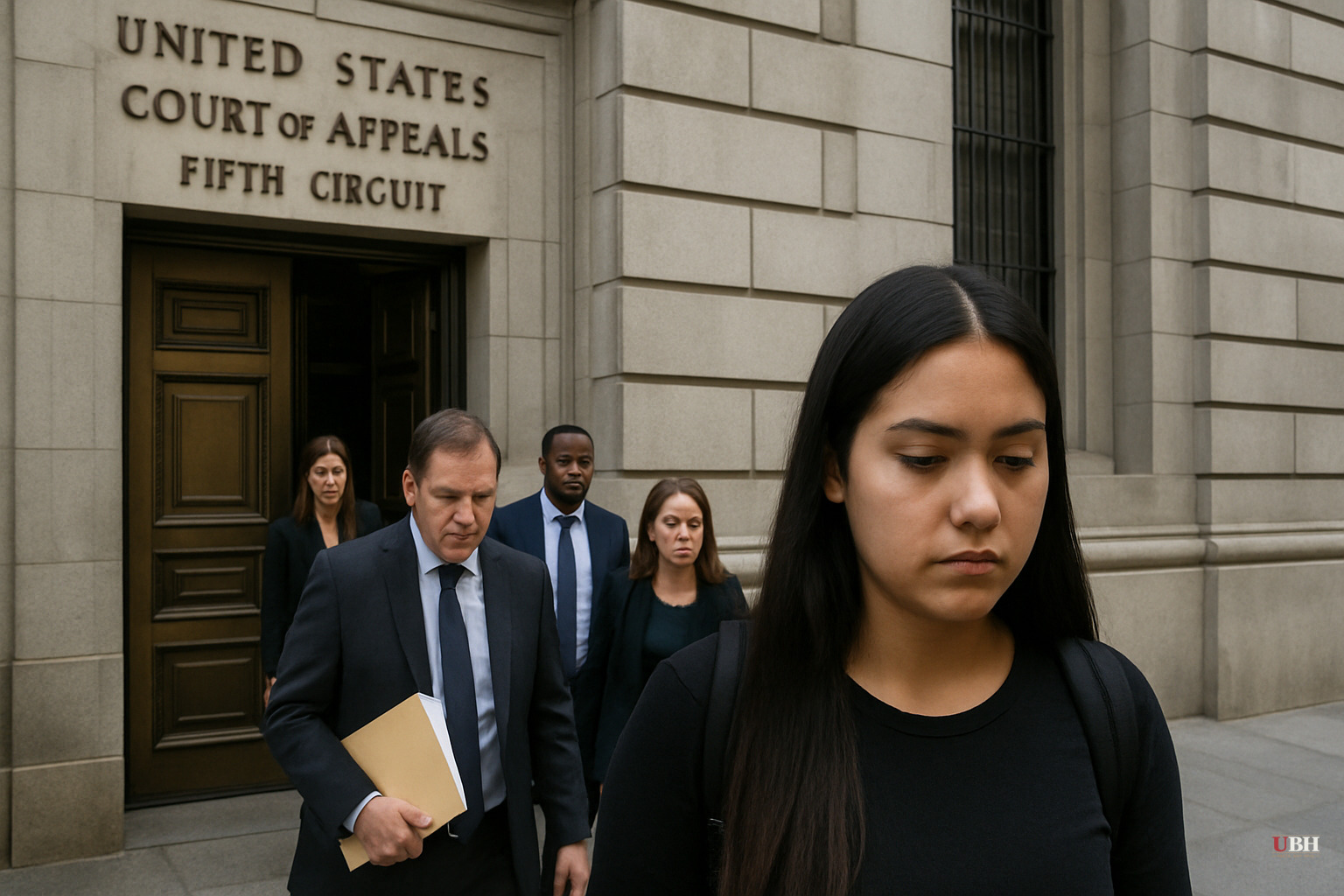
The Fifth Circuit issued a 2-1 decision Thursday, affirming a lower court's denial of intervention by advocacy groups who had tried to keep the Texas Dream Act alive. Judge Jerry Smith, a Reagan appointee, wrote the majority opinion, concluding that the groups' bid to defend the law was futile because federal statute clearly controls.
"In-state tuition is about one-tenth the amount of out-of-state tuition and represents a monetary form of assistance, not merely a hollow status," Smith wrote, according to NOTUS. That framing mattered: the majority treated in-state tuition as a concrete financial benefit, not just an administrative classification, which is why federal preemption applied.
The federal statute at issue dates to 1996. It bars states from granting undocumented immigrants higher-education benefits unless those same benefits are available to every U.S. citizen, regardless of what state they live in. Under the Texas Dream Act, qualifying undocumented Texas residents paid in-state rates while out-of-state American citizens paid substantially more. The court said that arrangement violated federal law.
How the Case Got Here
The Texas Dream Act was enacted in 2001 with bipartisan support. To qualify, a student needed to have lived in Texas for at least three years before high school graduation and signed an affidavit pledging to pursue lawful immigration status. Approximately 73,000 undocumented students were enrolled in Texas higher education as of a 2025 report from the Higher Ed Immigration Portal.
The case moved quickly after the Trump administration sued Texas in June 2025. Texas Attorney General Ken Paxton agreed with the Department of Justice's position and settled within six hours of the lawsuit's filing, according to NOTUS. That agreement imposed a permanent halt on in-state tuition for undocumented students.
The groups that tried to intervene — Students for Affordable Tuition, Austin Community College, La Unión del Pueblo Entero (LUPE), and University of North Texas student Oscar Silva — were represented by the ACLU of Texas, the Texas Civil Rights Project, and the Mexican American Legal Defense and Educational Fund, according to the Daily Texan. A district court denied their motion to intervene, finding the state law preempted. They appealed to the Fifth Circuit, lost.
The Dissent
Judge Irma Carrillo Ramirez, a Biden appointee, dissented on procedural and constitutional grounds. She argued the majority moved too fast and that the lower court never properly examined whether the 1996 federal statute itself violates the Tenth Amendment by commandeering state college policy. That is a legitimate constitutional question. States routinely control their own higher-education systems, and whether Congress can dictate tuition-pricing structures to state universities has not been definitively answered by the Supreme Court.
Ramirez believed that argument deserved a full hearing. The majority disagreed, finding preemption so clear that intervention was pointless regardless.
The Best Case for Supporters
Advocacy groups argue the Texas Dream Act served a practical, economy-wide function. LUPE president Tania Chavez Camacho said in a statement Thursday that education "is a human right, no matter someone's immigration status or background," and that the ruling would not stop advocacy for "equitable access to higher education for all Texans."
The substantive argument supporters would make at the Supreme Court level is the Tenth Amendment angle Ramirez flagged: the federal government has historically had limited authority to dictate how states price their own public university systems, and the 1996 statute arguably intrudes on that space without directly regulating immigration status.
The Majority's Position
Congress passed a law in 1996. Texas passed a conflicting law in 2001. Under the Supremacy Clause, federal law wins. When the state itself agreed with that reading and settled, the legal case for the program became extremely difficult to sustain through third-party intervention.
Governor Greg Abbott posted on X Thursday: "Texas and the Trump DOJ just secured another major victory for the rule of law. The Fifth Circuit upheld the END of in-state tuition for illegal immigrants in Texas."
The DOJ did not respond to a request for comment from the Daily Texan.
What Comes Next
The Fifth Circuit's jurisdiction covers Texas, Louisiana, and Mississippi. Thursday's ruling clarifies federal law across all three states, according to Texas Scorecard.
Austin Community College's Board of Trustees said in a statement it will follow the law and continue working with legal counsel to understand implications. The Daily Texan reported that the only remaining path for the advocacy groups is an appeal to the U.S. Supreme Court.
The Trump administration is pursuing similar challenges in 11 other states with comparable in-state tuition policies for undocumented students, according to NOTUS. Whether any of those cases produce a circuit split—and force the Supreme Court to weigh the Tenth Amendment question Ramirez raised—remains unresolved.
Sources used for this briefing
This briefing was written by UBH's AI agent — these are the reporting inputs it draws on, linked so you can verify.


