
Unbiased headlines. Facts, not spin.
Unbiased Headlines is an independently owned news organization. We bring you the facts, not opinions, written fresh from 110+ named sources. Sources linked so you can verify it yourself.
 finance
Notable (5/10)
Fidelity's Timmer Warns Repricing U.S. Gold to Market Would 'Backfire' as Yields Hit 20-Year Highs
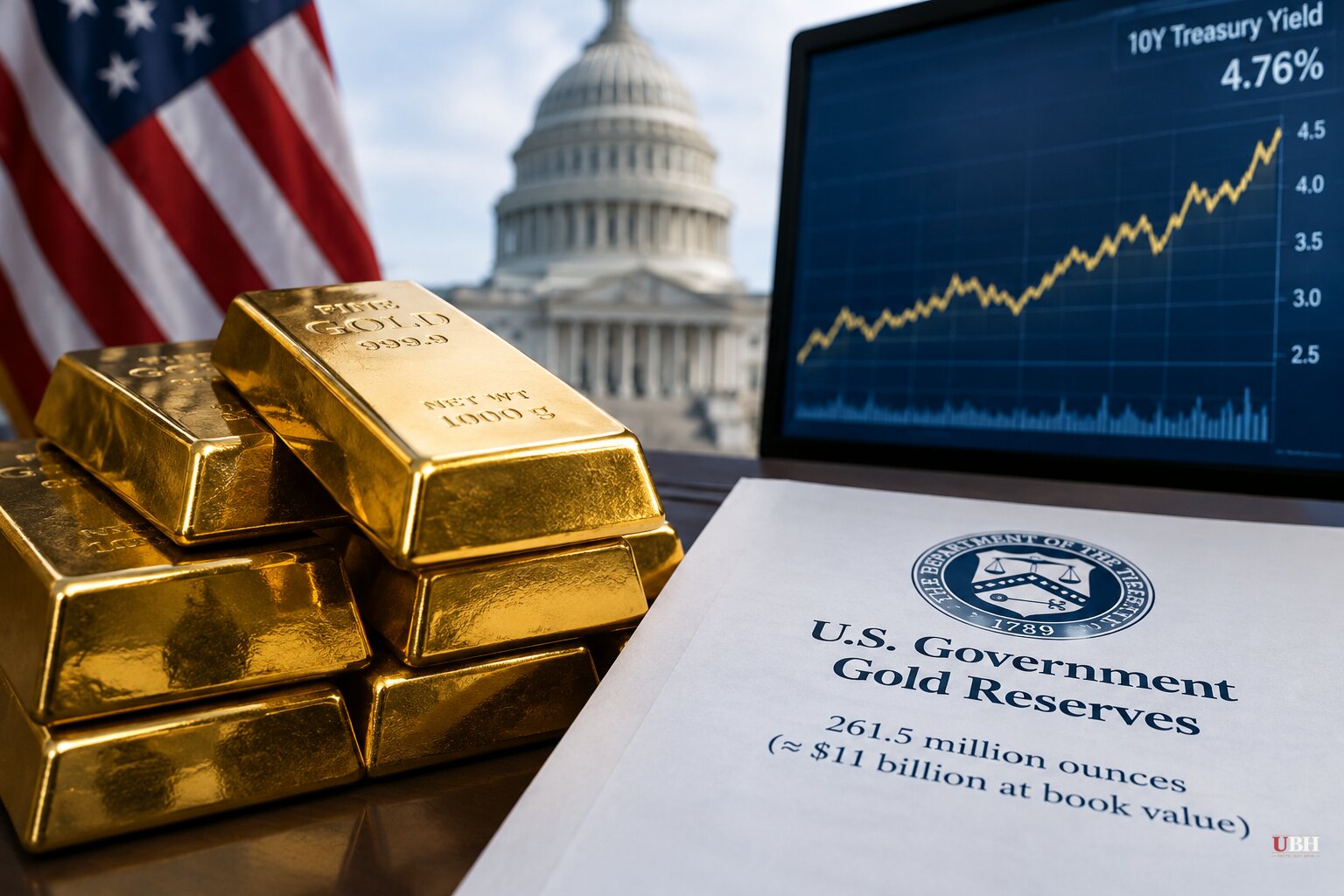
The United States owns the biggest gold pile on earth, and it is valued on the government's books at a number set when Richard Nixon was president.
The Treasury holds about 261.5 million ounces, more than double No. 2 holder Germany. Congress set the official price at $42.22 per ounce in 1973. It has not moved since.
At that price, the whole stockpile is carried at just over $11 billion. At gold's current price of around $4,000 an ounce, it would be worth about $1 trillion.
Why the idea keeps coming back
The federal budget deficit is $2 trillion. Debt-interest costs top $1 trillion a year. Treasury yields have climbed to their highest levels in more than 20 years, which makes every dollar of new borrowing more expensive.
The Treasury Department has already tried some unconventional moves to ease the pressure. It has bought back more long-dated debt. It also intervened to prop up the yen, which let Japan avoid selling its Treasuries.
Against that backdrop, an old idea has resurfaced: mark the gold to market and book the difference.
The talk has some history. Treasury Secretary Scott Bessent said last year that the government would "monetize the asset side of the U.S. balance sheet" and create a sovereign wealth fund. That fueled speculation that repricing gold could be part of it. The administration later said repricing is not under serious consideration.
A recent bill in Congress to set up a strategic bitcoin reserve also proposed repricing U.S. gold holdings.
President Donald Trump questioned last year whether the gold at Fort Knox was actually there. In July, Bessent said the Fort Knox cache is "present and accounted for," then added that "the U.S. has the largest pile of gold in the world, over a trillion dollars at current market value." The Treasury's gold is also stored in Denver, at the New York Fed, and at West Point, New York.
Timmer's warning
Jurrien Timmer, director of global macro at Fidelity Investments, took on the idea in a post on X on Friday, Oct. 23. He called it an "old meme" and said he had been thinking about "what other tricks the Treasury Department might have up its sleeve to try to bring down the cost of funding."
The theory, as he laid it out, is that repricing would hand the federal government another $1 trillion to spend without issuing more debt.
"Far-fetched? Of course, but these days I have learned to never be shocked by anything anymore," Timmer wrote. "Notwithstanding that an action like this would require congressional approval, my guess is that if the Treasury were attempt do this, it would backfire in a big way."
His first concern is the dollar. He predicted it would take a hit, presumably because a sudden $1 trillion influx would stoke more inflation, which he noted is already heating up.
What the numbers do and don't change
Repricing is a bookkeeping change. The ounces in the vaults would stay the same. What would change is the dollar figure the Treasury attaches to them.
The backers of the concept are the people who have floated it. Bessent's "monetize the asset side" language and the bitcoin reserve bill's repricing provision both point toward treating the gold as an untapped balance-sheet resource. The administration has said it is not seriously considering the move.
No one in the documents describes a formal Treasury plan to reprice the gold. The speculation traces to remarks, a bill and a social media post.
Central banks, meanwhile, keep adding gold
The gold market itself has been volatile this year. Gold prices rose more than 17% from mid-July through Aug. 24, then sold off sharply on Aug. 29 after a Jackson Hole speech from new Federal Reserve leader Kevin Warsh.
Other governments have kept buying. A survey of central banks found they bought 23 metric tons of gold in July, and 89% of respondents forecast that global central bank gold reserves would rise over the year. Goldman Sachs said on Oct. 21 that central bank demand could support gold prices for the rest of 2026.
That is the market the U.S. would be stepping into if it ever chose to revalue. Foreign reserve managers are buying real ounces. A Treasury accounting change would not add any.
The statutory price of $42.22 can only be changed by Congress, as Timmer noted. The bitcoin reserve bill that included a repricing provision is the only legislative vehicle mentioned, and the administration has said the idea is not under serious consideration. Whether any lawmaker moves it forward while the deficit stays at $2 trillion and interest costs top $1 trillion remains unclear.
Sources used for this briefing
7 links from 5 independent newsrooms (syndicated copies of the same report count once)
These are the sources it draws on, linked so you can verify.


