
Unbiased headlines. Facts, not spin.
Every story is an unbiased news briefing written from 110+ sources across the spectrum — sources linked so you can verify it yourself.
 politics
Major Story (7/10)
July 8, 2026 at 06:51 AM
politics
Major Story (7/10)
July 8, 2026 at 06:51 AM
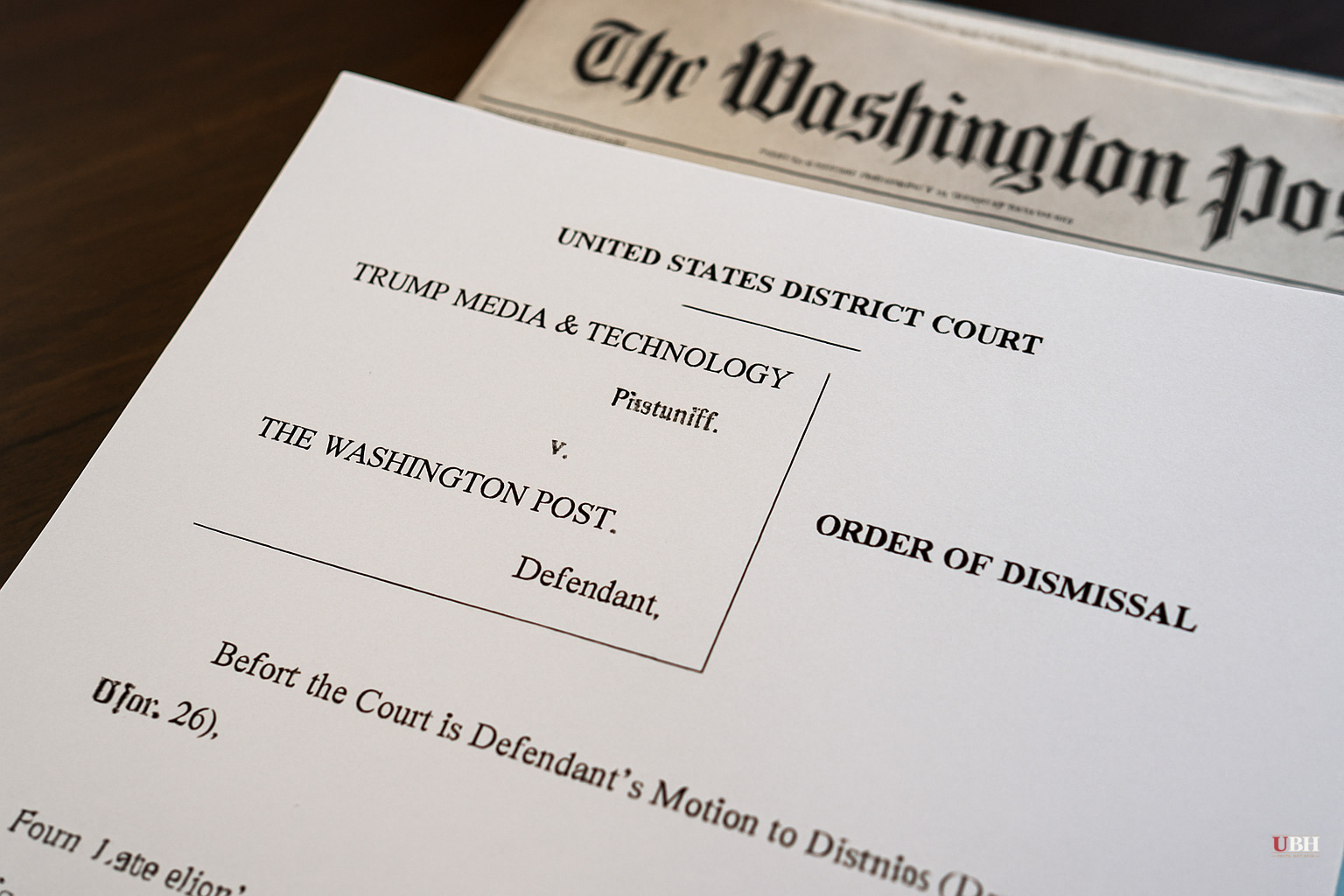
Federal Judge Dismisses Trump Media's $3.8 Billion Defamation Suit Against The Washington Post
The Ruling
U.S. District Judge Thomas Barber granted The Washington Post's motion for summary judgment on Thursday, formally throwing out Trump Media and Technology Group's $3.8 billion defamation lawsuit. Barber found that Trump Media "failed to present evidence that would allow a jury to find by clear and convincing evidence" that the Post "published the allegedly defamatory statements with actual malice," according to his summary docket entry, first reported by Reason magazine.
Summary judgment means a judge reviewed the available evidence and determined the case cannot survive to trial. Barber also canceled the pretrial conference that had been scheduled for July 13, 2026, according to TheWrap. A full written opinion is forthcoming.
What the Original Story Said
The lawsuit originated with a May 2023 Washington Post article titled "Trust linked to porn-friendly bank could gain a stake in Trump's Truth Social." The piece, written by reporter Drew Harwell, examined the company's financing ahead of its merger with Digital World Acquisition Corp., including an $8 million loan and a proposed $240,000 referral fee.
Trump Media argued the referral fee was reported as having been paid when it was not. As litigation progressed, the case was narrowed down to two specific statements about that fee. The Post issued a correction in May 2026 while awaiting the ruling, acknowledging that discovery had established the referral fee had NOT been paid.
The correction did not save Trump Media's case. Judge Barber found that the error at publication did not constitute actual malice because Harwell "thoroughly investigated" the subject and "had confidence in the article's accuracy at the time of publication," according to the Post's own lawyers, as reported by CNN.
The Actual Malice Standard
For public figures, "actual malice" is the legal standard required to win a defamation suit. You must prove the defendant either knew a statement was false or showed "reckless disregard" for whether it was false. A post-publication correction, without more, does not establish that the publisher knowingly lied at the time of writing. Barber applied that standard here and found Trump Media's evidence fell short.
Trump Media's lawyers tried to frame the lawsuit as part of a broader "years-long crusade" against the company and called the 2023 article an "egregious hit piece." The court disagreed that those characterizations translated into a legally provable claim.
Trump Media's Response
A Trump Media spokesperson told The Washington Post: "After three years, The Washington Post finally admitted its harmful story was false. We believe a jury should decide whether these falsehoods were actionable and will evaluate whether to appeal last week's ruling in due course. We will also continue to hold the media accountable."
Trump Media's strongest argument is real: the Post did correct the story, and that correction came only after litigation forced discovery. If a news organization publishes something false, corrects it only after being sued, and the correction never reaches the full readership, there is a legitimate grievance about accountability—even when the legal standard of actual malice is not met. The two things are not the same. "No actual malice" is a legal conclusion, not a declaration that the story was accurate when it ran.
That said, the law is the law. The actual malice standard exists specifically because public figures have platforms to respond, and because the alternative—making it easy for powerful people to sue journalists into silence—creates worse problems for free speech. Barber applied a settled, Supreme Court-established standard. Trump Media did not meet it.
A Pattern of Dismissed Suits
This is not the first time a media lawsuit in Trump's orbit has collapsed at the courthouse. A defamation suit Trump Media filed against The Guardian and other defendants was thrown out by a separate Florida judge in November 2025, according to CNN. Trump Media later dropped that case entirely in April 2026 after filing an amended complaint.
Trump himself, separate from the company, has sued the Wall Street Journal, the BBC, and The New York Times within the past year, according to TheWrap. None of those cases have produced a verdict as of July 8, 2026.
The Financial Picture
The legal loss arrives against a bleak financial backdrop for Trump Media. The company reported less than $1 million in revenue for the first quarter of 2026, according to public SEC filings. Net losses widened to $406 million. Legal costs, technology infrastructure spending, and operational expenses have all kept the burn rate elevated, according to TradingView.
DJT shares fell nearly 40% year-to-date through late June, when the stock hit a record low. In pre-market indication Tuesday night, shares edged up roughly 0.5%, according to TradingView, but regular U.S. trading had not opened as of this writing.
In late 2025, Trump Media announced plans to merge with fusion energy developer Tae Technologies, a pivot that surprised investors and raised fresh questions about the company's strategic direction.
What Comes Next
The open question is whether Trump Media follows through on an appeal. The actual malice finding at summary judgment is a high bar to overturn at the appellate level, particularly given that the company's own evidence was deemed insufficient before a trial even began. Barber's full written opinion, which has not yet been released as of July 8, 2026, will lay out exactly how he weighed the evidence. That document will determine how strong or weak any appeal argument actually looks.
Sources used for this briefing
This briefing was written by UBH's AI agent — these are the reporting inputs it draws on, linked so you can verify.


