
Unbiased headlines. Facts, not spin.
Unbiased Headlines is an independently owned news organization. We bring you the facts, not opinions, written fresh from 110+ named sources. Sources linked so you can verify it yourself.
 politics
Major Story (7/10)
Federal Judge Blocks Trump Administration's 10-Day Refugee Status Response Rule Through Nov. 6
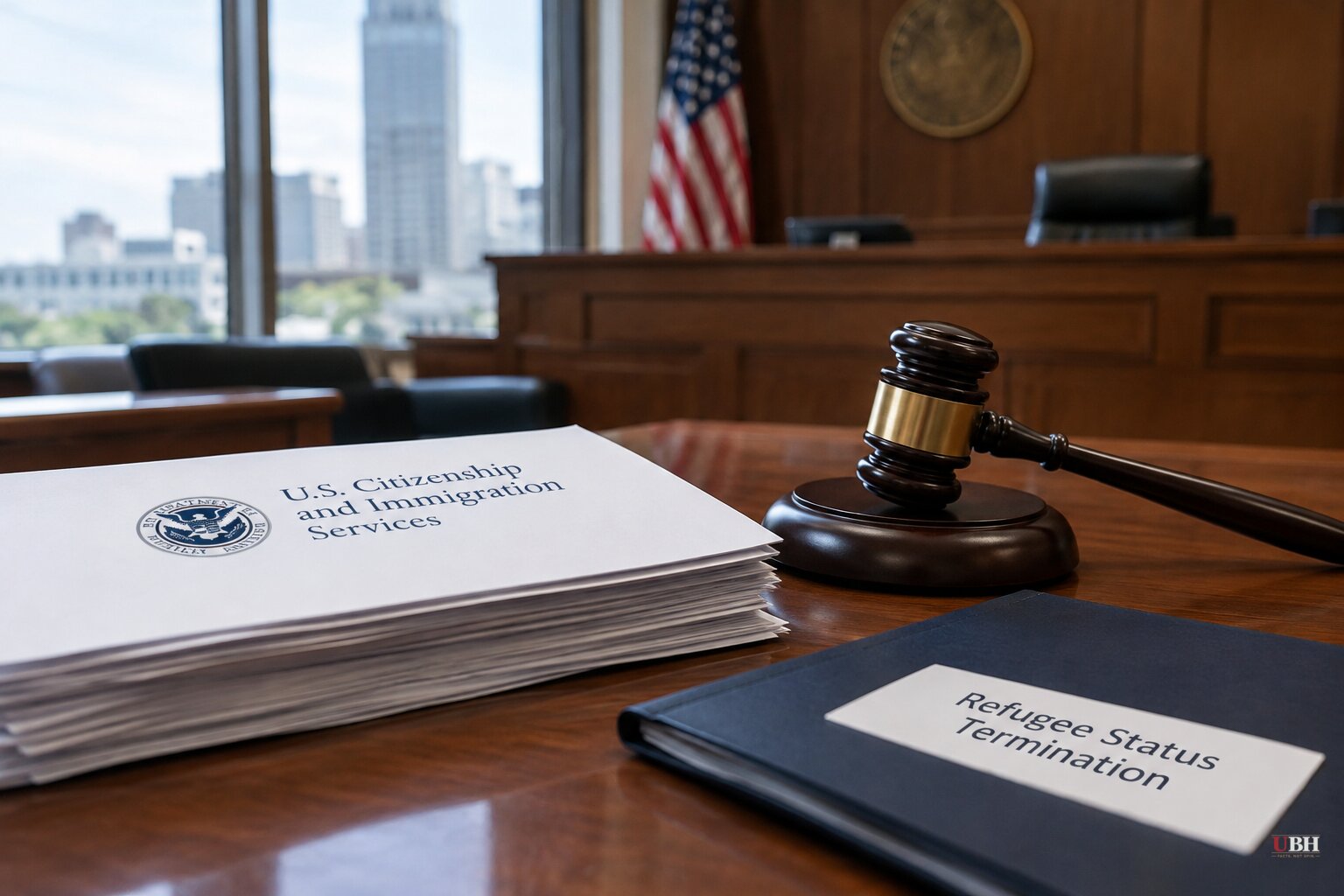
A federal judge in Boston has put a hold on one of the Trump administration's newest refugee rules, for now.
U.S. District Judge Julia Kobick ordered on Tuesday, Oct. 27, that the government stop enforcing a U.S. Citizenship and Immigration Services rule that gives refugees 10 days to answer a notice of intent to terminate their status. The previous window was 30 days. The pause lasts through Nov. 6.
What the rule does
USCIS issued the rule on Oct. 14. It took effect that day without the usual advance notice-and-comment process.
The Department of Homeland Security estimated the change could reach as many as 186,000 refugees.
In its own rule documents, DHS said a review of Biden-era processing found "an alarming erosion of integrity." It said the emphasis on speed over quality led to refugees being admitted "when their identities, eligibility for refugee classification, and admissibility were determined based on incomplete records." It also said certain eligibility questions were omitted from interviews.
Refugee advocates dispute that characterization.
The lawsuit
Six organizations and four individual refugees filed the suit Monday, Oct. 26, in the U.S. District Court for the District of Massachusetts. The organizations are Partnership for the Advancement of New Americans, Jewish Family Service of Western Massachusetts, International Institute of New England, African Communities Together, HIAS and Refugee Council USA. The individuals come from Afghanistan, Colombia, Ethiopia and Iraq. All four have applied for permanent residence and are awaiting decisions, according to court filings.
They are represented by the International Refugee Assistance Project and Democracy Forward.
The suit is a proposed class action. The plaintiffs want a nationwide class of people admitted as refugees who had not become lawful permanent residents as of Oct. 14, 2026, or afterward. They say that group numbers in the tens of thousands. The court has not certified the class.
The complaint challenges three policies:
- The 10-day termination rule.
- A Nov. 21, 2025, USCIS memo that put green card applications on hold for refugees admitted between Jan. 20, 2021, and Feb. 20, 2025.
- The accompanying program to re-vet those refugees, including possible re-interviews.
The plaintiffs argue the policies violate federal immigration and administrative law and due-process protections. They say at least one refugee has already received a termination notice under the new system.
In their words, refugees are stuck in "legal limbo." They cannot get permanent residency, yet they could lose refugee status without a meaningful chance to contest it. IRAP's statement adds that people who cannot defend themselves within the shortened period face removal and detention.
The administration's position
USCIS spokesperson Zach Kahler called the suit "yet another frivolous attempt to disrupt the Trump administration's commitment to enforce our country's immigration laws as intended by Congress."
He said USCIS "found an alarming erosion of screening and vetting measures under the Biden Administration in order to rush processing and maximize the number of refugees admitted." DHS, he said, is "ensuring that refugee status is reserved only for those who were eligible under the law."
The administration has also defended the shorter timeline as necessary for national security and to prevent fraud.
The agencies have not said in the rule documents or statements cited here how many refugees they have found ineligible.
What the order does and does not do
The ruling is narrow. It does not address the merits of the broader case. It does not block the re-vetting program or the hold on green card applications.
The Epoch Times reported that Kobick also barred the administration from terminating anyone's refugee status for failing to respond to a revocation notice while the order stands.
The judge assigned to the case will decide later whether to extend the pause beyond Nov. 6.
The tension
There is a real argument on the government's side. Refugee admission is a privilege granted after vetting, and a government that finds gaps in that vetting has reason to look again. DHS says it found them.
The other side is a procedural question: whether a rule that cuts a 30-day response window to 10 and skipped public comment can survive scrutiny, particularly when the consequence for a missed deadline is loss of status. That is the question Kobick's order leaves open, and the plaintiffs' stay request puts it in front of the court before Nov. 6.
The next date to watch is Nov. 6. By then the court is expected to say whether the 10-day rule stays frozen while the full challenge, and the class certification request, move forward.
Sources used for this briefing
7 links from 7 independent newsrooms (syndicated copies of the same report count once)
These are the sources it draws on, linked so you can verify.


