
Unbiased headlines. Facts, not spin.
Unbiased Headlines is an independently owned news organization. We bring you the facts, not opinions, written fresh from 110+ named sources. Sources linked so you can verify it yourself.
 politics
Major Story (7/10)
Event date: August 26, 2026 ·
Judge Gives Labor Department Until Dec. 30 to Replace Farmworker Wage Rule Found Illegal
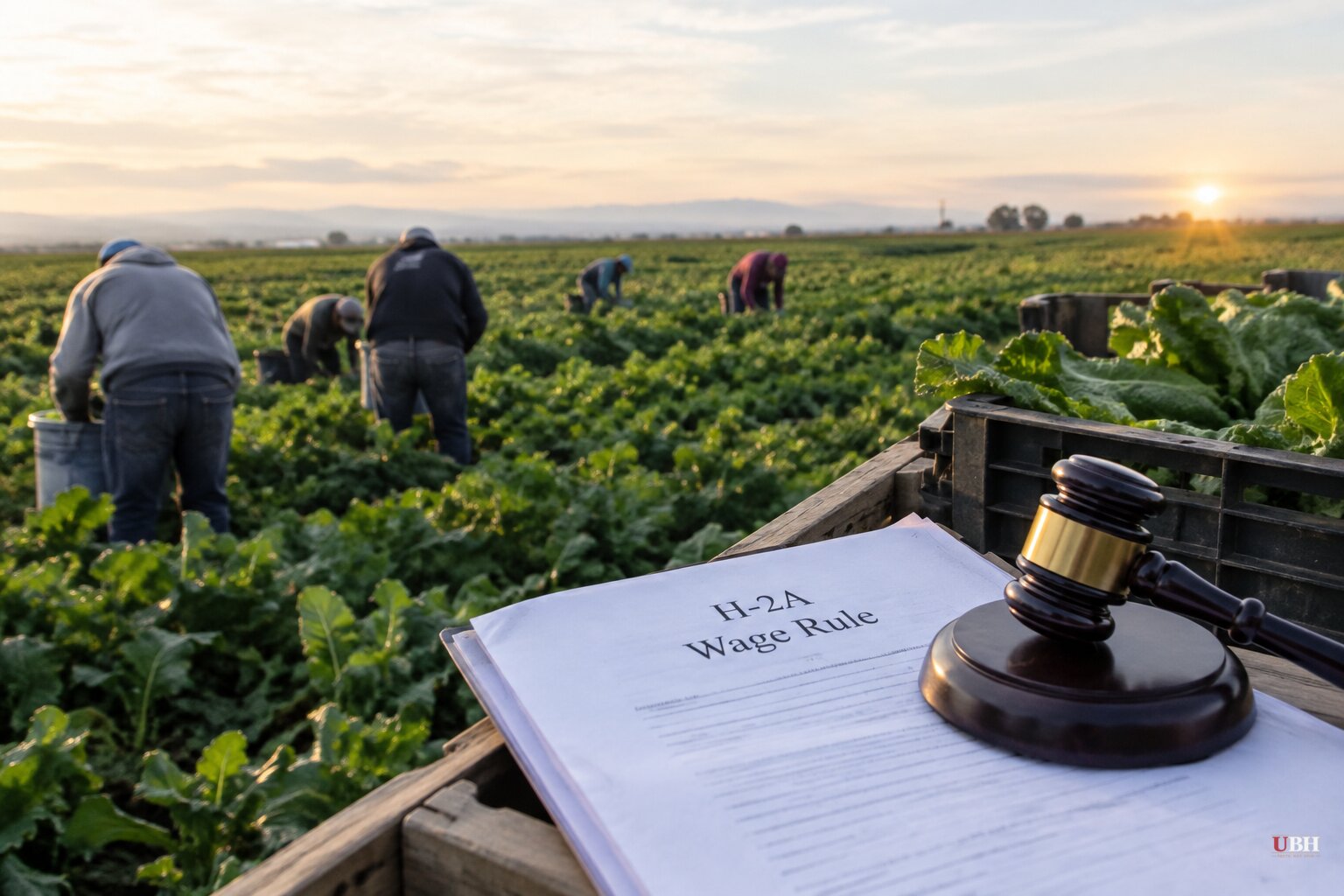
The Labor Department has until Dec. 30 to rewrite how it sets pay for roughly 400,000 seasonal farm jobs. U.S. District Judge Kirk Sherriff in Fresno ordered the deadline on Oct. 2, after ruling Aug. 26 that the administration's October 2025 wage rule is unlawful.
The court found the rule "adversely affects" U.S. workers by undercutting their wages, which federal law forbids. The rule remains in effect today, Oct. 28.
What the rule did
H-2A visas let farms hire foreign workers for seasonal jobs when they can show U.S. workers are not available. Certifications have climbed every year since 2012 and hit a record 398,258 positions in fiscal 2025.
The wage floor, called the Adverse Effect Wage Rate, exists so guest workers don't pull down pay for Americans doing the same work. For years the Labor Department set it at the average farmworker wage in each state or region, using the USDA's Farm Labor Survey.
The USDA discontinued that survey in August 2025. On Oct. 2, 2025, the Labor Department issued an interim final rule that relied on a Bureau of Labor Statistics survey of mostly nonfarm employers. It created two pay tiers. Entry-level wages were set at roughly the 17th percentile, a tier the department expected 92% of jobs to fall into. It also cut pay further to offset the housing employers must provide.
In California, the minimum fell from $19.97 an hour to the state minimum of $16.90. The United Farm Workers says the cuts ran $3 to $7 an hour. The Labor Department's own estimate is that the rule shifts about $2.46 billion a year from workers to employers.
The $2.46 billion figure comes from the government itself, not from an advocacy group.
The deadline and the back-pay question
The United Farm Workers, the UFW Foundation and 18 individual farmworkers sued shortly after the rule was issued. The August ruling required the department to notify employers by Sept. 2 that they may owe back pay from that date until a lawful rule takes effect.
Whether workers actually get back pay will be argued after the new rule is published. Nothing has been decided.
If the department misses Dec. 30, wages revert to the rates the Biden administration set, according to Sherriff's order as reported by Fortune and Capital Press.
The department had asked for up to a year to write a new methodology, according to Capital Press. In an Oct. 22 filing, it told Sherriff it is consulting with the USDA and the Department of Homeland Security. It said it still objects to the timeline but will work diligently to meet it.
The department's report noted the new scale will directly set pay for U.S. farmworkers, who must be paid the same as their foreign co-workers. It will also indirectly influence wages on farms that use no foreign labor at all.
Growers keep hiring
The uncertainty has not scared growers off. Enrique Gastelum, CEO of the Worker and Farmer Labor Association, which helps Washington farms navigate the H-2A program, said producers are still seeking foreign workers for next year. "People are still proceeding, as is," he said. "People are struggling to find workers."
That is the grower-side argument: labor is hard to find, and wage costs matter. The court has held that the answer cannot be a wage formula that undercuts American workers.
The program has a compliance record that makes the wage floor more than a technicality. A 2024 Government Accountability Office report found the Labor Department identified violations in 84% of its H-2A employer investigations between fiscal 2018 and 2023, most often over pay. In 2021, federal prosecutors in Georgia charged 24 people with running a trafficking operation that exploited dozens of H-2A workers.
Reaction and the Trump Organization
Teresa Romero, president of the United Farm Workers, said the administration "has dragged its feet, fighting to keep money out of farm workers' pockets." Erica Lomeli Corcoran, CEO of the UFW Foundation, said the administration must now issue a new, lawful rule that complies with the court's order.
Forbes reported that the Trump Organization applied for 36 H-2A workers for its Virginia winery about two months after the rule took effect. The pay rate was nearly $2 an hour below what the winery had previously offered. The rule was in force when the application was filed.
What comes next
The Labor Department now has to build a defensible replacement by Dec. 30 without the Farm Labor Survey, which the USDA discontinued. Whatever method it picks will face the same legal test the 2025 rule failed: whether it undercuts the wages of American farmworkers.
The back-pay fight comes after that, and it will decide whether growers who paid the lower rates for a year have to make up the difference.
Sources used for this briefing
5 links from 4 independent newsrooms (syndicated copies of the same report count once)
These are the sources it draws on, linked so you can verify.


