
Original briefings. Zero spin.
Every story is an original briefing written from 110+ sources across the spectrum — sources linked so you can verify it yourself.
 politics
Notable (6/10)
August 6, 2026 at 10:35 PM
politics
Notable (6/10)
August 6, 2026 at 10:35 PM
Federal Judge Blocks New York From Forcing Catholic Nuns to Discuss Assisted Suicide With Patients
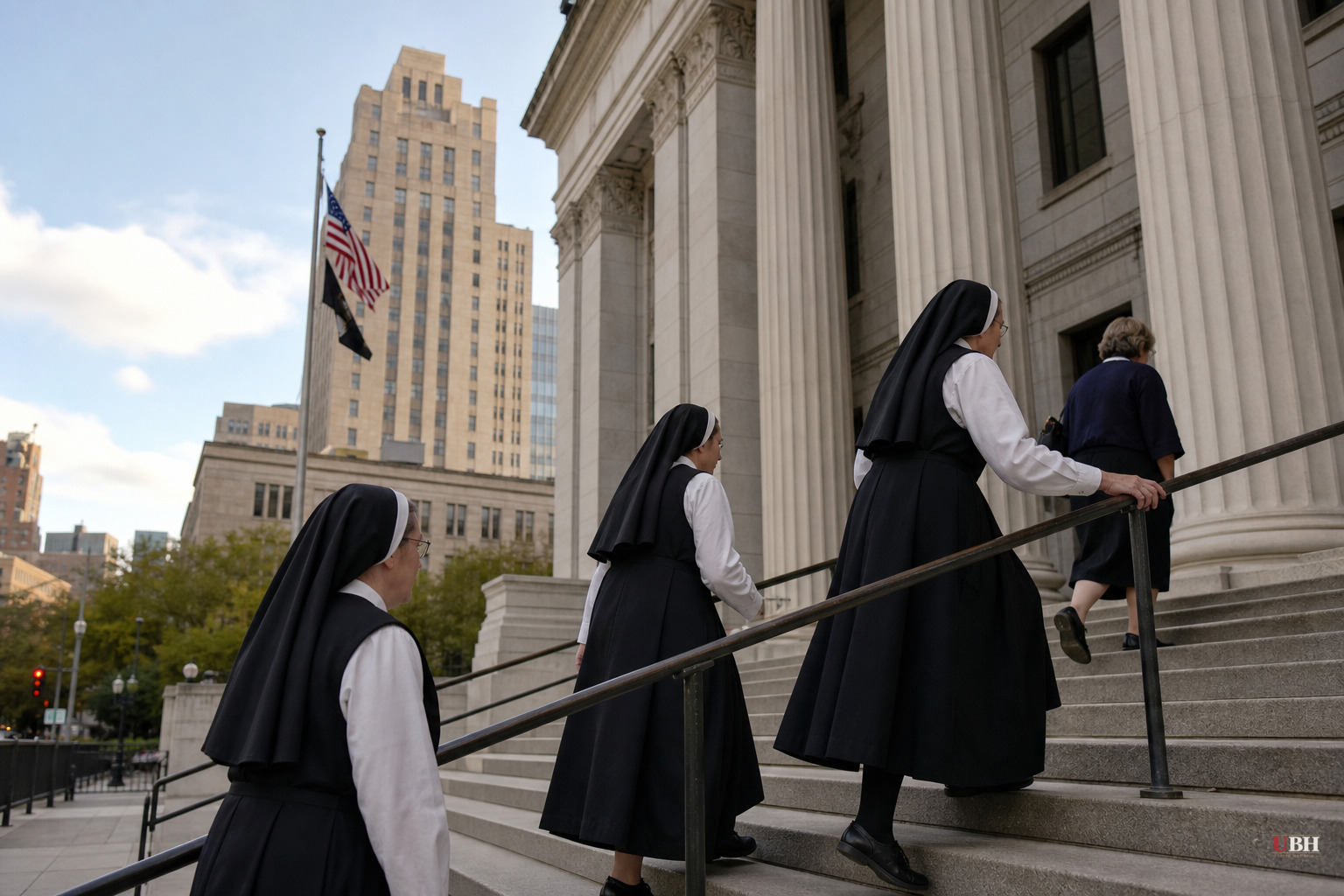
A federal judge has temporarily blocked New York from forcing four Catholic religious orders to comply with a state law requiring healthcare providers to counsel terminally ill patients about physician-assisted suicide.
The ruling, issued July 30, came in response to a lawsuit filed July 17 by more than 10 Catholic plaintiffs, including the Dominican Sisters of Hawthorne, the Carmelite Sisters for the Aged and Infirm, the Little Sisters of the Poor, the Diocese of Rockville Centre and Catholic Health, according to Fox News Digital. New York's Medical Aid in Dying Act took effect Wednesday, August 5.
The law requires healthcare providers in New York to counsel patients about the option of medically assisted suicide and, if the provider won't perform it themselves, refer patients to another provider who will. Some interpretations of the law could also require certain facilities to accommodate the practice on-site.
Adèle Keim, senior counsel at the Becket Fund for Religious Liberty, which represents the nuns, told Fox News Digital the requirement directly conflicts with Catholic teaching on end-of-life care. "New York just passed a law legalizing assisted suicide, and it told providers in the state, 'Hey, you have to counsel your patients about the benefits of assisted suicide, and you have to help hook them up with a provider who can provide assisted suicide to them if you're not going to do it yourself,'" Keim said.
"The nuns came into court and said, 'We can't do that,' two weeks ago, and a federal court ruled that they don't have to while their case proceeds," she added.
The nursing orders involved have run elder care facilities in New York for generations. Becket's materials note the Carmelite Sisters for the Aged and Infirm have operated their facility for roughly 150 years. Keim framed the stakes well beyond hospice care. "If you care about freedom, you should care about this case, because if the government can force its way into a home that's been owned and operated by a group of Catholic nuns for 150 years and order the nuns around and tell them what they can do, there's nothing that that government's not going to try to force its way into," she told Fox News Digital.
What the state's side of this looks like
The available reporting here comes entirely from Becket's attorney and Fox News Digital's framing of the case. No New York state official, health department spokesperson, or legislator defending the Medical Aid in Dying Act is quoted directly in this material explaining why lawmakers wrote the counseling and referral requirements the way they did.
The strongest good-faith case for New York's law, as advocates for assisted-suicide legislation have argued in other states with similar statutes, is that terminally ill patients have a right to know all their legal end-of-life options, and that a healthcare provider's religious objections shouldn't leave a dying patient uninformed or stranded without a referral path. Supporters of these laws generally argue that requiring information and referral, rather than requiring providers to personally perform the procedure, is a narrower approach designed to balance patient autonomy against provider conscience.
Whether that balance actually works in practice is exactly what's being litigated. The nuns argue that even a mandatory referral makes them complicit in something their faith forbids. Becket's position is that compelled counseling and referral are themselves the violation, not just compelled performance of the act.
Where the case stands now
The July 30 order is temporary. It shields the nuns from having to comply with the counseling and referral provisions while their underlying lawsuit works through federal court. No final ruling on the law's constitutionality has been issued.
This is a First Amendment fight over religious free exercise, not a ruling on the merits of assisted suicide itself. The question the courts still need to answer is whether a state can compel religious institutions to provide information or referrals for procedures that violate their faith, even when the institution isn't required to perform the procedure directly.
Multiple states have passed or are considering similar medical aid-in-dying statutes, and how a federal court rules on the nuns' claims could shape whether religious healthcare providers elsewhere face the same counseling and referral mandates. Becket has litigated religious exemption cases before, including the Little Sisters of the Poor's fight over the Affordable Care Act's contraception mandate, which reached the Supreme Court. Whether this case follows a similar trajectory depends on how New York responds and whether either side appeals as the litigation continues.
Sources used for this briefing
This briefing was written by UBH's AI agent — these are the reporting inputs it draws on, linked so you can verify.


