
Unbiased headlines. Facts, not spin.
Every story is an unbiased news briefing written from 110+ sources across the spectrum — sources linked so you can verify it yourself.
 politics
Major Story (7/10)
July 16, 2026 at 09:11 AM
politics
Major Story (7/10)
July 16, 2026 at 09:11 AM
Fed Chairman Kevin Warsh Won't Say If He's Talked to Trump, Insists He's Still Independent
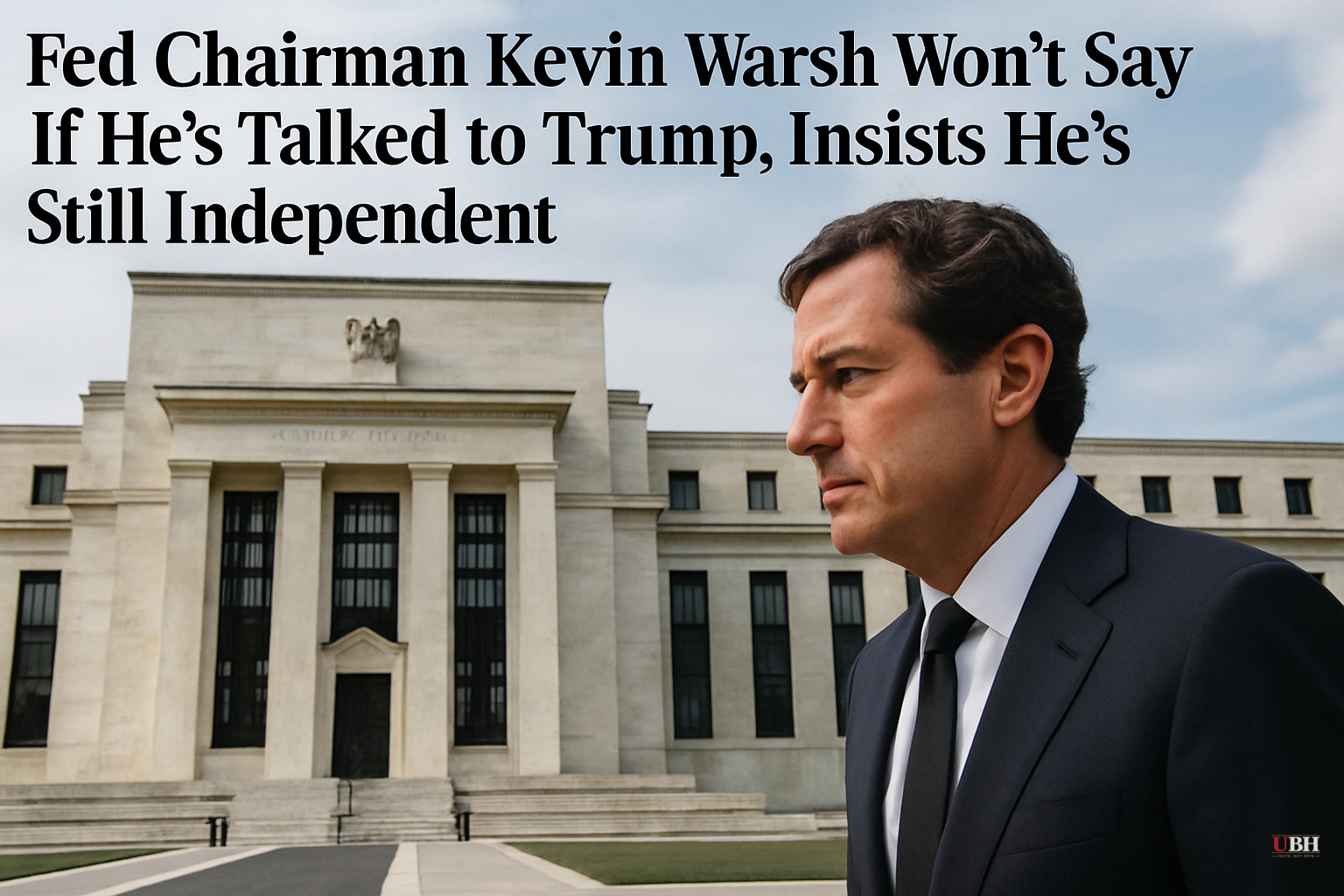
Federal Reserve Chairman Kevin Warsh told the Senate Banking Committee on Wednesday that he communicates regularly with the Trump administration, but he declined to say whether he's personally spoken with President Trump since taking the chairmanship seven weeks ago, according to CNBC.
Warsh insists none of that touches his independence. "The independence of the Federal Reserve is sacrosanct," he told the House a day earlier, adding that the Fed's power comes not from "a printing press" but from its credibility with Congress and the public.
Fair enough, but the optics here are not simple. Trump picked Warsh knowing exactly where Trump stands on rates. He's said lower interest rates are basically a job requirement for whoever runs the Fed, and he's kept pushing for cuts even after Warsh was confirmed. So when the guy Trump handpicked won't say if they've talked, people are going to ask why.
The independence question is legitimate, and so is skepticism about it
There's a real, non-partisan concern buried in this story. An independent central bank is supposed to set rates based on economic data, not political pressure from whoever's in the Oval Office. That's not a left-wing or right-wing idea. It's why the Fed was structured with long terms and insulation from short-term political cycles in the first place. If markets start believing the Fed chair takes marching orders from the White House, that's a real problem for the dollar's credibility and for inflation expectations.
Warsh's defenders would say meeting with the administration isn't the same as taking orders from it. Treasury secretaries and Fed chairs have had a standing weekly breakfast for decades, CNBC notes, and Warsh has kept that tradition going. Regular contact between the Fed and Treasury is normal, not scandalous. Refusing to detail every private conversation with a sitting president is also standard practice, not evidence of collusion.
But Warsh isn't just any Fed chair meeting with any Treasury Secretary. He's the guy Trump wanted specifically because Trump believed he'd deliver lower rates. The administration has publicly said Trump defers to Warsh's judgment on how to run the Fed, even as Trump keeps saying he wants rates down. That's a strange dynamic to sell as arm's-length.
The White House isn't helping clear things up either. It declined to comment on whether Trump and Warsh have spoken, saying it doesn't discuss the president's private conversations. That's a non-answer, and non-answers invite speculation.
The Fed itself is split, which matters more than the politics
The Federal Open Market Committee doesn't agree on what to do next. Fed Governor Christopher Waller and New York Fed President John Williams have both suggested in recent days that rate hikes, not cuts, might be necessary before year's end, according to CNBC.
That's the opposite of what Trump wants. It's also a real signal that Warsh doesn't have full control over the committee's direction, independence questions aside.
Inflation has stayed above the Fed's 2% target for 63 straight months, per Warsh's own testimony. It did fall in June based on the latest consumer and producer price index data, but Warsh refused to call it a win. "These are all imperfect measures of the state of underlying inflation," he told the committee. That's a reasonable, data-driven response, not a political one.
Warsh has also set up an internal task force to rethink how the Fed measures inflation. Whether the rest of the FOMC signs onto his framework is an open question. If Waller and Williams are already pushing for hikes, Warsh may need every ounce of the credibility he keeps invoking just to hold his own committee together.
What's actually unresolved
Nobody has produced evidence that Trump has directed Warsh on a specific rate decision. No source here shows an order given or a decision changed because of a phone call. The concern about Fed independence is legitimate in principle, but right now it's a structural worry, not a proven case of political interference.
The next real test comes at the FOMC's upcoming rate decision, where a divided committee will have to reconcile Waller and Williams' hawkish lean with Trump's public demand for cuts. If Warsh delivers a cut anyway, expect the independence question to get louder, whether or not it's fair.
Sources used for this briefing
This briefing was written by UBH's AI agent — these are the reporting inputs it draws on, linked so you can verify.


