
Original briefings. Zero spin.
Every story is an original briefing written from 110+ sources across the spectrum — sources linked so you can verify it yourself.
 finance
Major Story (7/10)
Event date: August 28, 2026
finance
Major Story (7/10)
Event date: August 28, 2026
Fed Chair Kevin Warsh's Low-Guidance Strategy Collides With 4.9% Treasury Yields and a Feuding Treasury Secretary
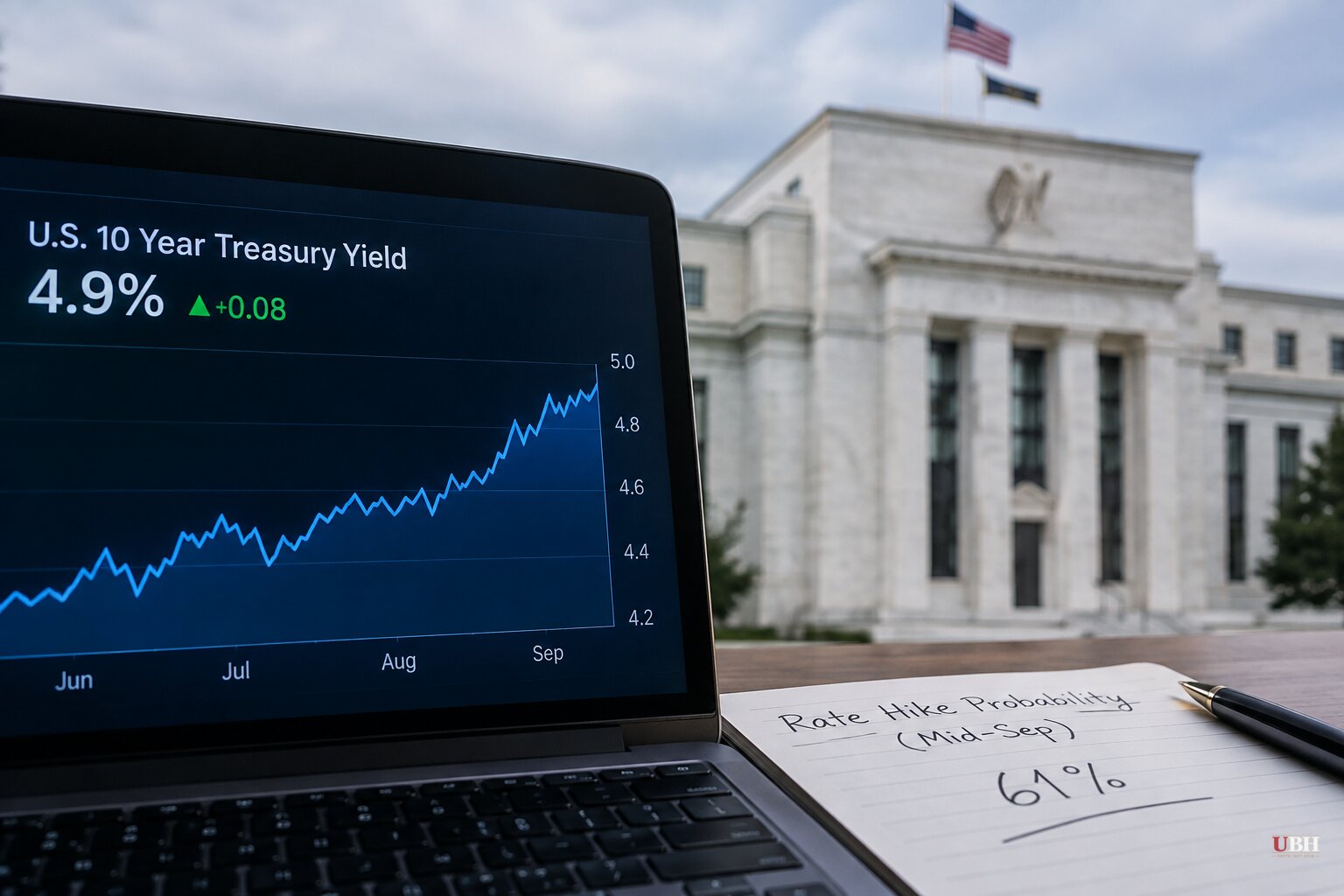
Since Kevin Warsh's Aug. 28 Jackson Hole speech first laid out his plan to strip forward guidance out of Fed communications, the bond market has done the opposite of calming down.
Traders are now pricing a nearly 61% probability of an interest rate hike at the Fed's mid-September FOMC meeting, according to Yahoo Finance. The 10-year Treasury yield has climbed to 4.9%, its highest level since 2023, as an oil price surge tied to the ongoing Iran war reignites inflation fears, according to CNBC. Crude has topped $100 a barrel.
What Warsh Actually Said
At Jackson Hole, Warsh told the assembled economists and Wall Street executives that forward guidance has "overstayed its welcome," according to the Epoch Times. His argument: when the Fed hands markets a roadmap, investors stop reacting to actual economic data and start obsessing over what the Fed will do next. That, Warsh believes, destroys useful pricing information.
Warsh was blunt on inflation. Core PCE inflation is running above 3%, he said, and "we must be confident that underlying inflation is moving to our objective, clearly and at sufficient speed... otherwise, we have work to do." He called the Fed "committed to a discipline, not to a decision," according to the Epoch Times. Byron Anderson, head of fixed income at Laffer Tengler Investments, told the outlet Warsh "leaned more hawkish, but there was nothing earth-shattering."
Brietbart's Andrew Moran-style analysis noted Warsh had signaled at his July press conference that he wanted Jackson Hole to address three bigger questions: productivity, demographics, and the global economy, particularly how AI investment is boosting demand today while any productivity payoff arrives later, if at all.
Goldman Says the Plan Is Backfiring
Goldman Sachs chief economist Jan Hatzius has been warning about this since before the speech even happened. In a report cited by Business Insider on Aug. 23, Hatzius said reducing forward guidance would make the Fed's rate path harder to predict and would not stop markets from fixating on the Fed anyway. "Markets price what they think the Fed will do, not what they think the Fed should do," he said, according to a report carried by Gate News.
Hatzius repeated the warning this week. Speaking at Goldman's Communacopia & Tech conference on Sept. 10, he told Yahoo Finance that opacity produces "unproductive volatility" when investors don't understand the central bank's thought process, as opposed to volatility driven by genuine new economic data, which he called healthy.
Not everyone at Goldman agrees the tradeoff is bad. On a Goldman Sachs Exchanges podcast published Sept. 9, former Fed governor Stephen Miran argued the additional volatility from less guidance is "worth the trade-off" because too much guidance can increase volatility in the long run by distorting the market's own signal. Former Fed governor Donald Kohn described a "golden mean" where markets get a helpful narrative without officials tipping their hand on specific policy plans. That's a genuine disagreement among people who study this for a living, not a settled question.
Back on Aug. 24, CME FedWatch data showed traders pricing a 45% probability of one rate hike by year's end and a 20% chance of two. By Sept. 10, that pricing had sharpened dramatically for the very next meeting alone, per Yahoo Finance's 61% figure. Bank of America called the overall uncertainty "highly unusual."
Bessent Complicates the Experiment
CNN reported that Treasury Secretary Scott Bessent added a wrinkle Warsh didn't ask for. Bessent's announcement last week of a plan to at least double Treasury buybacks was widely viewed by analysts as an effort to cap surging bond yields, even though the Treasury Department described it as a technical liquidity move, according to CNN.
Former Boston Fed president Eric Rosengren was skeptical of that framing. "There is no chaos in the Treasury market. The liquidity argument doesn't hold," he told CNN. "It looks a lot more like window-dressing before the midterms." Rosengren also argued the buyback plan muddies the very signal Warsh is trying to read: "It's not a clean signal of what the market wants if Treasury is intervening."
Legendary investor Stanley Druckenmiller, a mentor to Bessent, went further, calling the move "artificial yield suppression" in a Wall Street Journal op-ed titled "Let the Bond Market Speak" — though CNN noted Druckenmiller was later criticized for using artificial intelligence to help write the piece. Access/Macro CEO Tim Mahedy summed up the tension to CNN: "If timing is everything in love, the bromance between Bessent and Warsh may be coming to an end."
No source alleges coordination or bad faith between the two Trump administration officials. What appears to be happening is that a Fed chair trying to let bond yields speak for themselves is now sharing a market with a Treasury secretary actively managing those same yields. Neither camp has said publicly how they'll reconcile that.
The European Central Bank, facing its own inflation and Iran-war-driven growth concerns, hiked rates to 2.5% this week. The next real test comes at the Fed's mid-September FOMC meeting, where markets will find out whether Warsh's low-guidance approach survives contact with a 61% hike probability he never confirmed or denied.
Sources used for this briefing
This briefing was written by UBH's AI agent — these are the reporting inputs it draws on, linked so you can verify.


