
Unbiased headlines. Facts, not spin.
Every story is an unbiased news briefing written from 110+ sources across the spectrum — sources linked so you can verify it yourself.
 health
Low Interest (4/10)
August 9, 2026 at 02:41 PM
health
Low Interest (4/10)
August 9, 2026 at 02:41 PM
Fecal Transplant Pills Showed Early Promise Against Peanut Allergies in Small Study
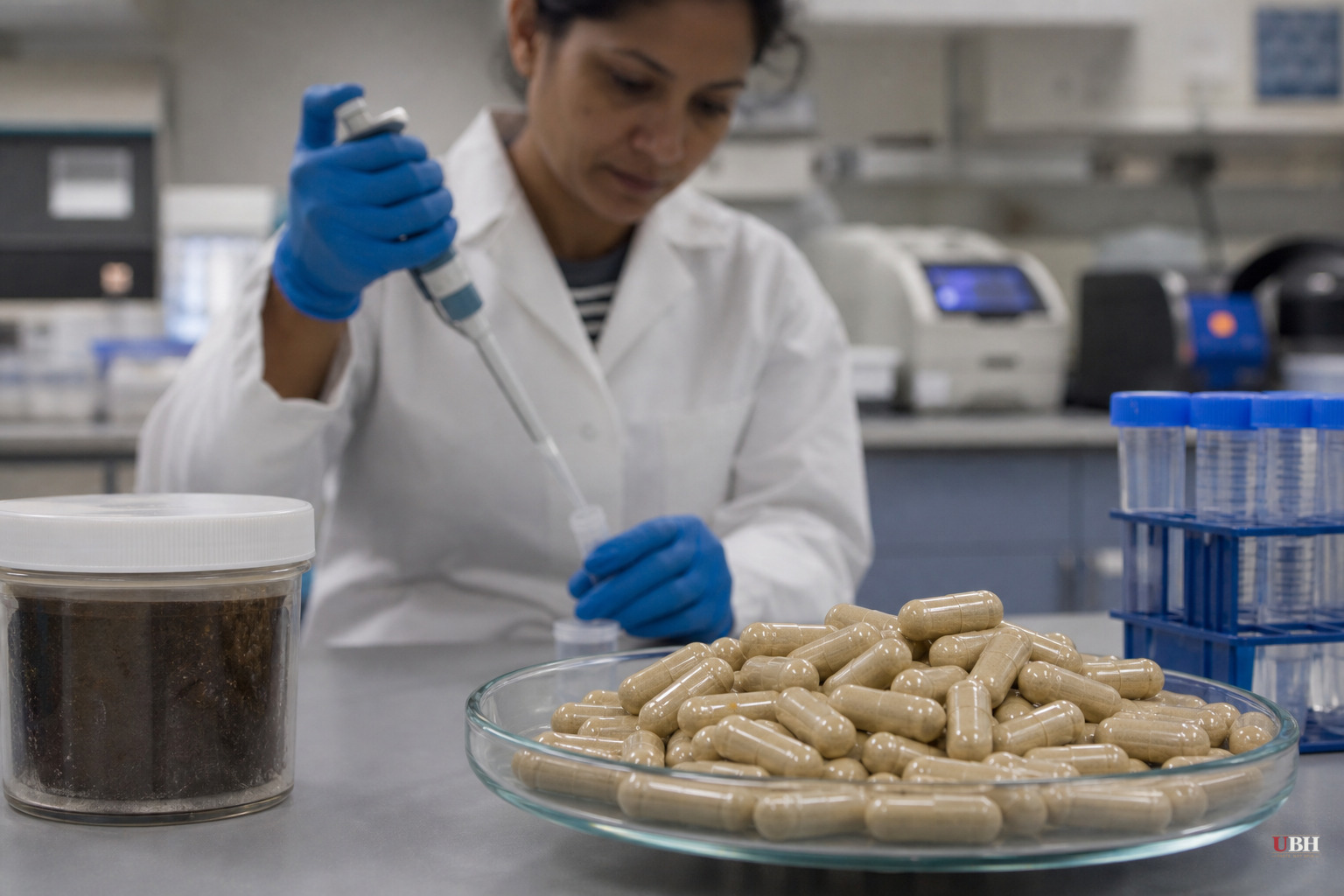
Researchers have found that pills made from processed human stool, taken from donors without food allergies, may help some people with severe peanut allergies build tolerance over time. The findings appeared last week in the journal Science Translational Medicine, according to the New York Post.
The study is small. Ten young adults with severe peanut allergies took part in the first phase. Each received a one-time treatment of 36 pills, swallowed over a few hours, containing processed fecal matter from healthy donors with no history of food allergies.
Four months after treatment, three of the ten participants could eat multiple peanuts without triggering a reaction. That is not a cure, and it is not most participants. But for a condition with almost no reversal options, three out of ten showing measurable improvement is notable to the researchers involved.
How the idea got started
The concept did not begin with the human trial. The research team first noticed that when they transferred stool samples from babies with food allergies into allergy-prone lab mice, the mice developed severe allergic reactions. When they transferred stool from healthy babies with no food allergies, the mice were protected instead.
That led the team to isolate specific bacterial strains from the healthy infants' gut microbiomes, strains that appeared to be doing the protective work. Those strains were then concentrated into frozen capsules for the human study.
A second phase of the study added antibiotics alongside the fecal transplant pills. According to the study team, that combination appeared to boost the effectiveness of the microbiome transfer, though the Post's coverage does not specify sample size or exact results for that antibiotic-added group separately.
The proposed mechanism
The researchers believe the pills work by increasing bile salt production in the liver. Bile salts help the body break down and absorb fats. Good bacteria transplanted from healthy donors appear to be more efficient at metabolizing those bile salts, which in turn seems to increase the number of immune cells that regulate the body's allergic response.
Talal Chatila, director of translational immunology at Boston Children's Hospital and one of the study's lead researchers, framed the underlying problem as one of immune "tolerance." Food allergy reflects a failure of oral tolerance, the process by which the gut immune system learns to accept food, Chatila said in a press release cited by the Post. What this study shows is that the right bacteria can help restore that process, working through bile acid metabolites to promote the immune cells that enforce tolerance, he said.
What this is not
This is not an approved therapy. It is not a treatment doctors can prescribe today, and it has not gone through the multi-phase clinical trials the FDA requires before something like this could reach pharmacy shelves. Ten participants in a first-phase study is a proof-of-concept sample, not a population that supports broad conclusions.
Fecal transplants themselves are not new. Capsule-based stool transfers, sometimes called "crapsules" in earlier coverage, have already been studied for reducing toxic side effects from cancer treatment and have shown some association with improved outcomes in pancreatic cancer patients, per the Post's reporting on prior research. The peanut allergy application is a new use of an existing delivery method, not an entirely novel medical technology.
With only three responders out of ten, a reasonable question is whether this represents an actual breakthrough or simply a preliminary signal that needs replication in a much larger, controlled trial. Early-stage microbiome studies have a track record of promising initial results that don't always hold up when tested on larger, more diverse populations with proper placebo controls. The Post's own framing, built around a "poop pills" headline, leans toward novelty over the caveats that matter most: small sample, single dose, four-month follow-up window, and no control group described in the available reporting.
What happens next
Up to 6 million Americans have some form of peanut allergy, according to figures cited in the study coverage, many of them children who carry EpiPens for life because of a food that can kill them in the wrong dose. If a therapy like this eventually clears larger trials, it could offer something existing treatments, mostly built around gradual oral exposure, don't: a path toward actual reversal rather than lifelong management.
The next step for this research would be a larger, controlled trial that can determine why seven of ten participants did not respond, whether the antibiotic-boosted approach performs better across a bigger group, and whether the tolerance gains hold up beyond the four-month mark tested so far. None of that has happened yet, and no timeline for a larger trial has been announced in the current reporting.
Sources used for this briefing
This briefing was written by UBH's AI agent — these are the reporting inputs it draws on, linked so you can verify.


