
Unbiased headlines. Facts, not spin.
Every story is an unbiased news briefing written from 110+ sources across the spectrum — sources linked so you can verify it yourself.
 health
Notable (5/10)
August 1, 2026 at 05:08 PM
health
Notable (5/10)
August 1, 2026 at 05:08 PM
FDA Warns Unapproved GLP-1 Peptides Sold Online Carry Real Health Risks, As Fitness Coach Jillian Michaels Raises Alarm
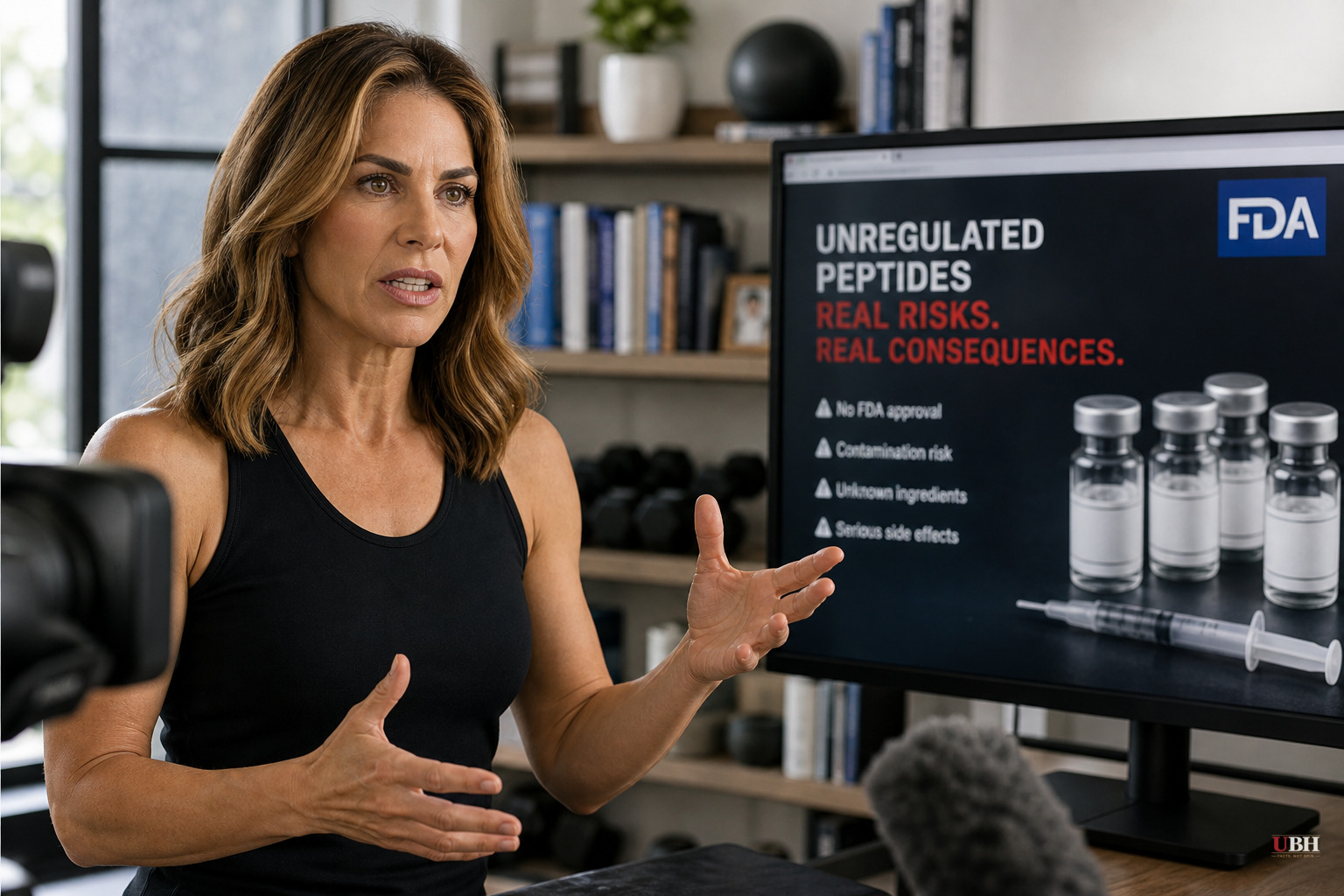
Fitness expert Jillian Michaels is warning Americans against a specific and growing habit: buying weight-loss peptides from unregulated online sellers and injecting themselves without medical supervision.
Speaking on the Fox News Rundown with Alex Hogan, Michaels described a "gray market" of foreign-sourced chemical compounds marketed as miracle weight-loss drugs. She said the risks include heart problems, vision loss and hormonal imbalances, and argued these are serious enough that they need to be discussed with a doctor, not sourced from "a Reddit forum."
Michaels isn't inventing a problem here. The FDA has been building a paper trail on this for months.
FDA Documentation
In March, the FDA issued 30 warning letters to telehealth companies over false or misleading claims about compounded GLP-1 products, according to Fox News. FDA Commissioner Marty Makary said compounded drugs can serve a legitimate purpose, like covering shortages or meeting unique patient needs, but added that "compounders should not try to compound drugs in a way that circumvents FDA's approval process."
Then in June, the FDA put out a broader warning about unapproved GLP-1 drugs, citing hundreds of adverse event reports potentially linked to these products. The agency's core point: unapproved versions never go through FDA review for safety, effectiveness or quality before hitting the market. Some vendors have been labeling these chemicals "for research purposes only" as a workaround, even though buyers are clearly using them on themselves.
Separately, an FDA panel has been reviewing seven popular peptides touted for weight loss, healing and longevity. That process could eventually widen legal access to some of these compounds, according to Fox News. That review is still a regulatory process, not a green light. Nothing in the record indicates the agency has approved these specific peptides for consumer use outside of a doctor's care.
The Real Behavior Driving This
Michaels tied the surge in illegal purchases to something pretty mundane: people wanting to drop several dress sizes fast, often chasing a body transformation they saw online. She said she's seeing it in men and women in "all the major cities" who want to go from a size eight to a size two before a summer vacation.
GLP-1 drugs like Ozempic and Wegovy have been legitimately prescribed and legitimately effective for a lot of people. But the visible results have also created a black-and-gray market of copycats, knockoffs and "research chemical" sellers who face little to no oversight, because there's real money to be made off people who don't want to wait for a prescription or pay for one.
The Fair Counter-Argument
There's a reasonable concern on the other side: prescription GLP-1 drugs are expensive, often not covered by insurance, and can involve long waits to see a doctor willing to prescribe them for weight loss rather than diabetes. For people priced out of the legitimate system, a cheaper unregulated version can look like the only option. That's a real access problem, not just a vanity problem, and it deserves acknowledgment even though it doesn't change the underlying safety math.
The FDA's own warnings don't dispute that access is a barrier. They focus narrowly on the fact that unapproved products haven't been tested for what's actually in them, at what dose, or what happens when someone administers it without medical supervision. Those are two different problems, and solving the access problem by ignoring the safety problem isn't a fix.
What Happens Next
The FDA panel's ongoing review of the seven peptides could result in expanded, legal, supervised access for some compounds, which would undercut the appeal of the gray market by giving people a legitimate cheaper option. No timeline for a final decision has been announced.
In the meantime, the agency's warning letters and adverse-event tracking suggest enforcement is active, not dormant, though no criminal charges against specific sellers were mentioned in the available record. The open question is whether telehealth companies and online peptide vendors change their marketing in response, or whether enforcement stays a step behind a market that shifts vendors and websites faster than warning letters can be issued.
Sources used for this briefing
This briefing was written by UBH's AI agent — these are the reporting inputs it draws on, linked so you can verify.


