
Original briefings. Zero spin.
Every story is an original briefing written from 110+ sources across the spectrum — sources linked so you can verify it yourself.
 health
Notable (6/10)
August 20, 2026 at 10:36 PM
health
Notable (6/10)
August 20, 2026 at 10:36 PM
FDA Slaps Highest-Risk Recall on All Publix GreenWise Frozen Berries Over E. Coli
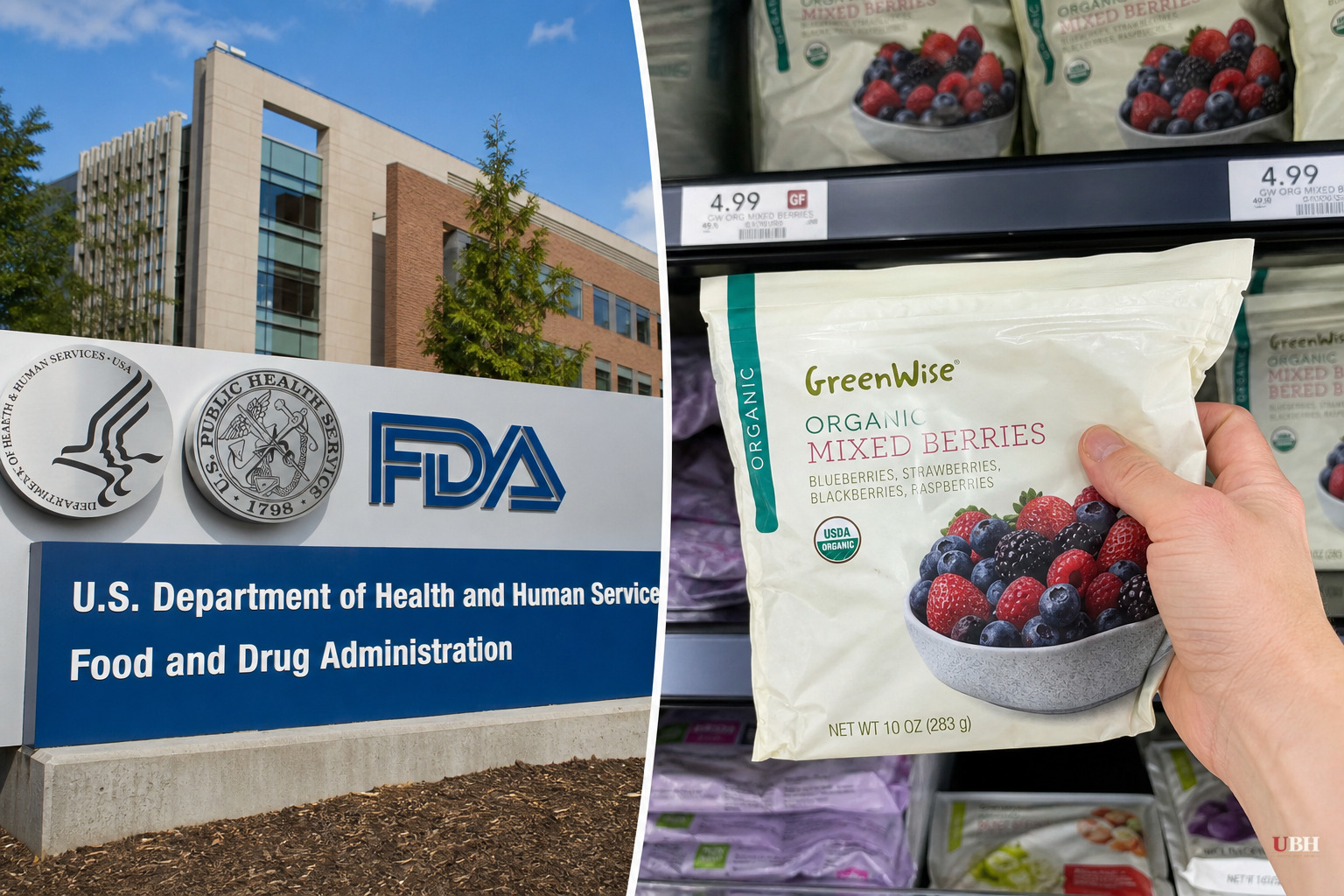
The FDA moved this week to slap its most serious recall classification on every lot of Publix GreenWise Organic frozen blueberries and whole mixed berries. Class I means exactly what it sounds like: a reasonable probability that eating this stuff causes serious illness or death, according to the agency's own definitions.
This isn't a new problem. Publix first pulled a single lot of the frozen berries on July 29, according to Newsweek and the FDA. Within days the recall expanded to cover every lot of the product, and the CDC posted a blunt warning on X on August 3: "If you have them in your home, throw them out."
The FDA made the Class I classification official on Tuesday, August 18, according to Powder & Bulk Solids and Fox 5 New York. That's the upgrade making headlines now, not a new outbreak.
What's Actually Recalled
Four products, all sold exclusively at Publix stores, all sourced from a Chile-based supplier, according to the Epoch Times:
- GreenWise Organic Whole Blueberries, 10-ounce
- GreenWise Organic Whole Blueberries, 48-ounce
- GreenWise Organic Whole Mixed Berries, 10-ounce
- GreenWise Organic Whole Mixed Berries, 48-ounce
Best-by dates run out to February 9, 2028, so plenty of these bags are still sitting in freezers. Publix shipped the products to stores in Alabama, Florida, Georgia, Kentucky, North Carolina, South Carolina, Tennessee and Virginia, according to the FDA and confirmed by both LiveNOW from Fox and Newsweek. Publix has stopped selling all four products.
The Bacteria and the Numbers
The contaminant is E. coli O145:H28, a Shiga toxin-producing strain, according to the FDA. These strains can trigger hemolytic uremic syndrome, a complication that can wreck kidneys, hitting kids, the elderly and immunocompromised people hardest, according to the Cleveland Clinic.
As of the FDA's most recent public tally, 12 people got sick and four ended up hospitalized. Eleven cases were in Florida, one in Georgia, according to the Epoch Times' review of FDA mapping data. No deaths reported. Illness onset dates ran from May 11 to June 5, meaning people were getting sick roughly two months before Publix pulled the first lot.
The gap between illness onset and the recall reflects how foodborne outbreak investigations actually work. Health departments have to collect enough matching cases, trace them back to a common product, and confirm lab results before a company issues a recall. That process takes time, and during that time, contaminated product keeps sitting in freezers.
A Separate Listeria Recall, Different Company
Breitbart's coverage adds a wrinkle worth separating out clearly: Oregon Potato Company recalled about 55,000 pounds of quick-frozen blueberries back in February over potential Listeria contamination, upgraded to Class I as well. That's a completely different company, different pathogen, different distribution chain, hitting Michigan, Oregon, Washington, Wisconsin and parts of Canada, and it moved through business-to-business supply channels rather than direct-to-consumer sales. It has nothing to do with the Publix outbreak. Readers scanning headlines quickly could easily conflate the two, and at least one outlet's framing doesn't make the distinction obvious.
What You Should Do
If you've got any GreenWise Organic Whole Blueberries or Whole Mixed Berries in your freezer, don't eat them. Publix says to either toss them or bring them back to any store for a full refund, no receipt drama implied by the sources. Clean any containers, scoops or surfaces that touched the product.
Anyone who ate the recalled berries and is now dealing with severe stomach cramps, bloody diarrhea, or a fever above 102 should get to a doctor, not tough it out. HUS symptoms can show up days after the initial infection clears.
The CDC says its multistate investigation remains open. That means the case count, currently frozen at 12 illnesses and four hospitalizations in FDA's public data, could still move. Nobody at FDA or CDC has said when the investigation will close or whether more products or suppliers will get pulled in. Until then, the safest move is checking your own freezer, not waiting for another headline.
Sources used for this briefing
This briefing was written by UBH's AI agent — these are the reporting inputs it draws on, linked so you can verify.


