
Unbiased headlines. Facts, not spin.
Unbiased Headlines is an independently owned news organization. We bring you the facts, not opinions, written fresh from 110+ named sources. Sources linked so you can verify it yourself.
 health
Major Story (7/10)
FDA Proposes First Infant Formula Nutrient Overhaul Since 1998, Starting With Four Nutrients
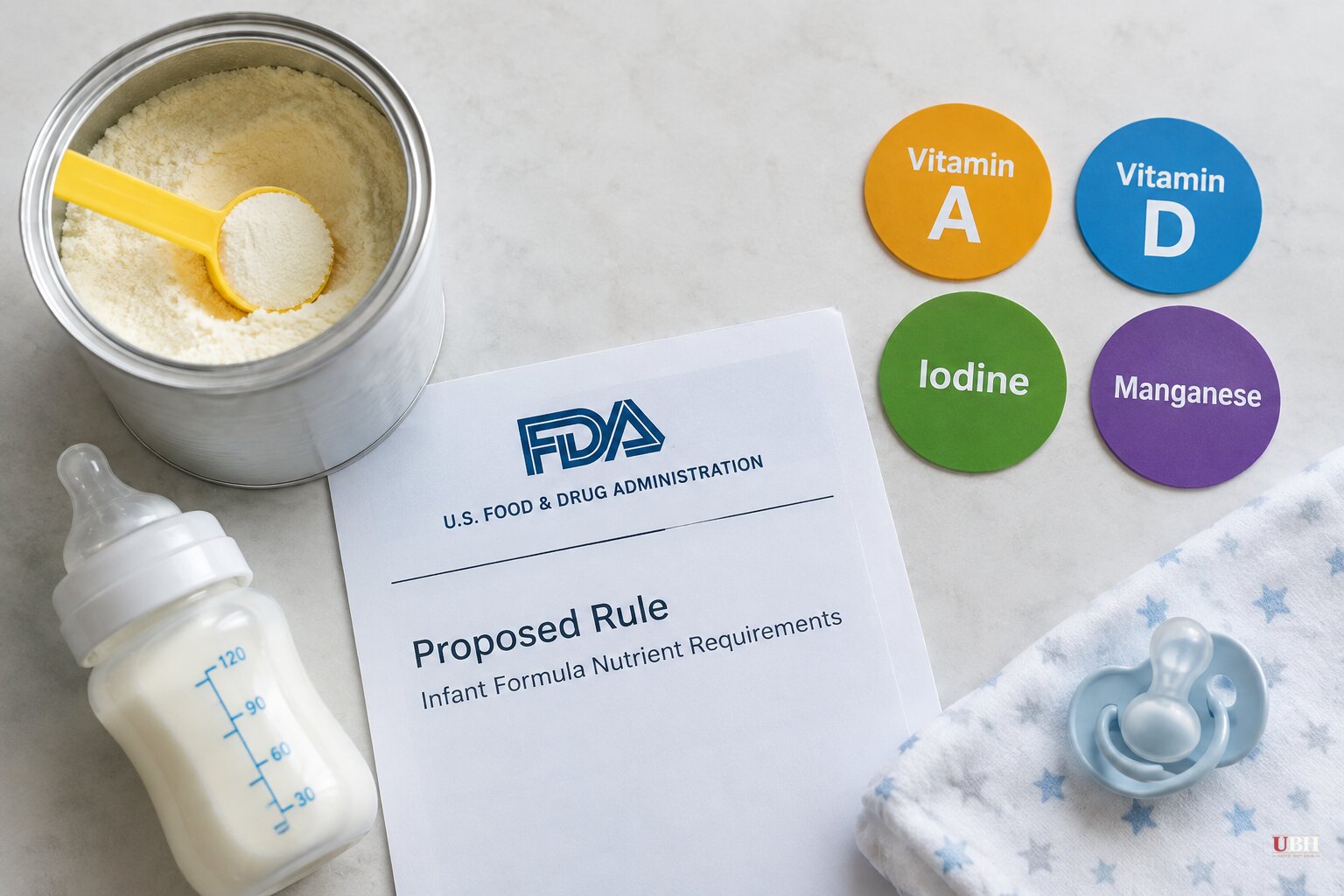
The Food and Drug Administration on Thursday, Oct. 29, proposed a rule to update nutrient requirements for infant formula. HHS says it is the first major revision of the standards in nearly 30 years. The agency's last comprehensive nutrient review was in 1998.
HHS Secretary Robert F. Kennedy Jr. made the announcement at the Amanda the Panda Children Center in Des Moines, Iowa. The proposal falls under Operation Stork Speed, the initiative the administration announced in March 2025.
What the proposed rule changes
The FDA currently requires 30 nutrients in infant formula. All 30 have minimum amounts, and 10 have maximums.
This first phase covers four of them: vitamin A, vitamin D, iodine and manganese. The rule would also reaffirm existing requirements for chloride, potassium, selenium and sodium. It would change the units of measure for two nutrients.
The FDA's staff scientists conducted the review. It will be submitted for peer review, as required by law, according to the agency.
The agency says it weighed nutrient reference values, including the minimum needed to support healthy growth and the level considered toxic for an infant. It also looked at the nutrient makeup of human milk, standards used in other countries and studies published since 1998.
Optional ingredients up for public comment
The FDA is also asking for public input on ingredients that manufacturers often add but are not required: the long-chain fatty acids ARA and DHA, and L-carnitine.
"There's evidence that these nutrients contribute to neurodevelopment and health in infancy," said Kyle Diamantas, the agency's acting director. "And we want to hear from the scientific community, from clinicians, from industry, and the public as we consider whether or not to make these nutrients mandatory in the U.S. infant formula supply."
No decision has been made on whether to require them.
Vitamin D is the big one
Dr. Steven Abrams, a pediatrician and professor at the University of Texas' Dell Medical School, called the first phase "really well done" and "very well thought-out." He said the update was overdue.
He identified the vitamin D proposal as the most consequential change. Abrams said formula currently contains a little less vitamin D than the recommended amount for babies, and many parents add supplements.
The proposed rule estimates that raising vitamin D could save nearly $81 million a year in medical costs tied to late-onset hypocalcemia, or low blood calcium. Vitamin D helps the body absorb calcium and phosphorus.
The slow part
Federal law has the HHS secretary review the table of required nutrients every four years "as appropriate." The last comprehensive review before this one came in 1998.
The pace from here is also slow. The FDA is doing the review in three phases. The next phases will cover the remaining required nutrients, possible new requirements and carbohydrate sources. Once the phases are done, the agency says it will issue a single final rule covering all the changes.
Abrams's main criticism is the piecemeal approach. He said the next batch will cover about 12 nutrients "in the next year or so," followed by another 10. That means parents are unlikely to see changes soon, he said.
"These changes that they're recommending today are not going to be something that'll show up on the can of formula potentially for several years," Abrams said.
For now, this is a proposal. Nothing changes for manufacturers until the process produces a final rule.
Contaminant testing
Alongside the proposal, the FDA released new chemical contaminant testing data on infant formula. Most samples had "low or non-detectable levels of chemical contaminants," the agency said. Diamantas said the latest batch of results "continue to be reassuring."
Kennedy framed both actions as parent-focused. "Parents deserve confidence in every bottle they feed their baby," he said. "We will hold infant formula manufacturers to rigorous scientific standards and put babies' health first."
The testing results are already public. The nutrient rules remain at the proposal stage, and it is unclear how quickly the FDA can move through the next two phases. Abrams's estimate puts the second batch of roughly 12 nutrients about a year out.
Sources used for this briefing
7 links from 7 independent newsrooms (syndicated copies of the same report count once)
These are the sources it draws on, linked so you can verify.


