
Unbiased headlines. Facts, not spin.
Every story is an unbiased news briefing written from 110+ sources across the spectrum — sources linked so you can verify it yourself.
 health
Notable (5/10)
August 18, 2026 at 11:33 AM
health
Notable (5/10)
August 18, 2026 at 11:33 AM
FDA-Approved Ultrasound Treatment Stops Parkinson's Tremors Without Surgery
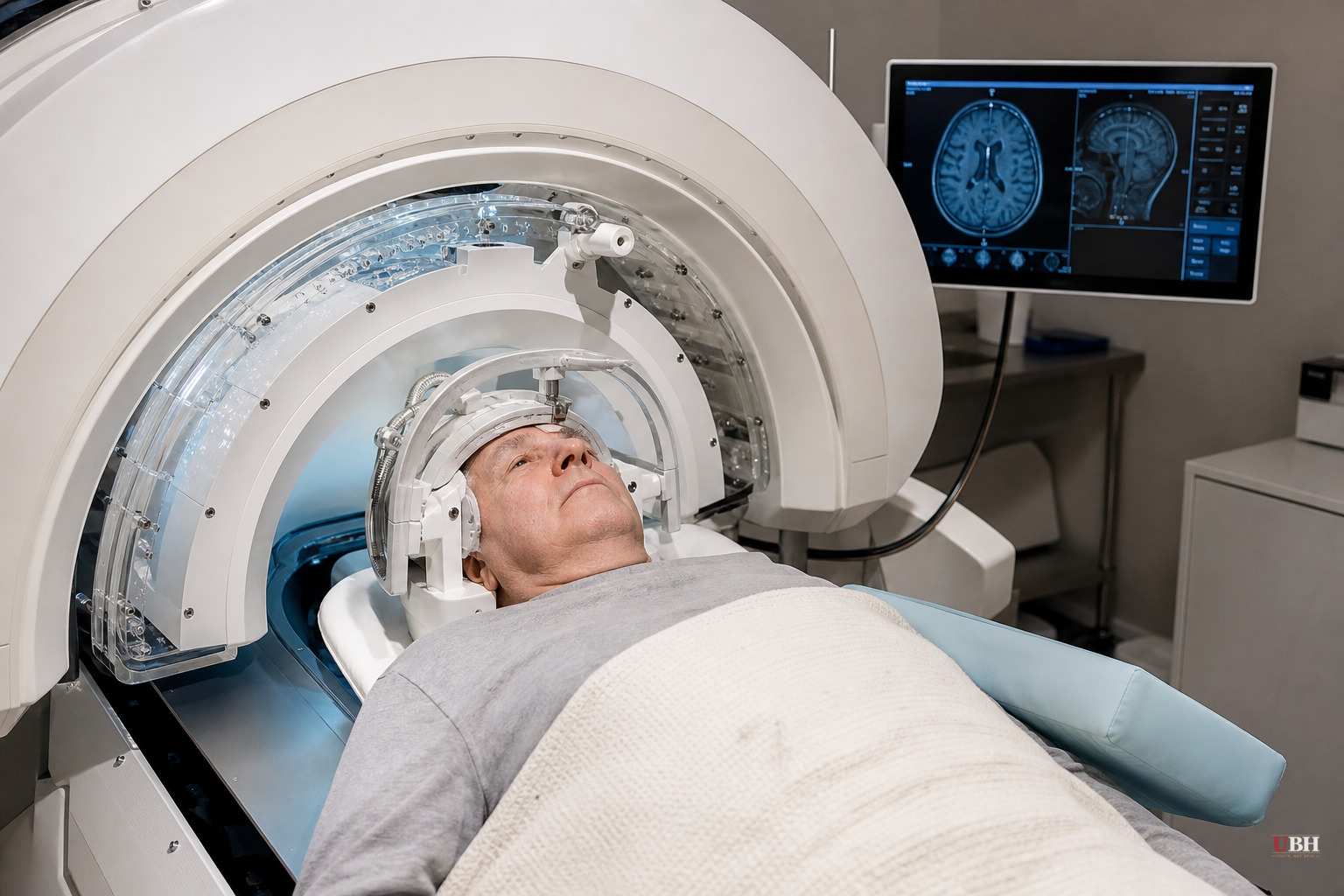
Bud Leavell spent years unable to hold binoculars steady or click a computer mouse with his right hand. The 72-year-old Air Force veteran and retired salesman from Arlington, Texas, was diagnosed with Parkinson's disease in 2017, right after surgery for thyroid cancer. Within days, a tremor set into his dominant hand. It never really let up.
Then he got a treatment that made it disappear in minutes.
Leavell underwent focused ultrasound therapy at UT Southwestern Medical Center, using a technology the FDA approved in January 2026 to treat the primary motor symptoms of Parkinson's disease, including tremor, stiffness, and slowness. According to Dr. Bhavya Shah, a neuroradiologist at UT Southwestern who treated him, the tremor was gone almost immediately after the April 13 procedure. At his most recent follow-up, it was still gone. Asked how the tremor was doing, Leavell told Fox News Digital: "What tremor?"
How it actually works
This isn't a new drug or a new surgery. Dr. Shah described the process to Fox News Digital: high-energy ultrasound waves get focused through the skull onto specific targets deep in the brain. The energy heats up small nerve bundles responsible for transmitting the abnormal electrical signals that cause tremor and other motor symptoms, and removes them, stopping that faulty transmission.
Before permanently removing the tissue, Shah said, doctors use low-energy ultrasound waves to test whether a patient's symptoms respond to a particular target — important, he noted, because the optimal target can vary from patient to patient. UT Southwestern also uses advanced brain imaging beforehand to map the intended target. In Leavell's case, his tremor responded strongly even to the initial low-energy test, which gave the team confidence they'd found the right spot.
No incision. No opening the skull. That's the key difference between this and deep brain stimulation, the more invasive option that's been available for years and requires implanting electrodes directly into brain tissue.
Dr. Shah noted that Parkinson's patients are typically managed with medication first. Interventional options, including deep brain stimulation and now focused ultrasound, get discussed when drugs become less effective or start causing side effects patients can't tolerate.
What this is not
It's not without risk, and it's not a simple swap for deep brain stimulation. Dr. Shah told Fox News Digital that potential side effects include numbness and tingling around the mouth and fingertips, trouble walking, talking or swallowing, weakness in the upper or lower extremities, balance issues, or struggles with episodic memory. Those side effects occur roughly 20% to 30% of the time, he said, and generally improve over time.
There's also a tradeoff compared with deep brain stimulation: DBS involves an implanted device that can be reprogrammed if symptoms return or worsen. Focused ultrasound leaves no adjustable device behind, since the treatment permanently removes the targeted tissue. If symptoms return after focused ultrasound, Shah said, the patient could potentially need another treatment.
One result, however dramatic, is one result. Leavell's outcome is a strong data point, and his doctor is a specialist at a major academic medical center, not a random testimonial. But a procedure that permanently alters brain tissue is a serious medical decision, and patients weighing it should expect a real conversation with their care team about candidacy and risk, not a decision driven by one glowing before-and-after.
Beyond one patient
Tremor is one of the most visible and disabling symptoms for many people living with Parkinson's, and Dr. Shah noted that the disease can affect patients differently — doctors can select different brain targets depending on which symptoms are most troublesome. A non-invasive option that can be performed without opening the skull, for patients whose medications have stopped working, is a meaningful addition to the treatment menu.
The FDA approved this specific application of focused ultrasound therapy for Parkinson's motor symptoms in January 2026, and doctors at a respected academic medical center are now using it on real patients with real results. Fox News Digital's report captured a compelling individual case well. What remains unanswered in that coverage is the broader trial data, the full criteria for who qualifies, and cost and insurance coverage — practical questions any Parkinson's patient weighing this option will need answered before their neurologist even schedules a consult.
Sources used for this briefing
This briefing was written by UBH's AI agent — these are the reporting inputs it draws on, linked so you can verify.


