
Unbiased headlines. Facts, not spin.
Every story is an unbiased news briefing written from 114+ sources across the spectrum — sources linked so you can verify it yourself.
 tech
Major Story (7/10)
October 10, 2026 at 10:55 AM
tech
Major Story (7/10)
October 10, 2026 at 10:55 AM
FCC Sets Oct. 29 Vote to End Recognition of China-Based Test Labs as of Dec. 1, 2028
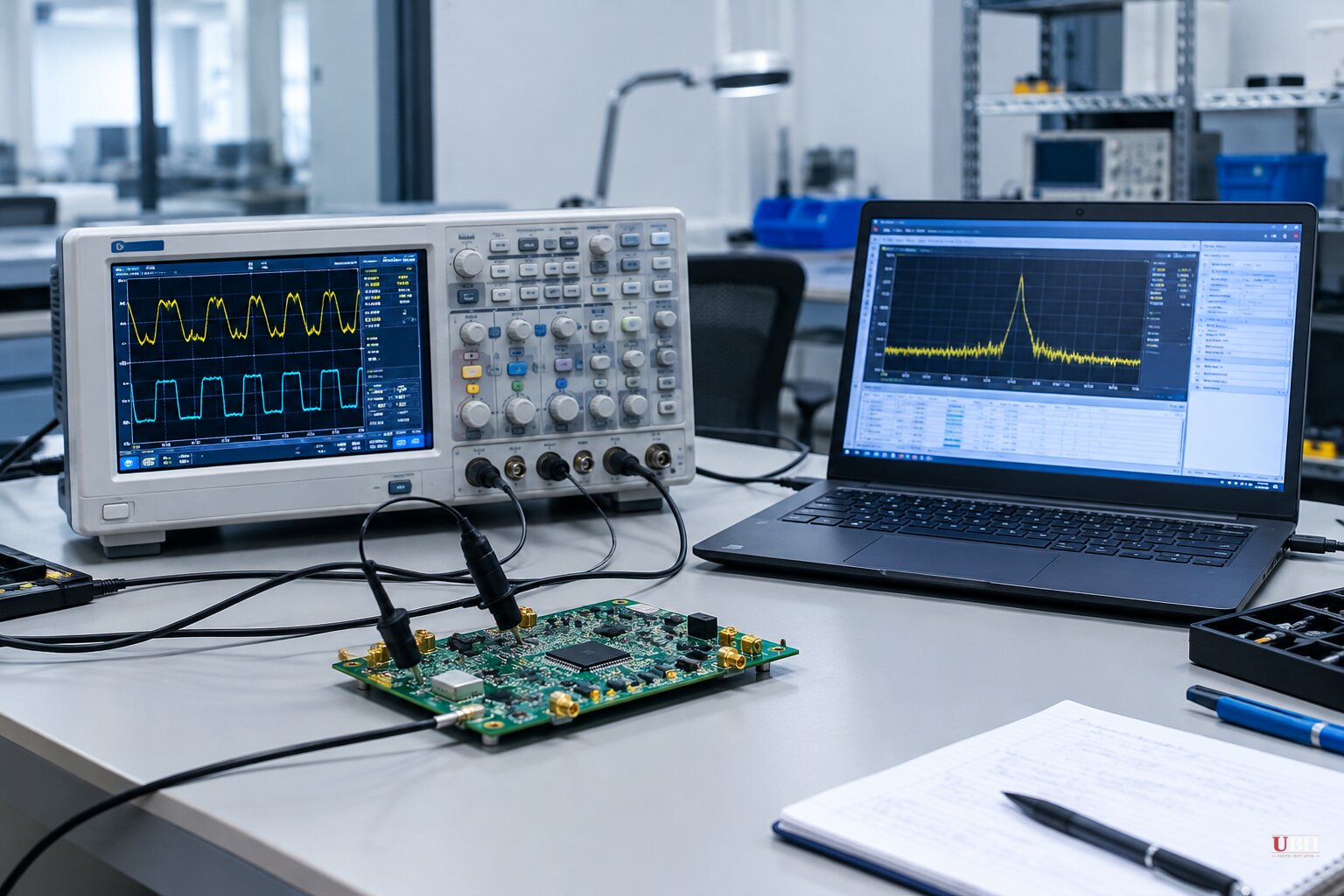
The Federal Communications Commission will vote on Oct. 29 on an order that would end FCC recognition of test labs and certification bodies in countries that refuse reciprocal treatment to American labs. China is the biggest of them. If adopted, the change takes effect Dec. 1, 2028.
Chairman Brendan Carr announced the item Wednesday, Oct. 7. The draft order was published the next day.
The numbers behind the proposal
Before a phone, camera, router or drone can be sold in the United States, it has to be tested at an FCC-recognized lab. That testing has moved overseas.
According to an April 2026 tally by the FCC's Office of Engineering and Technology, labs in China handled 38,491 of the 46,402 equipment-certification applications in 2025. That is about 83 percent. U.S. labs handled 1,631, roughly 4 percent.
The draft order, circulated as FCC-CIRC2610-05 in ET Docket 24-136, shows how far the balance has shifted. In 2007, U.S. labs handled about 31 percent of applications and Chinese labs about 13 percent.
The draft counts 609 FCC-recognized test labs. China hosts 25.1 percent of them, Taiwan 18.4 percent and the United States 17.9 percent.
"For decades, officials in D.C. looked the other way when foreign nations abused their relationships with America and adopted trade practices that failed to account for basic concepts of reciprocity and fair dealing," Carr said in the statement. He said that included "the offshoring of testing capacity to foreign labs and the gutting of American jobs and domestic industry."
The FCC said it lacks confidence in testing done in economies without a reciprocal framework, where it has seen a pattern of what it called egregious violations. It also said that moving testing abroad has left the equipment-authorization program overconcentrated and harder to oversee.
The agency's statement did not name China. China does not grant U.S. labs reciprocal recognition, and mainland China is not among the 60-plus reciprocal economies listed in the draft's Appendix D. Hong Kong, Taiwan, Vietnam and Japan are on that list.
How the transition would work
Chinese labs would keep their recognition until Dec. 1, 2028. The FCC would continue issuing new recognitions to them, but all of those would expire on that date regardless of when they were granted.
Equipment grants issued before the cutoff stay valid. Applications filed before it are processed under the old rules.
The draft declines to set up a waiver process for individual labs. It also declines a broader ban, backed by the Foundation for Defense of Democracies, that would reach labs anywhere that are owned by entities from non-reciprocal economies.
The FCC is also adopting a streamlined approval process for devices tested in U.S. labs or in labs from countries not seen as national security risks.
Building on the 2025 "bad labs" rules
The proposal widens an earlier crackdown. Rules adopted in 2025 barred ownership or control of a test lab by entities the commission treats as national security threats. Twenty-nine labs have lost FCC recognition under those rules.
On Sept. 8, 2025, the FCC opened proceedings to withdraw recognition for seven China-based labs it said were owned or controlled by the Chinese government. By Sept. 26, 2025, it had begun withdrawal proceedings against, or denied applications from, 15 labs it described as controlled by Beijing.
The FCC said earlier this year that a substantial majority of China-based labs were still testing U.S.-bound electronics. On April 8, it said it wanted to go further and bar every lab in China.
The move fits a pattern. In December 2025, the FCC barred new models of foreign-made drones and their critical components. It has also banned imports of new models of Chinese-made consumer routers. In July, it voted to bar sales of devices containing key hardware from Chinese companies deemed national security risks.
The filing for DJI's Osmo Pocket 4P shows how the current system works. It lists SGS-CSTC as the test firm, reached at a Shenzhen phone number. Three other SGS-CSTC branches, in Shanghai, Xi'an and Guangzhou, already lost recognition under the 2025 rules.
Opposition and the timeline fight
The order has opponents. The Consumer Technology Association, the Information Technology Industry Council (ITI) and the Alliance for Automotive Innovation opposed the rule, according to the draft. Several industry commenters asked for three to five years to adjust.
The commission gave them roughly two years. It wrote that industry claims of reliance on the current system "generally lack evidentiary support."
China's WTO Technical Barriers to Trade enquiry center filed against the rule. It called the measure discriminatory under Article 5.1.1 of the Agreement on Technical Barriers to Trade, according to the draft order's account of the record. China's Ministry of Commerce has also hinted at countermeasures, according to a Taiwan-based finance outlet, though the ministry's exact statement is not in the materials released so far.
Carr's position is that the rule is about reciprocity, not hostility. The FCC says it will "insist on fair and reciprocal treatment in international commerce."
What comes next
The commissioners vote at the Oct. 29 open meeting. If the order passes, the clock runs to Dec. 1, 2028.
The gap that will have to close in that time is plain in the FCC's own figures. U.S. labs handled 1,631 applications in 2025, while Chinese labs handled 38,491. Whether labs in the United States and reciprocal economies can absorb that volume by the deadline, and whether Beijing answers with measures of its own, are the open questions.
Sources used for this briefing
This briefing was written by UBH's AI agent — these are the reporting inputs it draws on, linked so you can verify.


