
Unbiased headlines. Facts, not spin.
Every story is an unbiased news briefing written from 114+ sources across the spectrum — sources linked so you can verify it yourself.
 tech
Major Story (7/10)
Event date: October 8, 2026
tech
Major Story (7/10)
Event date: October 8, 2026
GlobalFoundries and TSMC Sign $2B Deal for New York-Made AI Chip Interposers, With Volume Output Not Due Until 2028
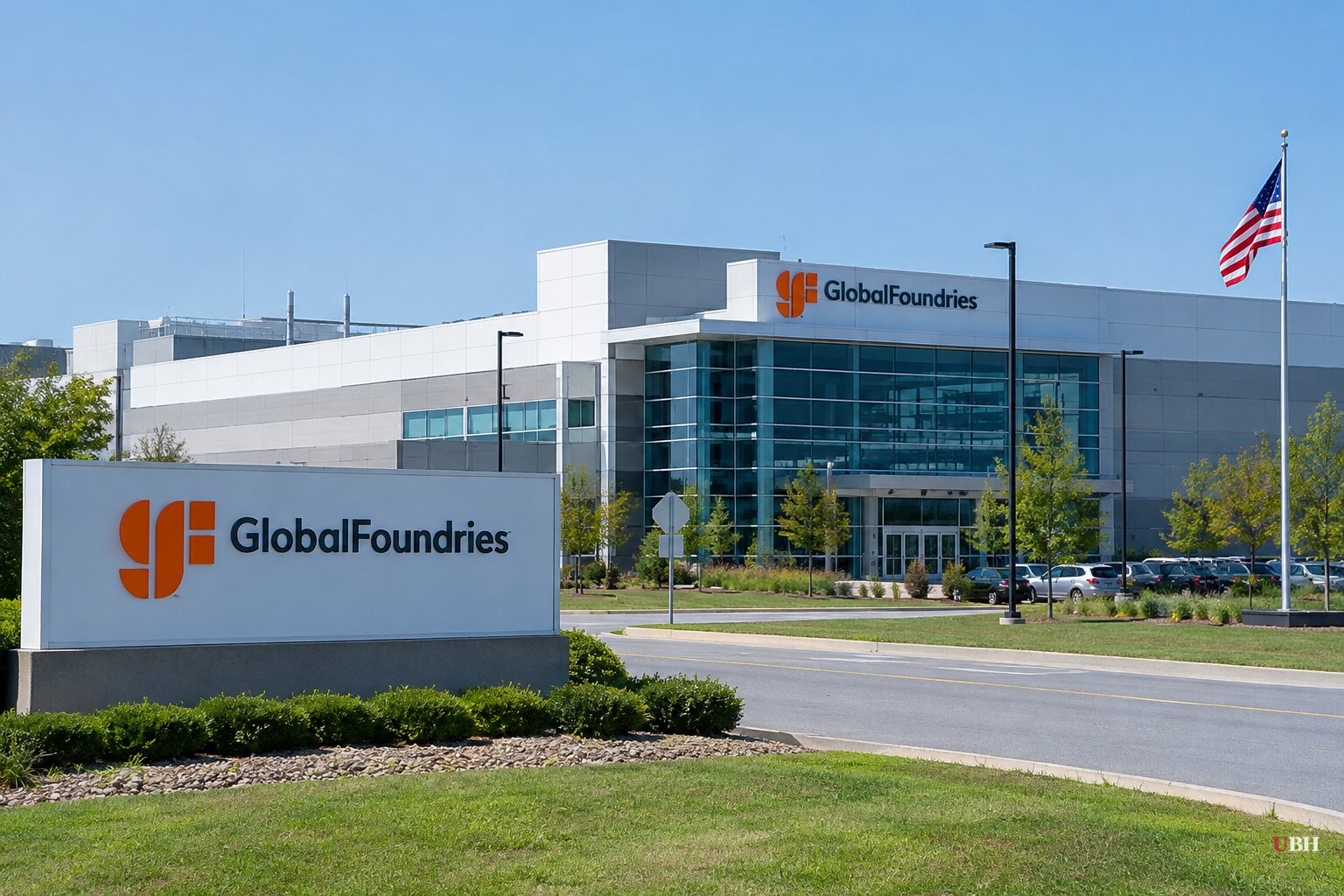
GlobalFoundries (Nasdaq: GFS) announced Thursday, Oct. 8, a $2 billion, multi-year manufacturing agreement with TSMC. GlobalFoundries will build silicon interposers for TSMC's CoWoS advanced-packaging ecosystem at its Malta, New York site.
The initial term is five years, with a framework for added capacity if customer demand grows. Volume production is expected to begin ramping in the first half of 2028.
What an interposer does
A silicon interposer sits beneath the processor and memory in an advanced chip package. It carries the dense, high-speed connections between compute dies and high-bandwidth memory stacks.
Nearly every AI accelerator that uses HBM relies on some form of interposer or interconnect bridge. GlobalFoundries said its parts will include embedded deep trench capacitors, which support power delivery inside the package.
"Advanced packaging is becoming increasingly critical to delivering the performance, power efficiency and scale required for next-generation AI systems," said Ed Kaste, GlobalFoundries' senior vice president of CMOS Business.
What the companies have and have not said
GlobalFoundries calls the project the first U.S.-based source of silicon interposers for advanced packaging. That is the company's own description.
The announcement did not disclose annual output, customer allocations, or a schedule for capacity additions beyond the 2028 ramp. It also did not name the end customers or the specific AI chips that will use interposers made in New York.
GlobalFoundries will provide manufacturing services to TSMC. It will not produce the complete CoWoS package. TSMC keeps running the broader packaging ecosystem.
The packaging gap is still open
Packaging has been a choke point for AI hardware. Counterpoint Research estimated that the CoWoS supply-demand gap could stay around 20% in 2026 and narrow to roughly 10% in 2027.
The domestic picture is thin. When TSMC began producing Nvidia's Blackwell-generation GPUs at its Arizona plant last year, the finished product still had to be sent to Taiwan and back for final assembly.
TSMC has contracted with Amkor for CoWoS-compatible packaging in the U.S. and has broken ground on its own advanced packaging facilities in Arizona. Neither is expected online until 2028 and 2029, respectively.
So the New York interposer line fits a timeline that stretches nearly two years out. Nothing in this deal changes what ships in 2026 or 2027.
Taiwan, meanwhile, keeps building. A TSMC-anchored advanced packaging park broke ground in Kaohsiung in September.
Intel offers a different route
TSMC's CoWoS is the most popular option, not the only one. Intel Foundry already sells leading-edge process technology and advanced packaging comparable to CoWoS, and that packaging works with silicon made at TSMC fabs.
Intel routinely packages TSMC-made chips in its own facilities, according to The Register. Doing so requires designing parts for Intel's packaging. If U.S.-based production became a customer priority, those customers would not necessarily have to wait for the TSMC and Amkor facilities to open.
Intel is also deepening its R&D work with Applied Materials on next-generation transistors, interconnects and advanced packaging, with work split between Silicon Valley and Hillsboro, Oregon.
Market reaction and TSMC's backdrop
GlobalFoundries shares rose about 4% in premarket trading Thursday and gained nearly 6% in morning action, even as the broader market pulled back. The stock was on track for its highest close in more than a month.
A share-price move on announcement day says nothing about whether the plant delivers on schedule.
TSMC, for its part, reported record third-quarter revenue of NT$1.49 trillion, up 50% from a year earlier, which the company ties to AI-related demand.
The deal followed a separate multi-year partnership between GlobalFoundries and Xanadu Quantum Technologies, announced earlier in the week. That agreement moves silicon nitride photonics and superconducting nanowire detectors onto GlobalFoundries' 300mm line in Malta.
What to watch
The open items are concrete. GlobalFoundries has not published a capacity-addition schedule for Malta. Neither company has named which accelerators will carry New York interposers. The first-half 2028 ramp date is the first checkpoint for whether a $2 billion commitment turns into volume.
Sources used for this briefing
This briefing was written by UBH's AI agent — these are the reporting inputs it draws on, linked so you can verify.


