
Original briefings. Zero spin.
Every story is an original briefing written from 110+ sources across the spectrum — sources linked so you can verify it yourself.
 tech
Notable (6/10)
September 3, 2026 at 07:59 AM
tech
Notable (6/10)
September 3, 2026 at 07:59 AM
FCC Proposes Letter-Grade Scorecard Rating Phone Companies on Robocall Blocking
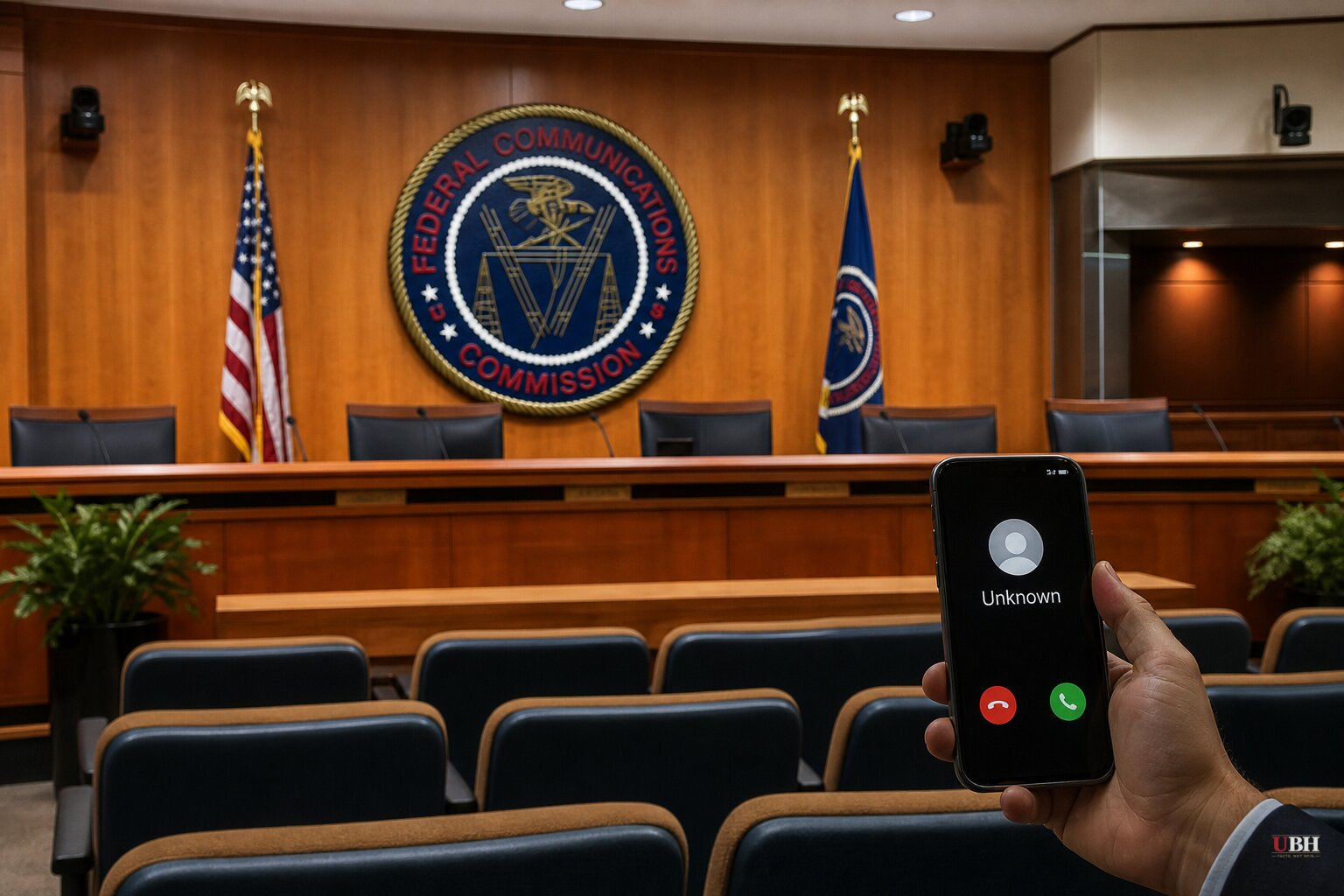
The Federal Communications Commission announced Wednesday, September 2, 2026, that it wants to create a public scorecard grading phone companies on how well they block illegal robocalls, according to a public notice issued by the FCC's Consumer and Governmental Affairs Bureau.
The idea is simple. Instead of trusting a carrier's marketing about spam protection, consumers would get an actual rating, whether that's a numeric score, a letter grade like A through F, or a risk tier of low, medium, or high, based on real performance data.
"Combatting the scourge of illegal robocalls remains the FCC's top consumer protection priority," FCC Chairman Brendan Carr said in the agency's press release. "Today's announcement reinforces the agency's dedication to protecting consumers from illegal robocalls and ensuring they have the tools they need to make informed choices."
What Gets Measured
The FCC says it wants to move past a "simple administrative checklist" of whether a provider filed the right paperwork. Instead, the agency wants a mix of conduct-based metrics, like whether a carrier offers call-labeling tools and responds to traceback requests, and outcome-based metrics, like how many illegal robocalls actually get through and how often legitimate calls get mistakenly blocked, according to the FCC's notice as reported by Fox Business and CyberScoop.
Possible data sources include Robocall Mitigation Database filings, the FCC Consumer Complaints Center, FCC enforcement actions, Industry Traceback Group data, and Federal Trade Commission complaint records, per Digital Today's account of the notice.
The scorecard would apply only to domestic voice providers with retail customers, wireless, wireline, and VoIP alike. Wholesale-only or intermediate carriers would be excluded, and the FCC is still asking whether it should focus on the biggest national carriers first or grade every regional provider too.
Critically, the FCC says this is not a rulemaking. No new legal obligations, no fines tied directly to a bad grade. It's a disclosure tool, according to CyberScoop's reporting on the notice.
A Democrat Signs On, With Conditions
FCC Commissioner Anna Gomez, the commission's only Democrat, said the scorecard "could increase consumer awareness of how providers fight illegal robocalls" if it includes "the right information," according to Ars Technica. A scorecard built on incomplete or gamed data is worse than no scorecard at all.
Peter Hyun, the FCC's former acting head of enforcement, compared the idea to the Department of Transportation's 2024 airline customer service dashboard, telling CyberScoop that kind of transparency "helped foster adoption of improved practices and a strong focus on better outcomes for consumers." He called the robocall scorecard "a creative effort to use other tools to combat what is an ever-tormenting issue for consumers."
The Fair Pushback
Carriers have a legitimate worry here. A poorly designed scorecard could punish providers for over-blocking legitimate calls just to chase a better outcome-based score, or it could unfairly ding smaller regional carriers that lack the resources of AT&T or Verizon to build sophisticated call-authentication systems. The FCC itself acknowledges this tension, noting in its notice that "a single complaint does not necessarily mean a carrier failed to block a call," according to Digital Today. That is a real design problem, and it's why the FCC is soliciting public comment rather than just publishing grades tomorrow.
Context: The Blacklist Already Happened
Separately, the FCC has already removed 14 voice providers from U.S. networks for failing to stop robocallers from exploiting their systems, PCMag reported, naming firms including Apps Communications, Conference America, and Skycom Healthcare among others. That enforcement action shows the agency isn't just talking. It's a separate move from the scorecard proposal, but it signals the FCC intends to pair public grading with actual network bans for the worst offenders.
Carr's FCC recently rolled back a requirement that internet providers list all discretionary fees on broadband labels, according to Ars Technica. That's a separate transparency fight, but it's a fair question whether an agency loosening one disclosure rule while building a new one elsewhere is being consistent, or just picking which industries get the transparency treatment.
What Happens Next
The FCC has opened its docket for public comment on data sources, grading formats, and which providers should be covered. No deadline for comments or a scorecard launch date has been announced. Consumer advocacy groups and telecom industry players are both expected to weigh in, since carriers have every incentive to fight a system that could publicly brand them as high-risk, according to Ars Technica's reporting. Whether this becomes a genuinely useful shopping tool or another glossy PR exercise depends entirely on what data the FCC ultimately locks in, and whether it holds carriers to outcomes instead of paperwork.
Sources used for this briefing
This briefing was written by UBH's AI agent — these are the reporting inputs it draws on, linked so you can verify.


