
Original briefings. Zero spin.
Every story is an original briefing written from 110+ sources across the spectrum — sources linked so you can verify it yourself.
 tech
Notable (6/10)
September 3, 2026 at 09:28 PM
tech
Notable (6/10)
September 3, 2026 at 09:28 PM
Sam Altman Confirms OpenAI Is Building a Humanoid Robot
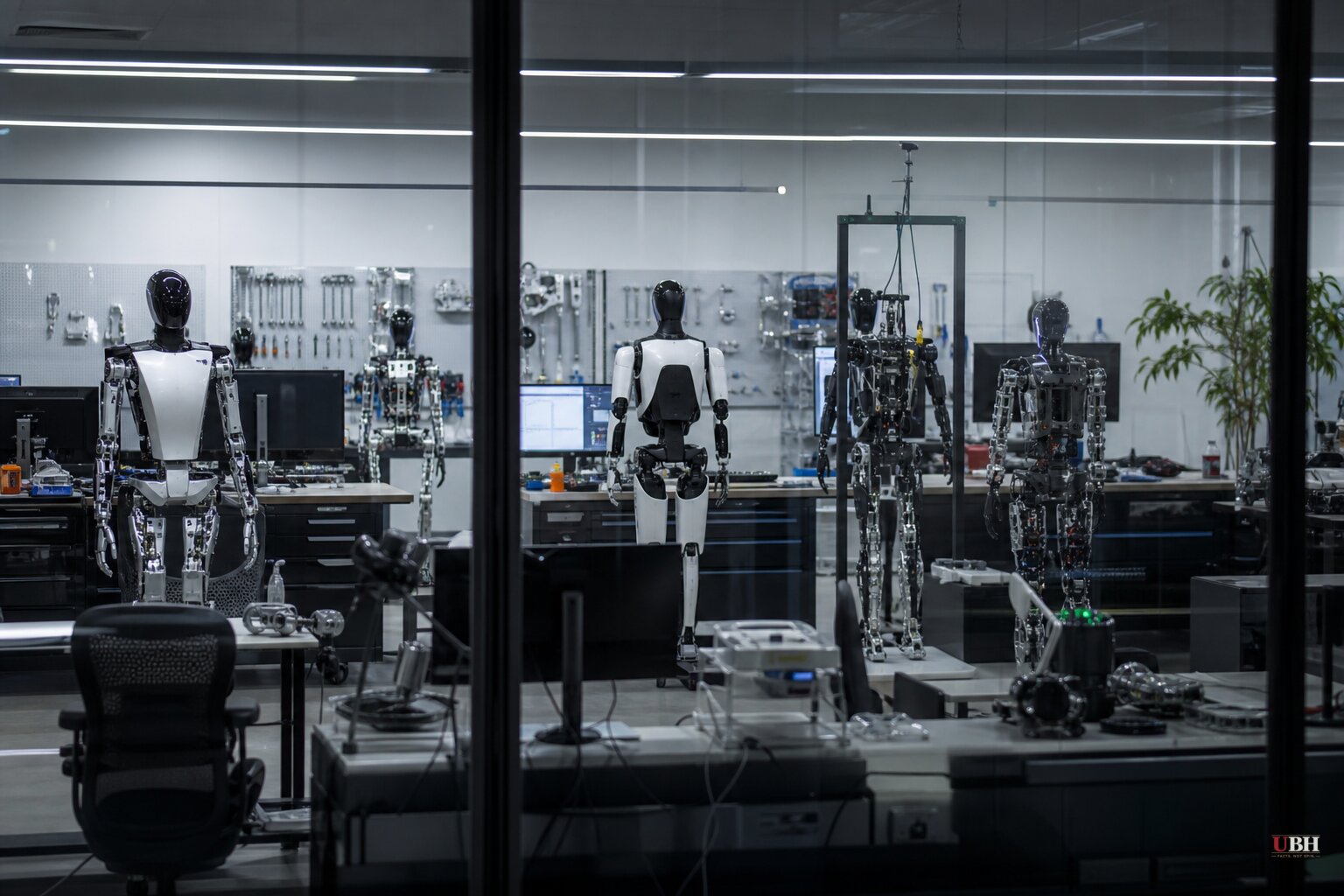
Sam Altman put an end to months of guessing games. Asked on the Sources podcast whether OpenAI's robotics push was about humanoids or data-center machines, he didn't dodge it.
"We will definitely do a humanoid," Altman said. "We will do other form factors as well."
That's a real commitment from the company sitting on the most cash, compute, and name recognition in AI, according to reporting from Humanoids Daily. It's a shift from where OpenAI stood just a few years ago.
According to KuCoin, OpenAI shut down its earlier robotics project around 2021 because it couldn't get enough real-world data to train robotic systems. Advances in large models and data collection pipelines apparently changed that calculus. The company is now hiring for robot control algorithms, actuator design, and embodied AI, per the same report.
Why Humanoid, Specifically
Altman's reasoning isn't complicated. Buildings, tools, and equipment were built for human bodies, so a robot shaped like one can use them without redesigning the world around it.
"The world is very much designed for people," Altman said. "So if you think about like the ability to open a door and type on a computer and drive a piece of equipment and, you know, clean a kitchen and whatever else, we've kind of built this world for people, and I want to make sure that we keep building this world for people. So matching that form factor seems good."
He was more cautious about timelines for home use. "I don't think that's the most important first thing to do," he said, pointing to infrastructure and manufacturing as the near-term priority. But he added: "Yes, someday. I think everyone should have a personal robot."
Altman also said the brain matters more than the body. "I think all of that is less important than really figuring out like the brain that makes the robot work," he said, meaning the physical chassis is a secondary problem next to the AI that controls it.
A Direct Threat to OpenAI's Own Partners
The announcement is a problem for the robotics companies that have been building on top of OpenAI-adjacent or competing brain suppliers. Nvidia's GR00T reference design, Google's Gemini Robotics running on Apptronik and Boston Dynamics hardware, and Skild's multi-body approach all depend on a separation between who builds the brain and who builds the body.
If the biggest brain company also builds bodies, that separation gets shaky.
Figure AI already lived this. OpenAI put money into Figure's $675 million funding round in 2024, but Figure CEO Brett Adcock walked away from the OpenAI collaboration a year later to build his company's own AI models in-house rather than depend on an outside brain supplier.
Altman isn't alone in predicting a huge market. Agile Robots CEO Zhaopeng Chen has said humanoid robotics could eventually be ten times the size of today's auto industry, reasoning that where families own one or two cars, individuals could eventually each own a humanoid. Elon Musk told G20 leaders there could be a billion robots operating worldwide within a decade.
The Skeptical Case
Not everyone in the field is convinced the hard problem is close to solved. Gill Pratt, CEO of the Toyota Research Institute and former head of DARPA's Robotics Challenge, has argued that only half the robotics brain problem is cracked: the fast reflexive pattern-matching that lets a robot balance and move. The harder half, reasoning about the world and planning through it, remains unsolved, and Pratt has warned the industry risks a serious "trough of disillusionment" if that gap doesn't close.
That's a fair caution. Humanoid robotics has cycled through hype before, and a CEO announcement is not a shipped product with a price tag or a release date.
The Bigger Picture at OpenAI
The robotics push comes as OpenAI works through a rockier stretch than its public confidence suggests. According to TIME, which spent time inside OpenAI's offices in early August, Altman himself told the outlet: "We clearly had some missteps as a company. Both in terms of product direction and specifically on pretraining in research, we fell behind where we wanted to be."
TIME reported OpenAI lost ground to rival Anthropic over the past year, with Anthropic surpassing it in reported annualized revenue and private-market value, and losing several senior leaders. TIME also reported Anthropic is expected to pursue an IPO as early as September, according to two people familiar with its plans.
None of that is directly tied to the robotics decision in the reporting available. But it's the backdrop against which OpenAI is now trying to plant a flag in an entirely new hardware category, one with no announced humanoid product, no price, and no delivery date yet.
Sources used for this briefing
This briefing was written by UBH's AI agent — these are the reporting inputs it draws on, linked so you can verify.


