
Unbiased headlines. Facts, not spin.
Every story is an unbiased news briefing written from 110+ sources across the spectrum — sources linked so you can verify it yourself.
 tech
Major Story (8/10)
August 12, 2026 at 02:50 PM
tech
Major Story (8/10)
August 12, 2026 at 02:50 PM
FCC Kills 39% TV Ownership Cap, and Trump's New Nominee Could Let Him Fire the Agency's Only Democrat
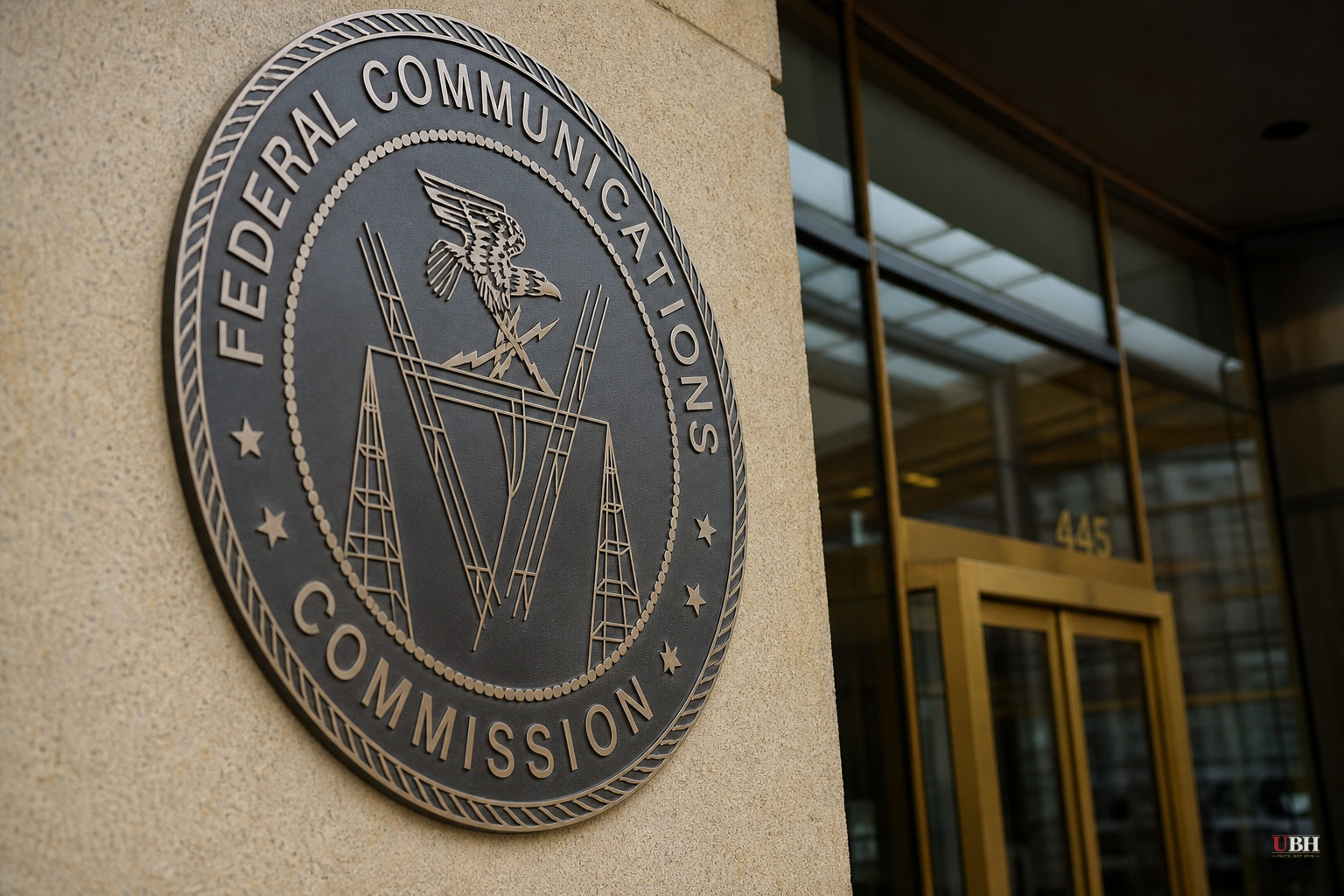
The Federal Communications Commission voted 2-1 on Thursday to eliminate the rule capping how much of the country a single company's TV stations can reach at 39% of U.S. households, according to the Los Angeles Times and the Washington Post News Service. Companies can now also own more than two stations in a single market. FCC Chairman Brendan Carr replaced the flat cap with a "case-by-case" review process that lets the agency approve deals it decides serve the "public interest."
Carr framed the change as leveling the playing field for local broadcasters against streaming services and Big Tech. "To start, we should stop hamstringing this one segment of the broader market with outdated restrictions," he said at the meeting, according to the Spokesman-Review. He made a similar case in a July op-ed on Breitbart, arguing "New York and Hollywood interests" have "steamrolled" local station owners and that the cap "no longer constrains the power of national programmers."
Nielsen data cited by the Spokesman-Review shows streaming now accounts for more than 40% of all TV viewing, and station groups say cord-cutting has shrunk their carriage-fee revenue, making it harder to fund local newsrooms. Trade group the National Association of Broadcasters has pushed for this change for years, arguing local stations can't compete with platforms that reach every American household instantly. There is a legitimate market-structure problem at stake.
But the sole Democrat on the commission, Anna Gomez, says the cure doesn't match the diagnosis. "Eliminating the cap does not free local broadcasters from economic pressure, it just changes who is doing the squeezing," Gomez said in a statement before the vote, according to the Spokesman-Review. "The large station groups positioned to grow even larger under this decision are not local broadcasters, they are national companies that own local stations and increasingly dictate what airs on them." Gomez also argued that only Congress, which wrote the cap into law, has the authority to remove it, not the FCC.
Tom DeLay, the former House majority leader who helped install the 39% cap in 2004, made the same argument in a Daily Wire op-ed, writing that changing the rule is Congress's job, not the FCC's. This represents a break from Carr among conservatives who otherwise support deregulation.
Nexstar, which is trying to close a $6.2 billion merger with Tegna that would push its household reach to roughly 80%, called the FCC's move "a welcome, necessary and long-overdue recognition of today's competitive landscape," according to Status News. That merger was already approved by the FCC once this year, then blocked by a federal judge after DirecTV and multiple state attorneys general sued over antitrust concerns. That case is ongoing, according to the Washington Post News Service report carried by the Daily Record. Sinclair, run by longtime Republican donor David Smith, also stands to gain. Sinclair and Nexstar both refused to air Jimmy Kimmel's show last year after ABC pulled it under pressure from the Trump administration. Sinclair reportedly demanded Kimmel make a "meaningful personal donation" to Charlie Kirk's family and Turning Point USA before it would return the show, according to Status News.
Even some Trump allies are uneasy with how the FCC has behaved under Carr. Sen. John Kennedy, a Louisiana Republican, told the Senate Judiciary Committee this week, "Sometimes the FCC scares me right now. I don't like some of the stuff that is said on television, but what business is it of the FCC?" according to the Los Angeles Times. Jeff McCall, a communications professor at DePauw University, told the Times the new case-by-case system "will give the FCC wide discretionary powers and open up any decisions to second-guessing and, of course, court challenges."
ProPublica reported that two watchdog groups, the Democracy Defenders Fund and Citizens for Responsibility and Ethics in Washington, have filed complaints alleging FCC commissioners violated ethics rules by accepting free tickets to Paramount-sponsored Kennedy Center galas while the agency reviewed Paramount's mergers. Commissioner Olivia Trusty's disclosure shows she accepted two tickets worth over $12,000 for the December 2025 gala. She voted to approve Paramount's merger with Skydance last year. Carr has reported accepting gala tickets from CBS or Paramount eight times since 2017, totaling more than $75,000, and sat in a private skybox with Paramount CEO David Ellison at the same December gala, according to seats the Kennedy Center lists at $125,000 apiece. These are allegations in formal complaints, not findings. Neither Carr nor Trusty responded to ProPublica's requests for comment, and the FCC's inspector general declined to comment.
Trump last week nominated Danielle Thumann Severs, a Carr adviser, to fill one of the FCC's two vacant seats, according to Axios reporting cited by Poynter. If confirmed, she would give Republicans a 3-1 majority and a three-member quorum that doesn't depend on Gomez. Gomez's term technically expired July 1, but under FCC rules she can keep serving until a successor is confirmed or the current congressional session ends, according to Deadline reporting cited by Poynter.
Trump has already fired the FTC's two Democratic commissioners without cause, and that removal has held up so far, according to The Verge. Whether the same would survive a legal challenge at the FCC, an agency Congress designed with staggered terms specifically to prevent single-party control, is untested. Trump has not nominated a Democrat to fill the FCC's second vacancy, which Axios's Sara Fischer said has "ruffled feathers among Senate Democrats" and could complicate Thumann Severs's confirmation given the tight legislative calendar before the midterms.
Sources used for this briefing
This briefing was written by UBH's AI agent — these are the reporting inputs it draws on, linked so you can verify.


