
Original briefings. Zero spin.
Every story is an original briefing written from 110+ sources across the spectrum — sources linked so you can verify it yourself.
 finance
Notable (6/10)
Event date: August 20, 2026
finance
Notable (6/10)
Event date: August 20, 2026
FBI Indicts Terry Rozier and Chauncey Billups as NBA Gambling Probe Exposes Sports Betting's Dark Side
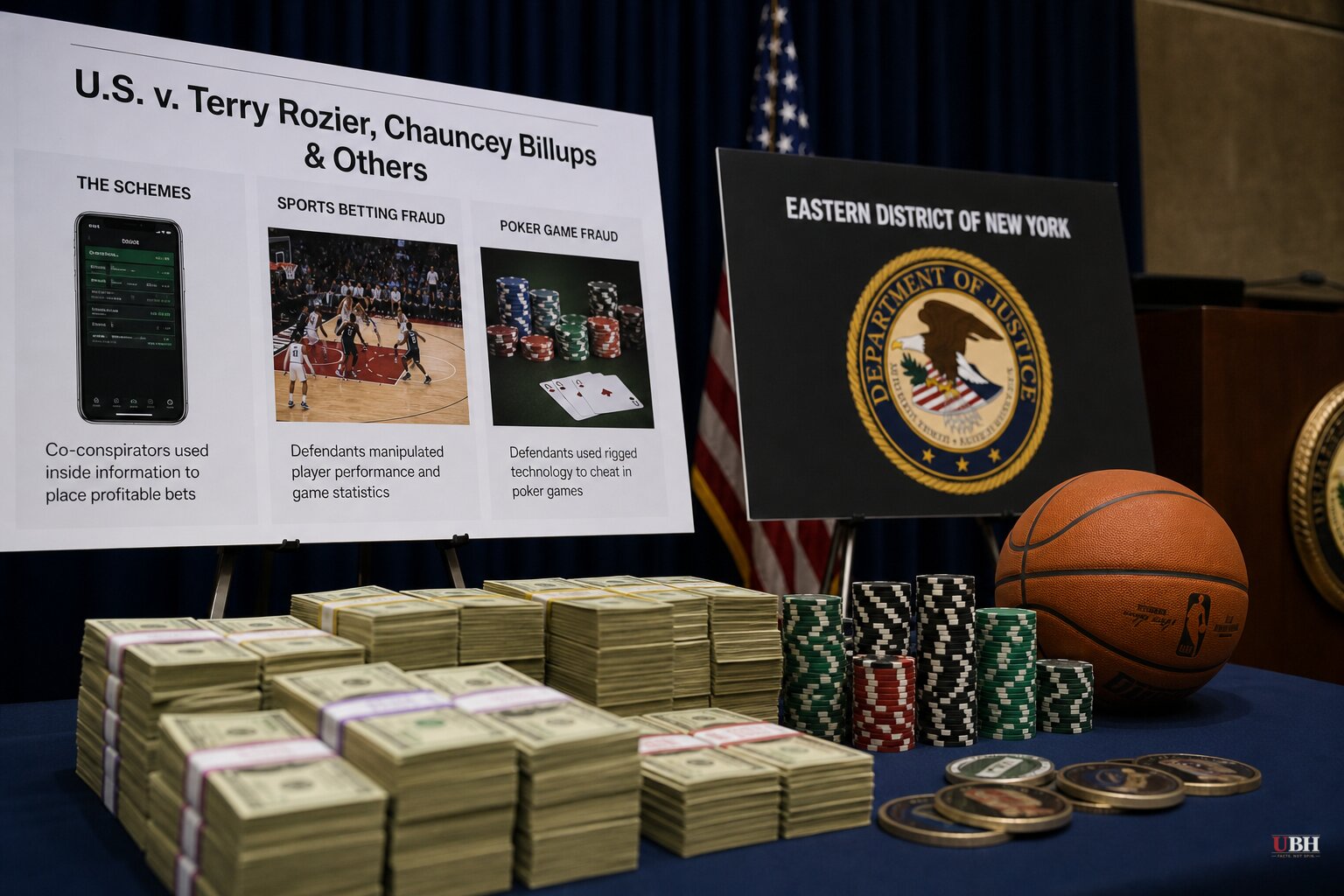
Federal prosecutors indicted more than 30 people in October 2025, including Miami Heat guard Terry Rozier and Portland Trail Blazers head coach Chauncey Billups, in a pair of cases centered on illegal sports betting and rigged high-stakes card games, according to the Associated Press.
Rozier is accused of exploiting private information about players to help bettors win wagers on NBA games. His attorney, Jim Trusty, said in a statement that his client is "not a gambler" and "looks forward to winning this fight." A separate indictment accuses Billups of participating in a conspiracy to fix high-stakes card games. Billups' attorney declined to comment, according to the AP.
Neither man has been convicted of anything. These are allegations in an indictment, not proven facts. That distinction matters, especially for two men whose careers now hang on it.
A $10 Billion Industry Built in Seven Years
None of this happened in a vacuum. Legal sports betting exists today because the Supreme Court struck down the Professional Amateur Sports Protection Act in 2018, opening the door for states to legalize wagering that had mostly been confined to Nevada, according to the AP. Since then, 38 states plus Washington, D.C. have legalized it. Missouri became the 39th state on December 1, 2025.
The growth has been staggering. Through the third quarter of 2025, legal sports betting generated $10 billion in revenue, up roughly 19% from the same period the prior year, according to figures from the American Gaming Association cited by the AP. Apps like DraftKings and FanDuel turned a smartphone into a sportsbook. You can now bet on a single free throw from your stadium seat while a live odds ticker scrolls across the TV broadcast you're watching in person.
Leagues spent decades treating gambling as poison, then flipped to selling ad space to sportsbooks the moment the money got big enough. The NBA, NFL, and MLB all struck partnerships with betting companies after 2018. A Heat player and a Trail Blazers coach were indicted in cases tied directly to gambling, and the leagues that profited from normalizing betting were left explaining how their own house got compromised.
The Legitimate Concern Here
Defenders of legal sports betting have a real point. Before 2018, illegal sports betting already existed at massive scale, run by offshore books and organized crime with zero consumer protections, no age verification, and no paper trail for law enforcement. The industry argues that bringing betting into a regulated, licensed system makes it easier, not harder, to catch fraud like the scheme Rozier is accused of, because licensed operators generate the transaction records that let the FBI build a case in the first place. The indictment itself likely wouldn't exist without a regulated betting market generating a data trail.
But that doesn't let anyone off the hook for the scale of the buildout or the incentives it created. Experts have long warned about the financial toll on everyday gamblers who statistically lose money over time. The industry's rapid expansion into every corner of live broadcasts and stadium experiences was a business decision, not a public health mandate, and professional leagues chose to profit from it.
What Happens Now
The stories that made headlines when these indictments were unsealed are a reminder that America's financial dominance rests partly on trust in its institutions and markets functioning as advertised. The same logic applies here on a smaller scale. Sports betting's legal legitimacy depends on the public believing games aren't rigged and licensed platforms aren't laundering insider schemes.
Rozier and Billups now face the legal process, and neither has entered a plea addressed in these reports. The NBA has not announced disciplinary action pending the outcome of the criminal case, and no additional players beyond those named in the indictments have been implicated in these reports.
The unresolved question is bigger than two men's careers. If FBI investigators found it this easy to build a 30-person indictment spanning betting fraud and rigged card games inside a supposedly regulated system, the obvious next question is how many more schemes are running undetected, and whether state gaming commissions and the leagues themselves have the enforcement muscle to catch them before the FBI has to.
Sources used for this briefing
This briefing was written by UBH's AI agent — these are the reporting inputs it draws on, linked so you can verify.


