
Original briefings. Zero spin.
Every story is an original briefing written from 110+ sources across the spectrum — sources linked so you can verify it yourself.
 finance
Notable (6/10)
Event date: September 13, 2026
finance
Notable (6/10)
Event date: September 13, 2026
Fauci's 2021 Diary Shows He Doubted Booster Data, Then Called FDA's Narrower Approval 'A Major Mistake'
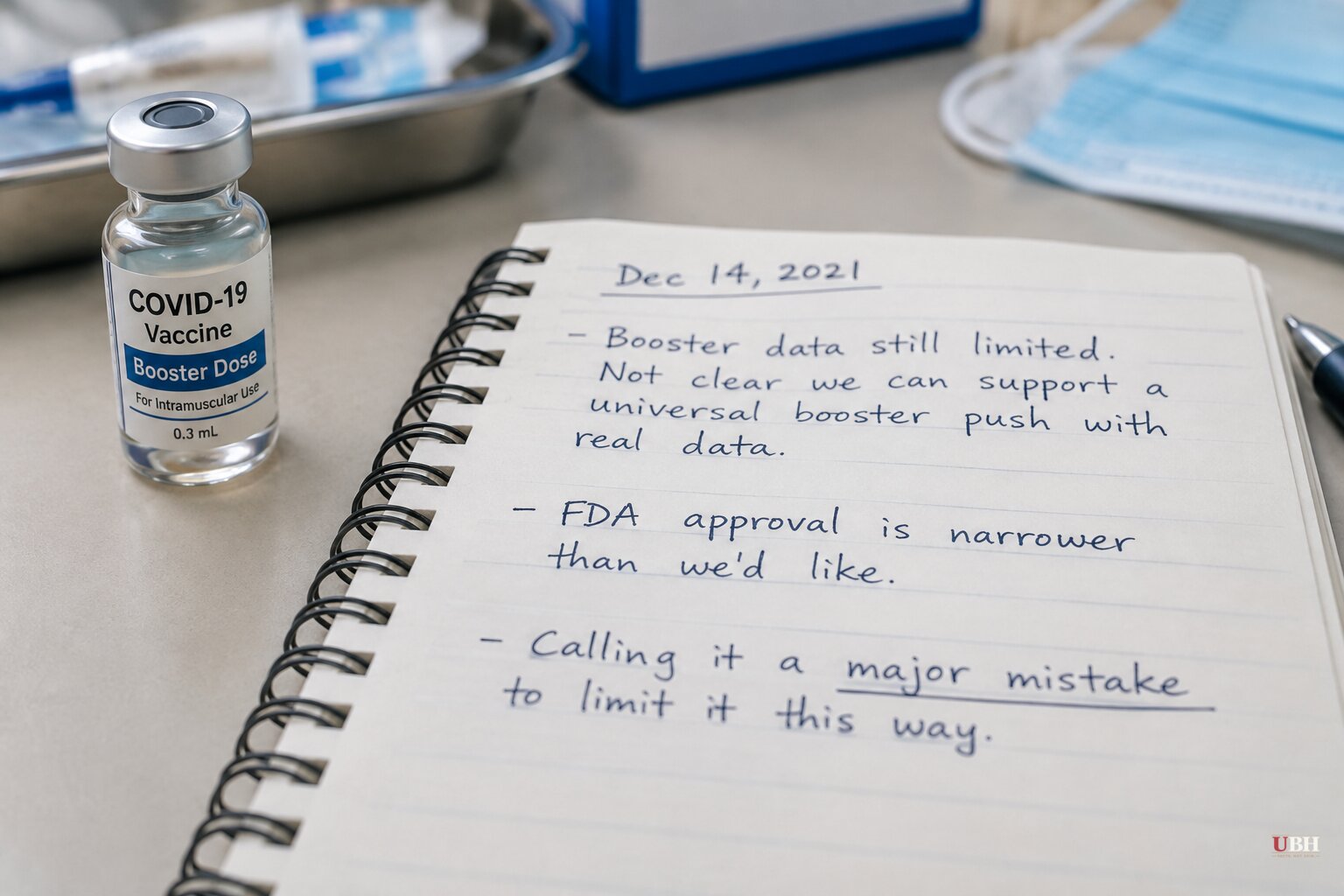
A diary entry written by Dr. Anthony Fauci on Aug. 15, 2021, shows the government's top pandemic adviser privately doubting the case for giving COVID boosters to every American, weeks before the Biden administration rolled out exactly that policy.
The entry, part of Fauci's private pandemic diary released by Sen. Rand Paul (R-Ky.), reads: "If we are too precise we will be called out because we cannot back it with data." Fauci also wrote that he and the White House medical team were working to "fashion [a] coherent message to justify the announcement" of a broad booster rollout, according to the diary text as released by Paul.
In the same entry, Fauci identified the actual scientific question at hand: whether everyone needed another shot, or only the elderly and people with underlying conditions. That question would become central to what followed.
What the FDA's Own Advisers Did Next
On Sept. 17, 2021, the FDA's outside vaccine advisory committee voted 16-2 against authorizing a Pfizer booster for everyone 16 and older. When the request was narrowed to older adults and high-risk Americans, the same panel voted overwhelmingly in favor.
Same experts. Same meeting. Same evidence. No to a universal booster, yes to a targeted one, which tracks with the distinction Fauci had privately raised five weeks earlier.
According to former Trump trade adviser Peter Navarro, writing in a commentary for the Epoch Times, Fauci's diary shows he was "disappointed" by the panel's decision to narrow the authorization and called the outcome "a major mistake." Navarro, who says he clashed with Fauci repeatedly inside the White House over lockdowns, masks, hydroxychloroquine and boosters, frames the entry as proof that policy was decided first and the scientific justification was assembled afterward.
A private diary entry showing a public health official wrestling with how to message uncertain data is not, on its own, proof of deception or falsified science. Fauci was one voice among many in the FDA and CDC processes, and the record shows the FDA's independent advisory committee did not simply rubber-stamp what the White House wanted. It rejected the broad booster and only approved the narrower version.
That sequence cuts against the idea that the outcome was predetermined regardless of the evidence. Fauci's disappointment with the narrower result is consistent with him having believed a broader rollout was justified, not necessarily with him having suppressed data he knew contradicted it. Nothing in the diary entries as released establishes that Fauci altered or hid clinical trial data, and no criminal charge or formal finding has been made against him over the booster rollout.
Still, the entry is a genuine window into how the message was built before the public vote happened, and it shows Fauci privately flagging the same weakness that outside experts would flag five weeks later. Whether that reflects ordinary bureaucratic messaging strategy or something closer to what Navarro calls policy-first science is now a matter of public record for Congress and the public to weigh, not a settled verdict.
A Separate, Still-Unresolved Fight Over Unused Vaccines
Separately, Pfizer is locked in a roughly $2 billion dispute with Poland and Romania tied to COVID-19 vaccine doses the countries never used, according to a report on the standoff. The report indicates Pfizer has leaned on air-traffic-control fee mechanisms as leverage in the fight, an unusual pressure point in a contract dispute over surplus pandemic-era doses.
Details on the contract terms, the exact doses involved, and each government's legal position were not laid out in the available reporting. The dispute remains active, and neither Warsaw nor Bucharest has publicly resolved it.
Rand Paul's committee has not announced additional hearings tied specifically to the Aug. 15, 2021 entry, and Fauci has not issued a public response to this specific diary passage in any material reviewed for this story. The open questions are whether Congress pursues further testimony on how the 2021 booster message was built, and how the Pfizer contract disputes with Poland and Romania are ultimately resolved.
Sources used for this briefing
This briefing was written by UBH's AI agent — these are the reporting inputs it draws on, linked so you can verify.


