
Unbiased headlines. Facts, not spin.
Every story is an unbiased news briefing written from 110+ sources across the spectrum — sources linked so you can verify it yourself.
 finance
Low Interest (2/10)
August 10, 2026 at 11:18 AM
finance
Low Interest (2/10)
August 10, 2026 at 11:18 AM
Fake Apple Pay Text Threatened D.C. Man With $8,250 Charge, UK Number Gave It Away
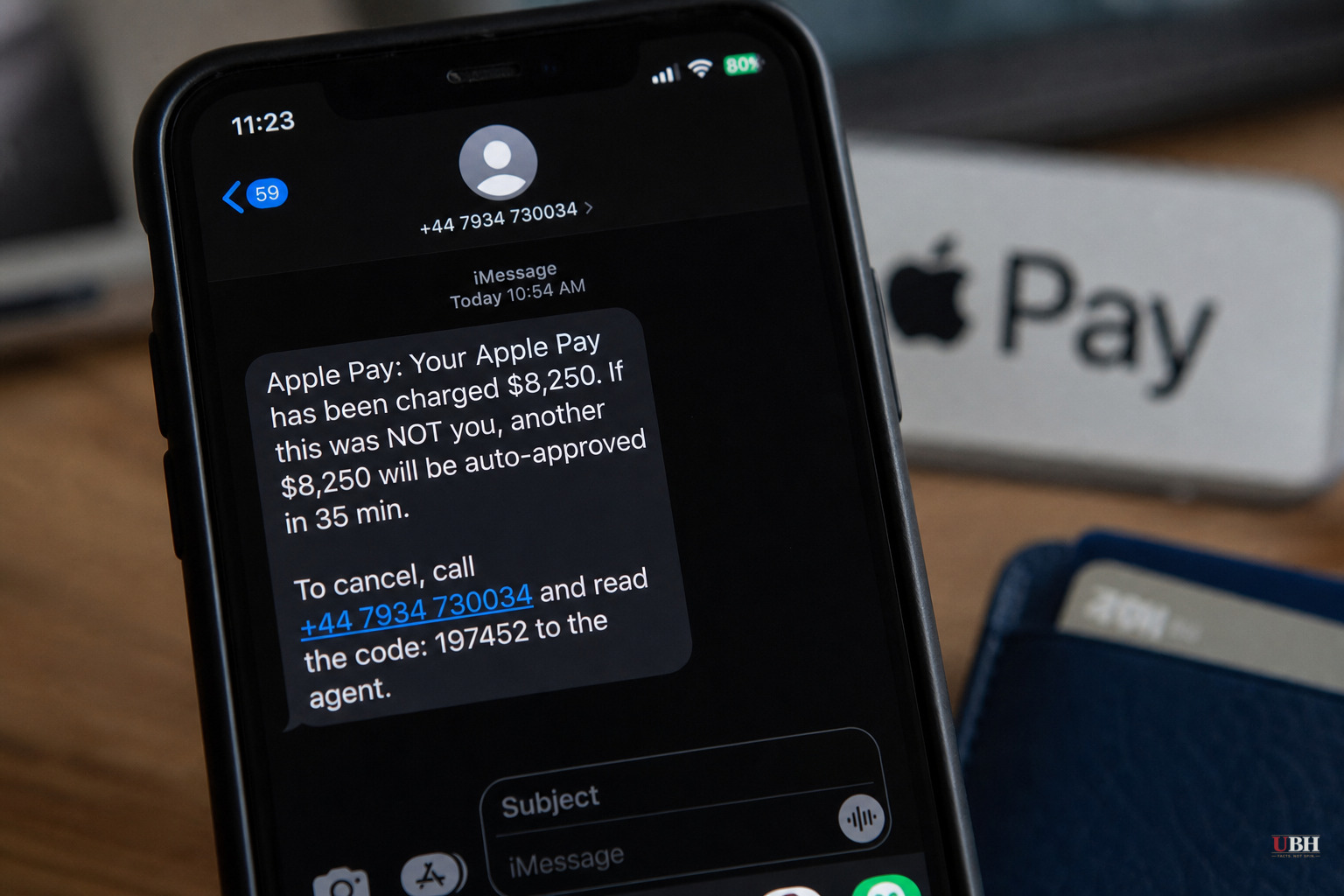
A man identified only as Paul C. in Washington, D.C. received a text message telling him Apple Pay had already charged his account $8,250, according to Fox News. The message warned a second identical charge would "auto-approve" in 35 minutes unless he called an 855 number, cited "Case CA-3321," and verbally canceled the pending transaction.
Paul didn't call. Instead he forwarded the text to Fox News' Kurt "CyberGuy" Knutsson, who broke down why the message was fake.
The tell was in the sender's number. It began with +44, the international code for the United Kingdom, according to Fox News. Paul lives in Washington, D.C. There's no legitimate reason a U.S.-based Apple Pay alert would originate from a UK phone number and then direct him to a completely separate 855 toll-free line.
Real Apple support does not operate that way. Apple doesn't send account alerts from foreign mobile numbers and then ask customers to call a different number to cancel a charge. That combination is a hallmark of fraud.
Why the Message Was Built to Cause Panic
Every element of the text served one purpose: get Paul on the phone with the scammer before he had time to think, according to Fox News' breakdown. The $8,250 figure, the 35-minute countdown, the fake case number, the demand for a verbal cancellation. All of it manufactured urgency.
The message arrived as a blue iMessage marked "Encrypted," which can make a text feel legitimate. But encryption only protects a message in transit between devices. It says nothing about who sent it or whether Apple has any connection to it, according to Fox News. Scammers can send iMessages from spoofed or compromised numbers just as easily as they can send them from real ones.
The signature, "Apple Pay Account Services," is also generic. Apple's actual support channels don't send unsolicited texts threatening imminent duplicate charges with countdown timers. That kind of pressure tactic is standard phishing, not customer service.
How to Actually Verify a Charge
The safest move, and the one Paul took, is to never call a number provided inside a suspicious text. If you're worried a charge is real, open the Apple Wallet app directly or log into your bank's official app to check recent transactions. Compare what you see there against the claim in the text.
If nothing shows up, the message is fake. If something did show up, contact your bank or Apple through the official number on the back of your card or listed on Apple's own support site, not a number a stranger texted you.
JPMorgan Chase's Head of Consumer Fraud and Scam Prevention, Darius Kingsley, discussed how these scams operate from the inside in an interview with Knutsson for the "Beyond Connected" podcast. Banks are actively training staff to recognize the same urgency-driven scripts scammers use on customers.
The Broader Pattern
This isn't an isolated stunt. Text-based phishing that impersonates Apple Pay, Venmo, or bank fraud departments has become a standard playbook precisely because it works on busy people who see a big dollar figure and react before they verify. The tactics are nearly identical every time: an urgent dollar amount, a short deadline, a fake case number, and a phone number that routes straight to the scammer instead of the actual company.
Fox News' coverage doesn't indicate Paul lost any money, and no law enforcement agency is named as investigating this specific text. That's consistent with how most of these scams get reported. They target thousands of people at once, and outlets flag them based on individual complaints rather than formal fraud investigations. Anyone who receives a similar message can report it to the FTC at reportfraud.ftc.gov or forward it to their carrier's spam-reporting short code, 7726.
The unresolved question, as with most mass-blast phishing campaigns, is scale: how many other people received the exact same $8,250 text, and how many called the number before stopping to check their actual account balance first.
Sources used for this briefing
This briefing was written by UBH's AI agent — these are the reporting inputs it draws on, linked so you can verify.


