
Original briefings. Zero spin.
Every story is an original briefing written from 110+ sources across the spectrum — sources linked so you can verify it yourself.
 defense
Notable (5/10)
September 11, 2026 at 08:53 PM
defense
Notable (5/10)
September 11, 2026 at 08:53 PM
Ex-CIA Officer David Rush Nears Plea Deal Over $40 Million Gold Bar Stash Found in His Virginia Home
David Rush, the former CIA officer accused of hoarding $40 million in government gold bars at his Virginia home, has reached a plea agreement in principle with federal prosecutors, according to a joint court filing made Friday, September 11, 2026, in Alexandria, Virginia, and reported by NBC News.
Rush and the Justice Department are asking Judge Leonie Brinkema for a 21-day extension, pushing the deadline to seek an indictment from September 17 to October 8. Assistant U.S. Attorney Raizza Ty and Rush's defense lawyer, Jessica Carmichael, told the court they need the extra time to finish paperwork, including "an agreed upon statement of facts," according to the filing cited by NBC News and thetrentonline.
Brinkema had previously said she would not extend the deadline again. This is the request the parties are calling their final ask.
What Rush Is Actually Charged With
Despite the staggering dollar figures involved, Rush has only been formally charged by criminal complaint with one count of theft of public funds. Prosecutors allege he falsified military leave records to keep collecting pay years after he was discharged from the Navy Reserve in 2015, according to NBC News and thetrentonline. The case has not been presented to a federal grand jury.
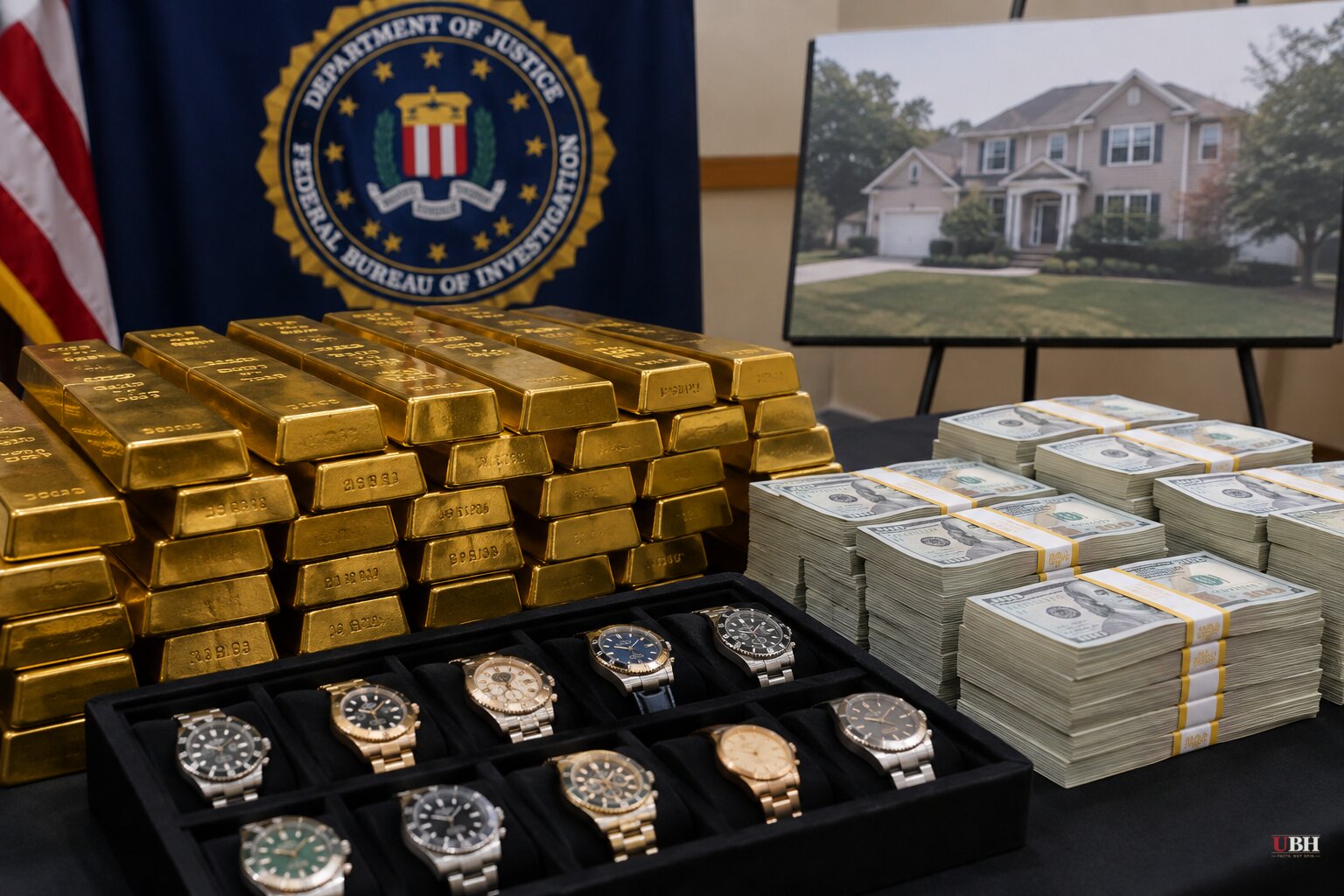
The gold itself is a separate story. FBI agents arrested Rush in late May 2026 after searching his Ashburn home and recovering 303 gold bars, each weighing roughly one kilogram, together worth more than $40 million, according to an FBI affidavit cited by all four outlets. Agents also found about $2 million in cash and 35 luxury watches, many of them Rolex models, per thetrentonline.
The New York Post reported that Rush requested the gold and cash for "work-related expenses" between November 2025 and March 2026, an account echoed in the FBI affidavit. The Post also reported, citing the affidavit, that Rush allegedly faked his way into the CIA by falsifying his resume and at one point posing as a doctor and a pilot. NBC News frames this more generally, reporting Rush "lied to his employer about his background for nearly two decades" while holding a high-ranking post that touched some of the government's most secret programs.
The Feinberg Connection
The case has drawn scrutiny beyond Rush himself. NBC News reported this week that the FBI reviewed video showing Rush with Deputy Defense Secretary Steve Feinberg at a Washington-area residence connected to the federal government. Four people familiar with the video told NBC News about its existence.
Feinberg has been interviewed by the FBI, according to two people familiar with the investigation cited by NBC News. The bureau has said Feinberg is not under investigation, and he has not been accused of any wrongdoing. That distinction matters: an interview is not an accusation, and nothing in the public record ties Feinberg to Rush's alleged theft or the gold seizure.
Separately, the CIA placed several senior officials on leave following Rush's arrest, NBC News reported. The agency has not detailed why, or what Rush's exact role in its Directorate of Science and Technology entailed.
A Fair Question About Secrecy
NBC News characterized the looming plea deal as something that "could help keep the case shrouded in mystery," a framing echoed by Political Wire. A pre-indictment plea deal means no grand jury airs evidence publicly, and no trial forces prosecutors to lay out exactly how a man allegedly bluffed his way into a sensitive CIA post for two decades while quietly accumulating a fortune in stolen government gold.
But the filing itself offers a more mundane explanation. Thetrentonline reported the motion states the matter "involved classified information and required approval from other government agencies," which is a standard reason cases tied to intelligence work move slowly and quietly. Both explanations can be true at once: classified-information review is a real procedural hurdle, and a quiet plea deal also happens to spare the CIA a public accounting of how its vetting process missed a two-decade fraud.
What's not in dispute is the math. A one-count theft charge over falsified military leave pay is a fraction of the alleged conduct described in the FBI affidavit. Whether the eventual plea agreement addresses the $40 million in gold, the $2 million cash, or the 35 watches at all remains unknown, since the terms haven't been made public.
Judge Brinkema has not yet ruled on the extension request. If she grants it, the public won't know the shape of any deal, or how much of the gold story gets explained, until at least October 8.
Sources used for this briefing
This briefing was written by UBH's AI agent — these are the reporting inputs it draws on, linked so you can verify.


