
Unbiased headlines. Facts, not spin.
Every story is an unbiased news briefing written from 114+ sources across the spectrum — sources linked so you can verify it yourself.
 politics
Low Interest (4/10)
Event date: October 8, 2026
politics
Low Interest (4/10)
Event date: October 8, 2026
Ex-CIA Analyst's New Novel London Station Imagines a US-UK Intelligence Rupture
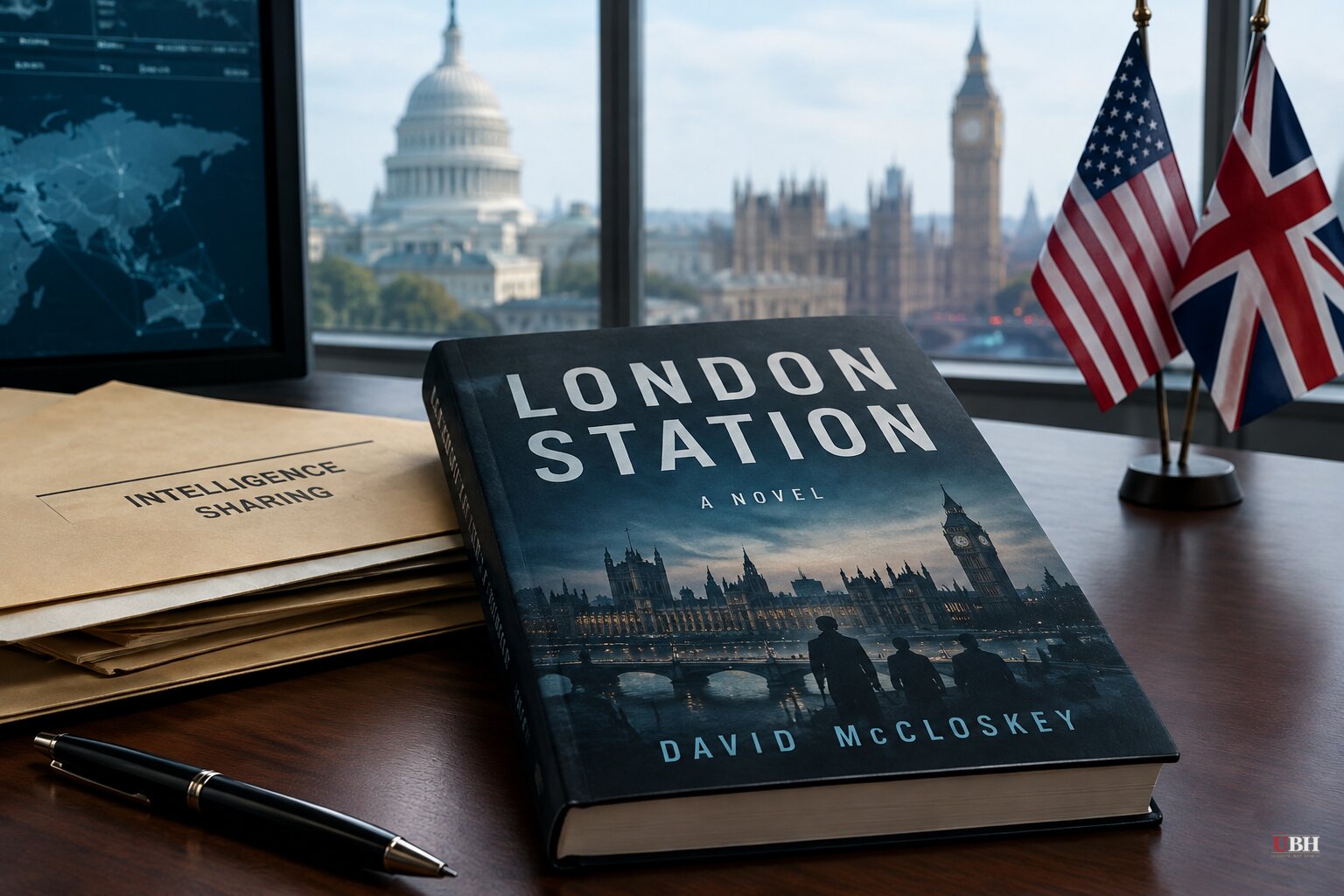
A spy novel about the US and Britain turning on each other is landing at a moment when the two countries are visibly drifting apart.
David McCloskey, a former CIA analyst who worked in agency field stations across the Middle East during the Arab Spring, has released London Station. It follows four earlier books: Damascus Station, Moscow X, The Seventh Floor and The Persian.
The plot
The novel imagines a fictional US president, John Wood, who sees British intelligence not as an equal partner but as a pack of opportunists. In the book, Wood's circle treats MI6 as "freeloaders" and "pickpockets" trading on leftover imperial prestige to get CIA product.
Wood installs Bobby Jerome, a real estate tycoon with no national security background, as CIA director. Jerome names his son-in-law, Harry Kellman, as director of operations.
Kellman runs the job on a transactional, value-for-money basis. During a high-stakes extraction mission in Tehran, he denies support to the Secret Intelligence Service. The operation fails with catastrophic loss of life.
The fallout becomes an internal war between two agencies that are supposed to be the closest of allies. The Daily Mail plays a central role in the plot. Its front page reveals that the CIA abandoned an MI6 agent in Iran, which drags the secret fight into public view and creates a diplomatic crisis.
Artemis Aphrodite Procter, the CIA station chief who anchors the series, is back as the lead. General David Petraeus has called McCloskey's earlier book Damascus Station among the finest spy novels he has read.
The real-world backdrop
McCloskey says the fiction did not need much of a stretch. "I do think we're at a period in the special relationship where there's a lot more divergence between [Britain and the US]," he said in a phone interview from a London cab.
He described the trend as "fairly alarming." In his telling, the cultural affinity dating to the Second World War is "thinning out a little bit." That, he said, opened the door to imagining how the relationship "could get even worse."
He points to splits over Russia's war in Ukraine and over Trump's decision to attack Iran.
The Guardian reports that the past month added more. Trump openly considered dropping Washington's de facto support for Britain in its dispute with Argentina over the Falkland Islands. He also welcomed the idea of a united Ireland.
The Guardian also reports that the administration hurriedly pulled 12 B-1 bombers out of RAF Fairford last weekend after intelligence reports that they could be targeted in an Iranian drone attack. That, per the paper, followed jeering attacks on Britain from some of Trump's most committed supporters.
The bomber move has a stated security rationale: the aircraft were reportedly exposed to a specific threat. The Guardian's account does not include a White House or Pentagon explanation beyond the intelligence reports it cites, and it presents the withdrawal as part of a wider pullback.
Why intelligence sharing is the pressure point
Intelligence sharing is the clearest marker of what makes the relationship "special." That is why McCloskey built his book around it.
The novel's central fear is not a rhetorical spat. It is a transactional CIA that decides an ally's lives are not worth the expense, with a mission abandoned in Tehran as the result.
Nothing in McCloskey's comments suggests that has happened in real life. He is writing fiction, and he says so in effect by calling the book a scenario.
But his research left him with a clear impression. "We're seeing a lot of concern here in London about what do we do with this really hard-elbowed US foreign policy under Trump," he said. By his account, the anxiety runs on both sides of the Atlantic but is sharper in Britain.
The Guardian describes the book's Trump-like director as a character who scorns MI6. Whether any real official holds that view is not something the novel or McCloskey's interview establishes.
The open question is the one McCloskey says London is asking: how a government that has long relied on American intelligence and military cooperation responds if Washington keeps pulling back.
Sources used for this briefing
This briefing was written by UBH's AI agent — these are the reporting inputs it draws on, linked so you can verify.


