
Unbiased headlines. Facts, not spin.
Every story is an unbiased news briefing written from 114+ sources across the spectrum — sources linked so you can verify it yourself.
 politics
Major Story (7/10)
Event date: September 25, 2026
politics
Major Story (7/10)
Event date: September 25, 2026
Trump Approval Hits Record-Low 32% in Reuters/Ipsos Poll as Averages Sit Near Minus-21 Before Nov. 3 Midterms
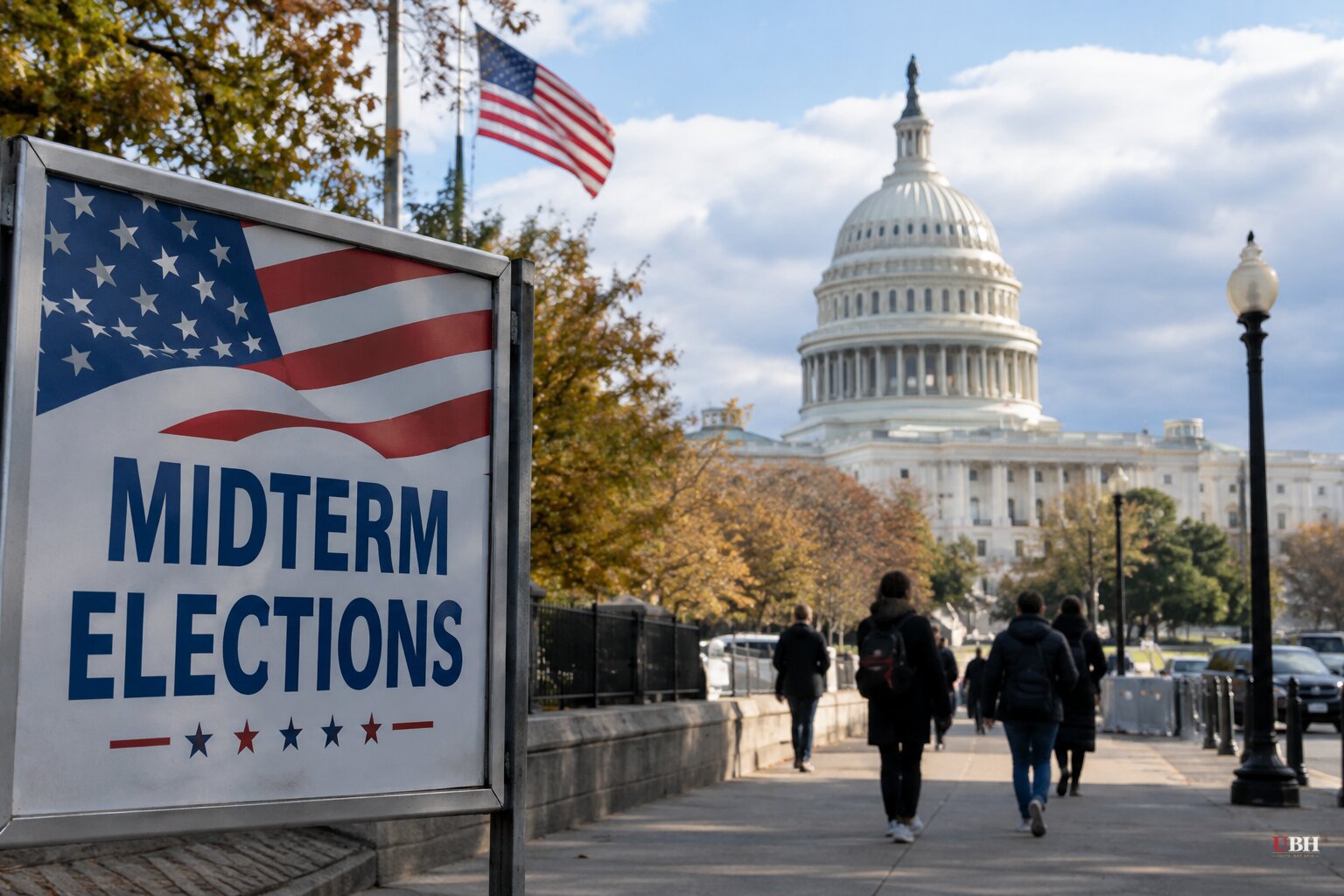
Just over three weeks before the Nov. 3 midterms, Donald Trump's approval has slid from 47% in January 2025 to a record-low 32% in the latest Reuters/Ipsos poll.
That is the floor in one survey. The averages tell a similar story.
The numbers
Silver Bulletin's average has Trump at 38.0% approval and 59.5% disapproval, a net of minus-21.6, a second-term low. A year ago it was minus-8.5. RealClearPolitics, which usually runs a bit friendlier to Trump, shows 39.5% approve and 58.9% disapprove. Decision Desk HQ has 38.3% to 60.1%.
Individual polls run lower. CNN-SSRS puts him at 33% approve and 67% disapprove among registered voters. Economist/YouGov has 35% to 63% among likely voters. The New York Times/Siena poll earlier this month had 38% to 58%. American Research Group's September survey had him at 28%.
CNN's own poll showed Trump 34 points underwater among all adults, and its Poll of Polls puts him 29 under. At this stage of 2018 he was generally 13 to 15 points under. CNN's numbers for Bush in 2006 were about 15 points under.
Intensity is lopsided, too. Silver Bulletin finds 48.6% of Americans strongly disapprove, against 19.7% who strongly approve.
The economy leads the damage
In the new CNN poll, Trump's economic approval is 27% with 73% disapproving. In 2018 it was generally around 50%.
Only 28% of Americans now call the economy at least somewhat good. That figure was 69% in 2018 and 59% in 2006. And 68% call the economy extremely important to their vote, compared with 44% in 2018 and 32% in 2006.
Silver Bulletin's issue-by-issue net approval: minus-44.2 on inflation, minus-31.7 on the economy, minus-26.6 on trade, minus-11.0 on immigration. Support for the Iran war stands at 32.5% in its average, with 59.1% opposed, both records.
Analysts at Anchor Advisors, the U.S. partner of GK Strategy, attribute the slide to high fuel prices tied to the Iran war, sticky inflation, and a renewed trade war with Canada. Trump has offered no such accounting. Asked about the polls before boarding a flight to Nebraska, he said, "I'm doing great," and blamed CNN and the media.
Voters who put him in office
The erosion extends to groups Trump won in 2024. An NBC News/Telemundo poll found 24% of Hispanic Americans approve of him, and 59% prefer a Democratic-controlled Congress. That is double the share that backed Democrats two years ago.
Ipsos found Trump's approval among Republicans at 73%, down from 86% at the start of the year. Among Republicans, only 56% approve of his handling of the economy and 44% of his handling of cost of living.
Civiqs data shows him with positive approval in just 11 states: Alabama, Arkansas, Idaho, Kansas, Montana, North Dakota, South Dakota, Oklahoma, Utah, West Virginia and Wyoming.
What it means for Congress
National approval does not map neatly onto seats. CNN's own analysis notes that some districts are gerrymandered to be insulated from national trends, and that some indicators have not broken overwhelmingly against Republicans. Trump still holds nearly three-quarters of his own party in Ipsos' numbers.
Still, Trump has told GOP voters to act as if he is on the ballot. Mail voting has begun in ten states and early in-person voting in six.
The House stands at 218-214 in the GK Strategy analysis, so Democrats need a net three seats. As of early September, forecaster 270toWin rated 215 seats as leaning Democratic, 201 leaning Republican and 19 toss-ups. Anchor Advisors cites betting markets putting the odds of a House flip near 90%.
In the Senate, Republicans hold a 53-47 edge, and Democrats need a net four seats. According to the same analysis, Democratic candidates lead RealClearPolitics polling in Alaska, Maine, Iowa, North Carolina, Ohio and Texas, some by a point or two. Since 1946 the president's party has lost an average of 25 House seats in midterms.
The Supreme Court polls, too
The Court is not immune. Gallup's July survey found 33% approval, a record low in its 26-year series. Marquette Law School has 47% approving and 53% disapproving.
The Manhattan Institute's analysis, published with the Daily Wire, argues this reflects polarization rather than a legitimacy crisis. Republican approval fell from 79% in September 2025 to 58%, while Democratic approval stayed at 12%, per Gallup. The institute also notes that Gallup's average confidence across 14 institutions is 27%, the same as the Court's.
Marquette found majorities backing 11 of 13 decisions from last term. That includes 66% support for striking down Trump's IEEPA tariffs and 70% for blocking the immediate removal of Fed Governor Lisa Cook. Those are rulings against the White House's position.
The test comes Nov. 3. Whether a president 20-plus points underwater drags down his House majority depends on a few dozen districts, and no poll settles that.
For Republicans in tough races, the choice has already been made for them. Some have started distancing themselves from the president on immigration, according to The Guardian.
Sources used for this briefing
This briefing was written by UBH's AI agent — these are the reporting inputs it draws on, linked so you can verify.


