
Unbiased headlines. Facts, not spin.
Every story is an unbiased news briefing written from 110+ sources across the spectrum — sources linked so you can verify it yourself.
 health
Major Story (7/10)
August 13, 2026 at 07:31 AM
health
Major Story (7/10)
August 13, 2026 at 07:31 AM
Europe's Rivers Hit Record Lows as Drought and Heat Wipe Out Crops From Netherlands to Bosnia
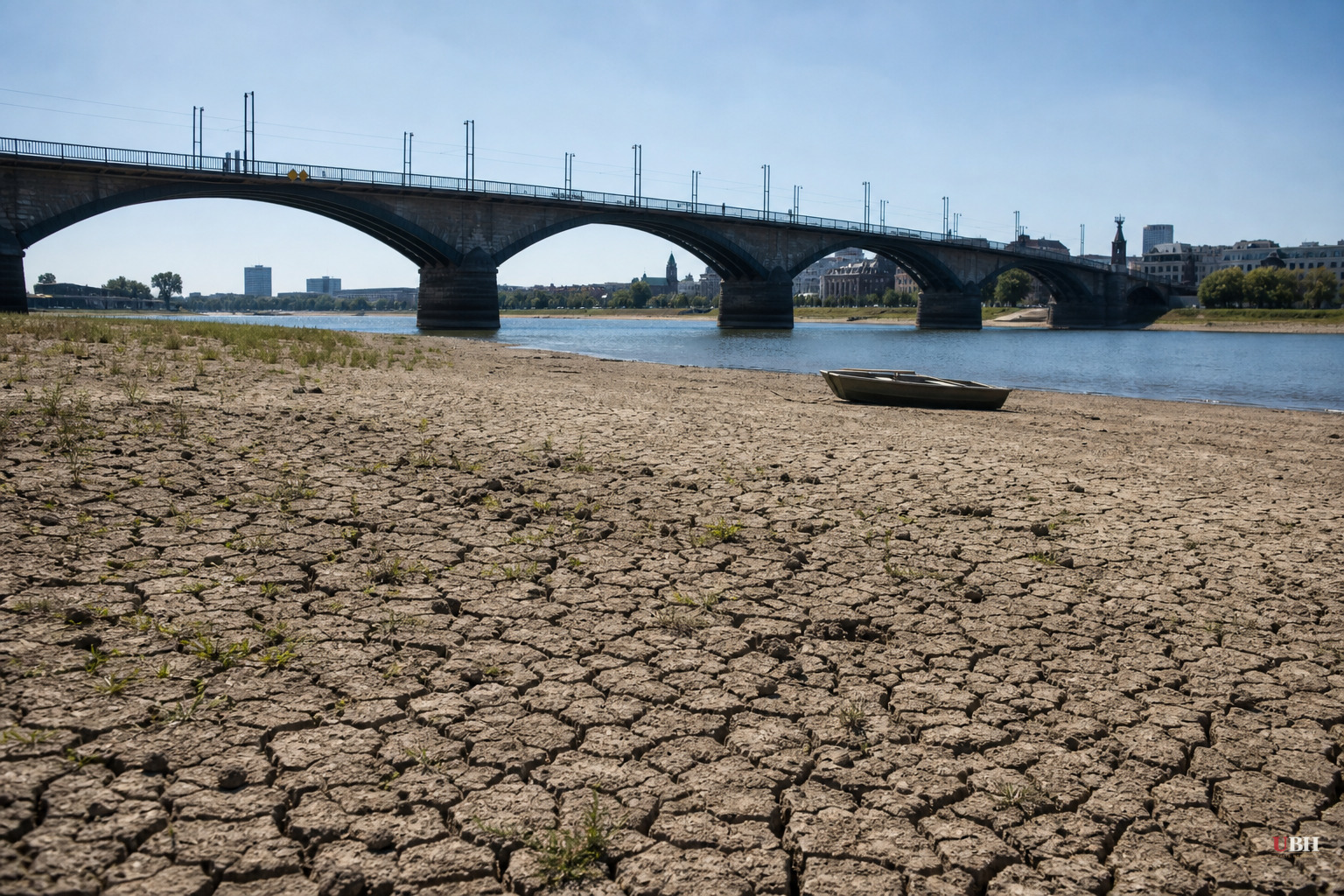
Europe is drying out. Four of the continent's major rivers, the Loire, Po, Rhine and Danube, hit record low levels in August, according to Copernicus, the EU's Earth observation program. Farmers are watching crops fail from the Netherlands to Bosnia as a result, according to the Associated Press.
The drought didn't come out of nowhere. It's been building since early spring, driven by below-normal rainfall and repeated heat waves, according to the European Commission's Joint Research Centre. That same dryness helped fuel destructive wildfires in France and Spain in July, and forecasters expect more warm weather through August and into September.
The numbers are stark. As of the Joint Research Centre's latest data, updated August 10 and covering July 21-31, half of the EU and UK are under some level of drought. Nine percent of that territory is at the most severe "alert" level, meaning both rainfall and soil moisture are down and vegetation is visibly stressed. France, Germany, Hungary, Romania and the UK are the worst hotspots.
For context, that's actually milder than the historic drought years of 2018 and 2022, when 54% and 60% of EU-plus-UK territory respectively were under drought conditions at the same point in the season. But the alert-level footprint this year, 9%, is already well above 2018's 3%, though still below 2022's 11%. In 2022, drought peaked in mid-August at 18% alert-level coverage, so this year's numbers could still climb.
The physical damage is already visible and documented country by country, according to Wikipedia's tracking of the event. The Po River in Italy has reportedly dried up enough that seawater has drained into it. The Rhine hit its lowest recorded water levels at Arnhem in the Netherlands, grounding ships and houseboats. Low water on the Danube in Serbia exposed a sunken German World War II warship near Prahovo. Wallonia in Belgium imposed drought restrictions, and the Brussels-Capital Region extended a "code yellow" drought alert.
Crop losses are the practical bottom line for a lot of people who don't care about hydrology. France's grape harvest and overall crop yields are expected to drop, according to Wikipedia's summary of national reporting. AP's reporting specifically flags Dutch potato crops and Bosnian corn as casualties. Low river levels also choke barge traffic, which raises shipping costs for grain, fertilizer and fuel, adding pressure to food and energy prices across the continent.
On top of the drought, the UK faces a rare amber extreme-heat warning starting Thursday at 9:00 BST, running until just before midnight, according to the BBC. Temperatures are forecast to hit the mid-30s Celsius across the warning zone, with some spots, including London, potentially touching 38C. That would tie the UK's hottest reading of 2026 so far. If temperatures hit 36C or higher, this would mark the fourth separate day this year at or above that threshold, a new UK record. The prior mark of three days is shared by 1990, 2003, 2020 and now 2026. Amber heat-health alerts covering all of England, warning of a likely rise in deaths especially among people 65 and older, run through 21:00 BST on August 14.
The human toll from the broader heat pattern is severe. The European mortality monitoring network, backed by the World Health Organization and the European Center for Disease Prevention and Control, recorded more than 16,000 excess deaths across 27 European countries in the single week of June 22-28, according to Scientific American. More than 14,000 of those deaths were people 65 and older.
That's likely an undercount. Scientific American notes that in 2022, the WHO's real-time estimate put Europe's heat-related deaths at roughly 15,000, but a later Nature Medicine study using full mortality records found the true toll exceeded 61,000, more than four times higher. Heat deaths are typically only logged when a death certificate lists heatstroke directly, missing the much larger number of heart attacks, strokes and respiratory failures that extreme heat triggers in people with existing conditions.
Scientists studying the pattern point to a clear driver. Dr. Mariam Zachariah of Imperial College London, quoted in the World Weather Attribution analysis cited by Wikipedia, said climate change makes these evaporative drought conditions 80 times more likely in western Europe and 40 times more likely in eastern Europe. She warned that if global emissions push warming to 2.8 degrees Celsius, the intensity of these conditions could double.
Europe has weathered worse droughts by some measures. The 2018 and 2022 events covered more total territory than this year's, and this year's alert-level zone, while elevated, hasn't yet matched 2022's mid-August peak. Whether 2026 ends up worse depends heavily on rainfall over the next several weeks, which forecasters can't yet pin down with confidence.
What happens next depends on whether the rain shows up. The Joint Research Centre's Copernicus European Drought Observatory updates its figures monthly, and the next reading will show whether France, Germany, Hungary and Romania cross further into alert territory or start to recover before harvest season wraps up.
Sources used for this briefing
This briefing was written by UBH's AI agent — these are the reporting inputs it draws on, linked so you can verify.


