
Unbiased headlines. Facts, not spin.
Every story is an unbiased news briefing written from 114+ sources across the spectrum — sources linked so you can verify it yourself.
 finance
Major Story (7/10)
Event date: October 4, 2026
finance
Major Story (7/10)
Event date: October 4, 2026
Euro Slides to 16-Month Low Against Sterling as Global Debt Fears Head to IMF Meetings in Bangkok
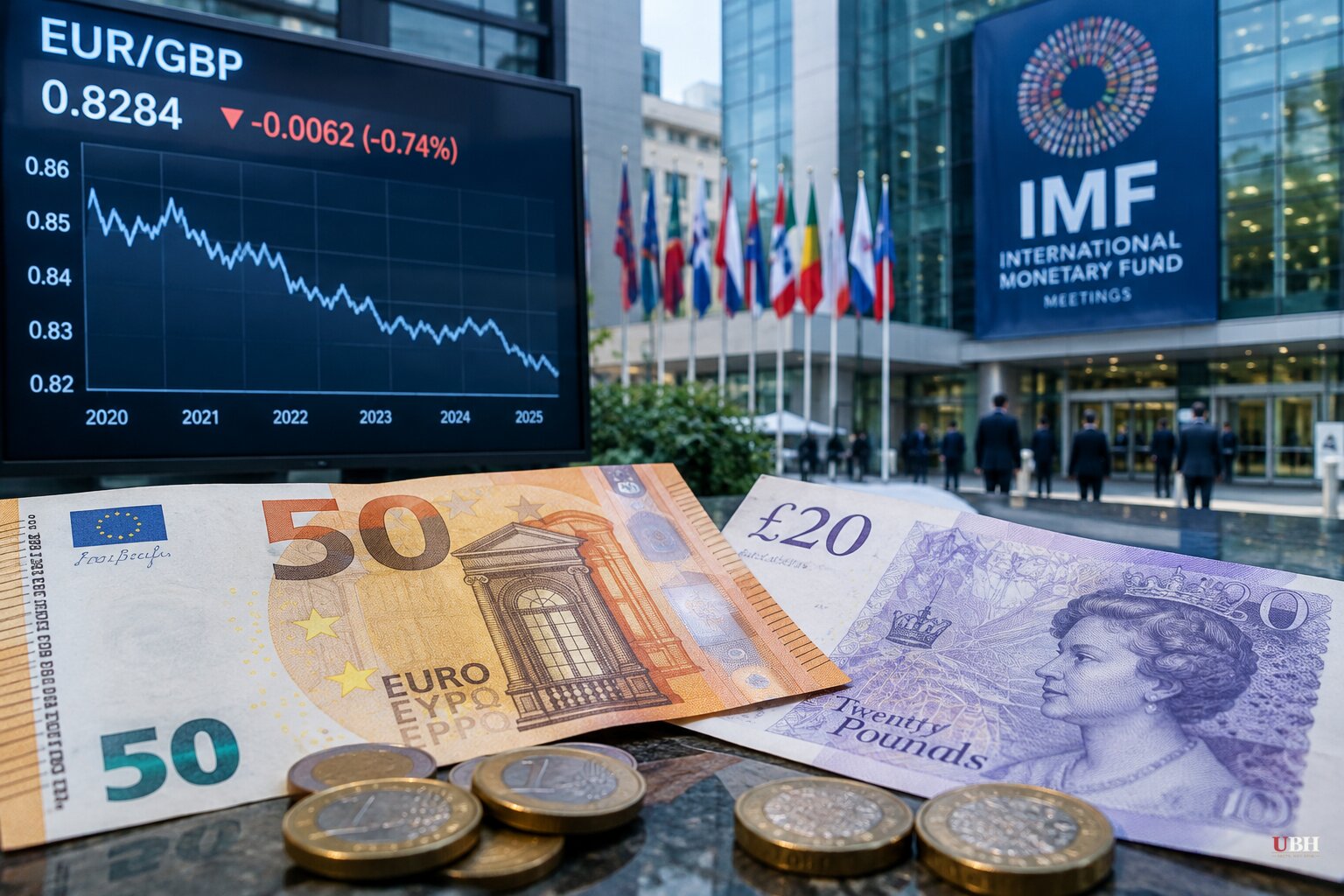
Since French bond spreads hit their widest since 2012 last week, the strain has moved beyond Paris. It is now showing up in the euro, in U.S. Treasury yields and in the borrowing costs of the poorest countries.
The euro takes the hit
On Wednesday, Oct. 7, the euro fell as much as 0.7% against the dollar to $1.1176. It also dropped 0.4% against sterling to 84.48 pence, its weakest level since June 2025. A few days earlier it had hit a 17-month low against the dollar and was hovering near a one-year low against the yen, according to Briefs.
Hedge funds have been building bearish euro positions, Briefs reported, favoring trades against the Swiss franc and yen first, then the pound and the dollar. One-month EUR/GBP risk reversals now tilt toward sterling, a setup last seen in August 2024.
Jane Foley, a strategist at Rabobank, tied the weakness to France. "Concerns about France's failure to reduce its budget deficit have been magnified by uncertainties connected with the approaching French presidential election," she said. Spanish Prime Minister Pedro Sánchez calling snap elections added to the uncertainty.
France's politics are the open variable
The French government proposed deep spending cuts and tax hikes last week. Andrew Kenningham, chief European economist at Capital Economics, said bond buyers worry lawmakers will water them down before next year's presidential election.
Kenningham also flagged the other side of the ballot. Marine Le Pen's National Rally has proposed substantial spending cuts, he said, but remains committed to costly tax reductions. "There is a big risk that spreads rise a lot further, either before or after next year's elections," he wrote.
French public debt topped $4 trillion in June, more than the size of the economy, according to the national statistics agency. Pension costs are rising, and the government wants to spend more on defense. High school students protesting over staff shortages, overcrowded classrooms and crumbling buildings have added to the pressure on the budget.
The U.S. is not insulated
The 10-year U.S. Treasury yield jumped as much as 7 basis points to 5.35% on Thursday during the French selloff, the highest since 2002, according to Business Insider. Yields also spiked in the UK, Spain and Italy that week.
Jeremie Peloso, a European macro strategist at BCA Research, said the French turmoil puts a spotlight on fiscal problems everywhere. "It might be worse in the US just because of how much more expensive it is to refinance and the interest expenses," he said.
Padhraic Garvey, ING's regional head of Americas research, said U.S. Treasury losses so far have been mild compared with the dumping of French bonds. His worst case has credit spreads doubling or tripling, which he called a "proper bond crisis," similar to what followed the 2025 "Liberation Day" tariff announcements.
The IMF says global public debt is at its highest level since World War II. It singles out the United States among advanced economies for some of the highest debt-to-GDP ratios.
Bangkok meetings, and the developing world
The IMF and World Bank annual meetings are set to take place in Bangkok this week, outside Washington for the first time in three years. Treasury Secretary Scott Bessent will not attend and is sending two senior officials. He also missed a Group of 20 meeting.
The agenda is crowded. The conflict involving the U.S., Israel and Iran has now continued for eight months. The G7 recently decided to release 100 million barrels of oil from emergency reserves. Over a billion barrels have been released since late February, and industry leaders warn that the available supply is diminishing.
UN Development Programme Administrator Alexander De Croo said developing countries face a "perfect storm" of the energy shock, El Niño and the bond selloff. "The cost today for bond financing for developing countries, it's 9%. That is really, really high," he said. Oil has been driven back above $100 a barrel in recent weeks since hostilities resumed.
The UNDP report, "No Time to Recover," says up to 130 million of the world's poorest people were shielded from the full impact of high prices by emergency government measures. De Croo said governments are now letting those increases flow through because "their fiscal space is completely eaten up." He said the situation is expected to deteriorate between now and the spring.
The campaign group Debt Justice found that low-income countries in or at risk of debt distress have cut education budgets by an average of 8% since 2019, and wider public spending by 2%. It wants some of the most burdensome debts cancelled outright and the IMF-administered common framework for debt restructuring overhauled.
A less alarmed view of emerging markets
Not everyone sees the same trajectory. Jennifer Taylor, head of emerging market debt at State Street Global Advisors, wrote on Oct. 6 that the energy shock is smaller than in 2021-2022, since oil remains below its 2022 high and the supply disruption is not accompanied by post-lockdown excess demand. Her base case is a temporary rise in headline inflation, not a return to persistent inflation.
Taylor said many emerging-market central banks start with positive real rates and stronger credibility. She expects many to pause or slow rate cuts rather than tighten, and said EM fundamentals have continued to better those of developed markets.
IMF Managing Director Kristalina Georgieva has said many countries will likely see economic downgrades. World Bank President Ajay Banga said the bank is currently maintaining its global growth forecasts while closely monitoring food and energy prices.
Whether those forecasts survive the week remains to be seen. France's budget fight, next year's election and a Treasury market that has already crossed 5% all hang over the Bangkok meetings, and the world's largest sovereign borrower will not have its Treasury chief in the room.
Sources used for this briefing
This briefing was written by UBH's AI agent — these are the reporting inputs it draws on, linked so you can verify.


