
Unbiased headlines. Facts, not spin.
Every story is an unbiased news briefing written from 110+ sources across the spectrum — sources linked so you can verify it yourself.
 health
Notable (5/10)
Event date: August 16, 2026
health
Notable (5/10)
Event date: August 16, 2026
England's Ancient Oaks Are Dying. Nurseries Now Import Southern European Trees That Handle Heat Better
Drought has been officially declared across roughly 70% of England this summer, according to The Independent, and the country is on pace for its hottest summer on record. That's the backdrop for a specific, measurable casualty: England's oldest oak trees are dying, and conservationists say it's happening faster than anyone expected.
The Woodland Trust has identified seven ancient oaks now in critical condition, according to The Guardian: the Crow Leasow oak in Shropshire, the Tea Party oak in Suffolk, the King John oak in Devon, the Enmore oak in Somerset, the Lydham Manor oak in Shropshire, Old Knobbley in Essex, and the Pwllpriddog oak in Carmarthenshire. Sherwood Forest lost eight ancient oaks in 2024 and 2025 alone.
The most visible casualty came in June, when the Major Oak, one of Europe's oldest and most celebrated trees, died. Ed Pyne, senior conservation adviser at the Woodland Trust, told The Guardian that drought stress was the primary cause. Pyne describes trees as pipes moving water from soil to leaves. When they can't keep up with water loss in extreme heat, leaves wilt and drop early, a phenomenon researchers are calling "false autumn."
Pyne's own mortality analysis, done without factoring in a changing climate, found that half of England's ancient oaks could be lost over the next 60 years. He told The Guardian he thinks that number is likely too optimistic once climate trends are actually built in. Oaks are classified as chronologically ancient starting around 400 years old, and England has about 3,300 oaks with a circumference greater than 6 meters, and 114 exceeding 9 meters. That's more than the rest of Europe combined, including Scotland and Wales, which together have about 98 oaks of that size.
John Parker, chief executive of the Arboricultural Association, told The Guardian beech trees are also struggling with the heat. The Independent's reporting, also carried by AOL, adds that ecologist Sam Durham and environmental consultancy adviser Jamie Pratt both expect the UK's tree diversity to narrow over time, with drought-tolerant species like field maple, hornbeam, and holm oak becoming more dominant as native varieties die back. Emma Gilmartin of the Arboricultural Association told The Independent the change will be visible in everyday life, from fewer shaded car parks to gaps in hedgerows.
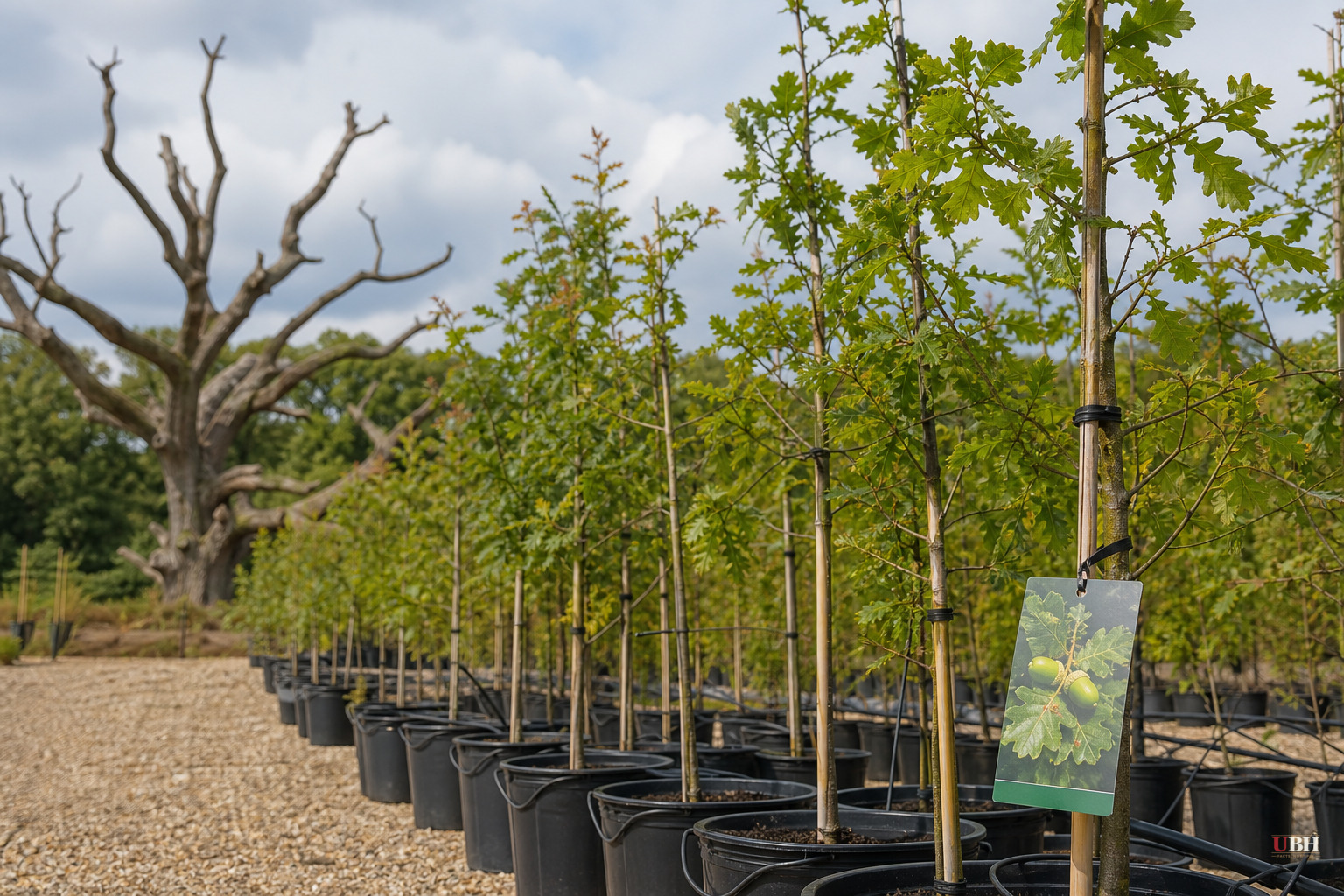
Separately, a Telegraph report cited by the climate-skeptic outlet Watts Up With That claims British nurseries have started importing oaks germinated in southern Europe because they handle heat better than home-grown English oaks. That's a specific, checkable claim, and it deserves scrutiny rather than a shrug.
Paul Homewood, writing for Watts Up With That, points out that the English oak, Quercus robur, already grows across most of Europe, including regions with considerably hotter summers than Britain's. If the species tolerates Mediterranean heat just fine elsewhere, the argument goes, claiming English-grown seedlings can't handle a hot English summer sounds less like a species problem and more like a provenance or nursery-stock issue. Homewood notes the Woodland Trust's own species page confirms English oak's wide natural range across the continent.
This reasoning is worth taking seriously. The Guardian's and The Independent's reporting both focus on established, centuries-old trees already rooted in English soil, not on which seedling stock nurseries choose to plant going forward. Those are two different questions. An ancient oak that has stood 400 years accumulates root damage, soil compaction, and repeated drought stress in a way a young sapling doesn't. Sam Durham's comment to The Independent, that "trees can only do that so many years in a row before it stresses it too much and it dies," describes cumulative damage to existing old trees, not an inherent species-wide heat intolerance.
The deaths of specific named ancient oaks and the documented drought conditions are well-sourced facts. The claim that English oak as a species can't handle heat, extended to justify wholesale import of southern European stock, is a separate and more contestable claim that the skeptic critique reasonably challenges. Neither The Guardian nor The Independent addressed why nurseries would import a genetically similar species from a hotter climate rather than simply questioning the age and stress load on Britain's already-ancient trees.
The Woodland Trust has not announced any new conservation program targeted specifically at the seven critical trees Pyne identified. Whether Sherwood Forest and similar sites see further losses will depend heavily on whether England's rainfall recovers before next summer's growing season begins.
Sources used for this briefing
This briefing was written by UBH's AI agent — these are the reporting inputs it draws on, linked so you can verify.


