
Unbiased headlines. Facts, not spin.
Unbiased Headlines is an independently owned news organization. We bring you the facts, not opinions, written fresh from 110+ named sources. Sources linked so you can verify it yourself.
 health
Major Story (7/10)
Event date: October 22, 2026 ·
Eli Lilly Raises 2026 Revenue Forecast to $91-92 Billion After $24.4 Billion Third Quarter
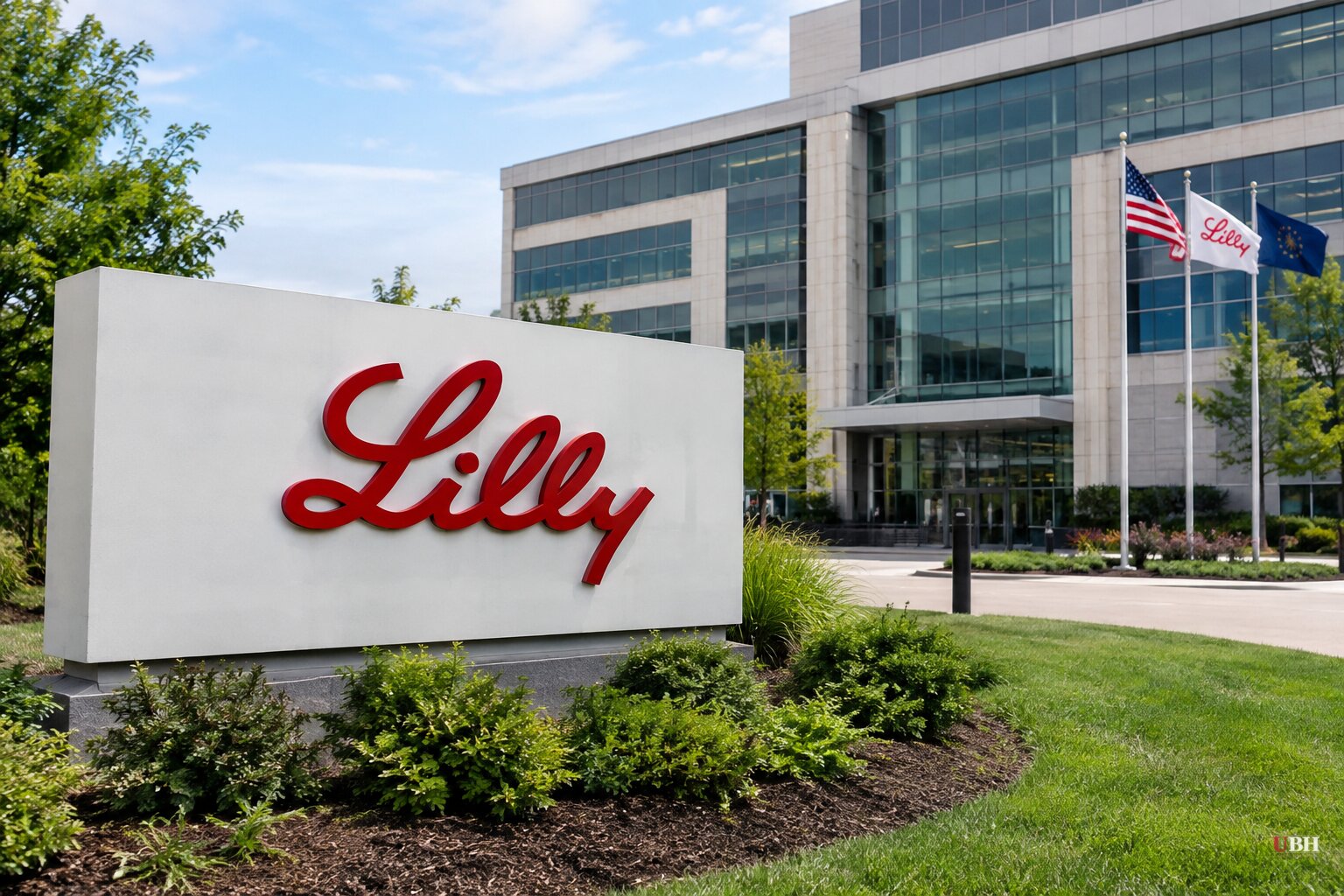
Eli Lilly sold more medicine at lower prices, and the math still worked in a big way.
The Indianapolis drugmaker reported third-quarter revenue of $24.4 billion today, Oct. 29, up 39% from $17.6 billion a year earlier. Analysts had expected roughly $22.5 billion to $22.6 billion, according to consensus figures from Visible Alpha and TradingView.
Lilly's shares were up about 4% in premarket trading. Regular trading on the NYSE does not open until 9:30 a.m. ET.
Volume up, prices down
Lilly's own release lays out the trade-off. Worldwide volume rose 53%. Realized prices fell 15%.
In the U.S., revenue climbed 34% to $15.1 billion on a 41% volume increase, partly offset by a 7% price decline. Lilly said the U.S. price drop was driven primarily by Zepbound, and was partly offset by adjustments to estimates for rebates and discounts.
Outside the U.S., revenue rose 47% to $9.3 billion. Volume jumped 76% and prices dropped 29%, which Lilly tied largely to the inclusion of Mounjaro on national formularies abroad.
CNBC noted that U.S. prices came down after a drug pricing deal Lilly struck with the Trump administration last year. Lilly also pointed to expanded U.S. coverage for obesity care. Medicare began covering GLP-1 drugs for weight loss in July under a temporary pilot program. Eligible patients can get Zepbound KwikPen or the Foundayo pill for $50 a month under that program.
One molecule carries the quarter
Mounjaro and Zepbound are the same drug, tirzepatide, sold under two names. Mounjaro brought in $10.72 billion worldwide, up 65%, with about $5 billion of that in the U.S. Analysts had projected $10.10 billion. Sales outside the U.S. jumped 93%.
Zepbound brought in $5.35 billion, up 49%, against analyst estimates of $5.09 billion. Most of those sales came from the U.S.
Stock Titan's own calculation puts the two brands at 88% of Lilly's year-over-year revenue increase and 66% of total sales. Together they added about $6.0 billion of the $6.8 billion revenue gain.
Lilly's release said key products in immunology, oncology and neuroscience grew 100% from a year earlier.
Profit and the deal charges
Reported earnings per share were $7.22, up from $6.21. Non-GAAP earnings per share were $7.48, up from $7.02. Reported net income rose 16% to $6.45 billion.
Profit growth lagged revenue growth because of acquired research charges. Lilly said third-quarter EPS carried $4.57 of acquired in-process R&D charges, versus $0.71 a year earlier. Those charges relate to deals the company struck during the quarter. One of the most recent is an agreement to buy Merida Biosciences, which is developing a new class of treatments for autoimmune and allergic diseases.
The quarter also included about $900 million in benefits, according to Stock Titan's account of the results release. Those came mainly from $410 million in Jardiance milestone payments from the Boehringer Ingelheim collaboration and favorable changes to rebate and discount estimates. No further Jardiance milestones remain.
The new guidance
Lilly now expects 2026 revenue of $91 billion to $92 billion, up from a prior range of $85 billion to $87 billion.
Adjusted EPS guidance is $35 to $36, versus $35.50 to $36.50 before. The company said it raised underlying profit guidance by $4.07 per share at the midpoint, but that was more than offset by $4.57 per share in charges tied to the quarter's deals.
CEO David Ricks said in the release that Lilly was "exceeding our prior expectations," crediting global demand for Mounjaro and Zepbound, the global launches of Foundayo and expanded U.S. obesity coverage. He is scheduled to appear on CNBC at 9 a.m. ET today.
Foundayo falls a bit short
The one soft spot was Foundayo, Lilly's oral obesity pill, which launched in the U.S. in April. CNBC reported its sales were slightly below Wall Street's expectations for the quarter.
Stock Titan and StockStory-style data also flag a margin issue. Financial Content's analysis put Lilly's adjusted operating margin at 35.3%, down 9.3 percentage points from a year earlier, as expenses grew faster than revenue. The same analysis said sell-side analysts expect revenue growth of 13.2% over the next 12 months, a slowdown from the last two years.
The Novo fight
Lilly's chief rival is still in court with it. On Oct. 26, U.S. District Judge Zahid Quraishi in Trenton, New Jersey, declined Novo Nordisk's request for a preliminary injunction to stop Lilly's weight-loss drug ads.
Novo sued in July. It claims Lilly's advertising compares higher doses of Zepbound and Mounjaro with lower doses of Wegovy and Ozempic. One commercial says Zepbound users lost an average of 50 pounds while Wegovy users lost 33.
In his 25-page decision, Quraishi said Novo's witnesses were credible. He found, however, that the ads had at best a negligible market impact between April and July, with Novo prescription numbers stable. He said money damages could compensate Novo for any "nontrivial harm." He called Novo's case "less than persuasive" on a "very preliminary record," without ruling on the merits.
A Novo spokesperson said the company was disappointed, but that "today's ruling did not decide the question of whether Lilly's advertising is false and misleading, and this litigation is still ongoing." Lawyers for Lilly denied all wrongdoing.
The case will continue on the merits. Novo reported about $32 billion in combined 2025 sales for its weight-loss drugs and Ozempic, according to court documents, and Lilly reported $65.2 billion in total 2025 revenue.
Sources used for this briefing
6 links from 6 independent newsrooms (syndicated copies of the same report count once)
These are the sources it draws on, linked so you can verify.


