
Unbiased headlines. Facts, not spin.
Unbiased Headlines is an independently owned news organization. We bring you the facts, not opinions, written fresh from 110+ named sources. Sources linked so you can verify it yourself.
 politics
Notable (6/10)
Election Eve: Watchdog Lists 50-Plus Threats to Voting Integrity While Officials Point to Paper Trails and Audits
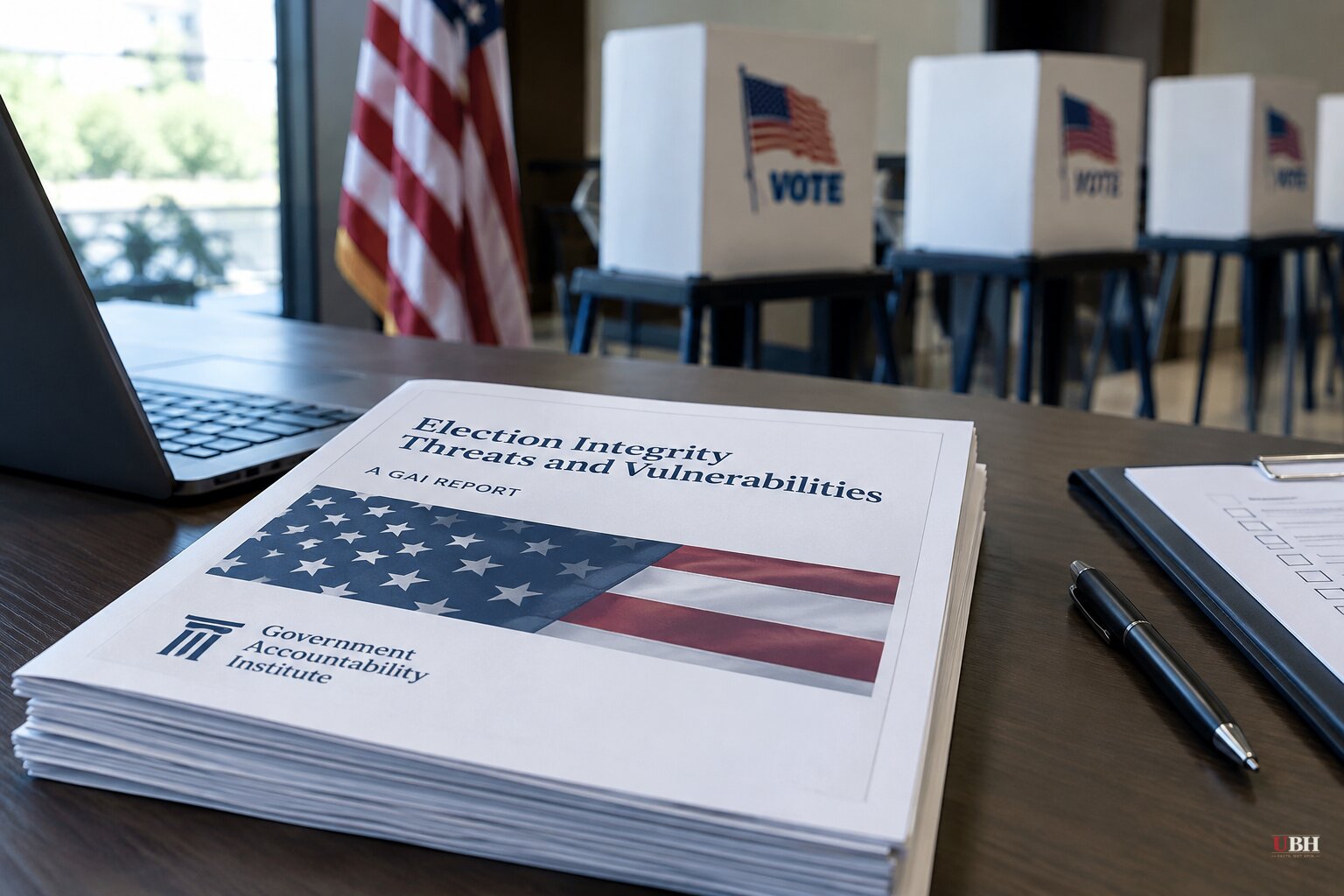
Americans vote Tuesday, Nov. 3, in elections for all 435 House seats, 35 Senate seats and a long list of state and local offices. The final stretch comes with two competing messages about how safe the process is.
The Government Accountability Institute (GAI) says it has documented more than 50 threats. Election-administration experts say the system's structure makes widespread manipulation difficult. Both sides agree on one thing: the details matter.
What the GAI report says
GAI's biennial Top 50 Election Threats report sorts its findings into five areas: noncitizen voting, ballot handling, partisan lawfare, political financing, and emerging technological and foreign threats. It ties each threat to documented examples and a proposed fix.
"America's elections face threats from every direction – foreign adversaries, political operatives, dark money, and government officials who refuse to enforce the rules," GAI president Peter Schweizer said in a statement.
Eric Eggers, GAI's vice president and top voter-fraud investigator, said "none of these threats are hypothetical" and that most "can be fixed if officials are willing to enforce the laws already on the books."
Noncitizen voting gets the most space. The report cites:
- An undercover investigation that found two Iranian nationals registered to vote in Michigan.
- Roughly 6,600 self-identified noncitizens registered in New Jersey between 2023 and 2024.
- A Census Bureau report that, per GAI, linked more than 24,000 voters in the 2020 election to noncitizen status "with high confidence."
- 278,000 noncitizens registered in federal elections nationwide, a figure GAI attributes to DHS and calls conservative because it draws only on public records and voluntary data from ten cooperating states.
Those are GAI's characterizations of the underlying records. Registration is not the same as casting a ballot, and the report's totals have not been tested here against state-level adjudication.
State policies under fire
The report singles out Minnesota's vouching system, which GAI says lets people cast ballots without showing ID. It also points to California laws that GAI says shield noncitizens from prosecution if they are caught registering.
As of 2026, GAI says, 22 local governments in the country let noncitizens vote. It says only 18 states have strong constitutional language explicitly barring it.
Voters in Arkansas, Kansas, South Dakota and West Virginia will weigh in Nov. 3 on constitutional changes tied to that question.
Voter ID and clean voter rolls are mainstream positions. Many ordinary civic and financial transactions already require identification. GAI's argument is that weak ID rules and outdated rolls leave gaps that officials are not closing.
What election administrators say
The opposing view comes from people who study and run the system. Political scientist Daniel Schatz told Newsweek the country's decentralization is a strength. Elections run through thousands of state and local officials using "paper records, bipartisan procedures, ballot tracking where available, post-election audits and judicial review," he said. "That makes a single point of failure far harder to exploit."
Therese Pearce Laanela, head of the Electoral Processes Program at the International Institute for Democracy and Electoral Assistance, told Newsweek that U.S. integrity measures "are among the most rigorous in the world." For mail ballots, she listed voter declarations, witness statements, identification documentation, multiple envelopes, signature verification, ballot tracking and observer access.
She also flagged a weak point. Decentralization means less-resourced communities may struggle to recruit expertise or match the service of better-funded ones.
That is the practical test in a close race. Whether a result is trusted depends on whether ballots can be traced, physical records preserved and totals checked.
Fake polls add a different problem
The information environment has its own integrity issue. Wedgewood Polls, which launched in June, published surveys of battleground states including Texas, Ohio, Michigan, Kansas and Maine. Last month it admitted the numbers were fake.
The firm called its work "an experimental project" meant to expose "vulnerabilities, lack of oversight and overall low barrier to entry" in polling. Asked how easy it was to get fabricated polling noticed, it answered: "Far too easy." Al Jazeera reported that the surveys had circulated to prominent outlets, including The New York Times, before the admission. The firm's social media account has since been deleted.
It was the second such case this cycle. Median Strategies acknowledged in August that it had faked results as a "short-term social experiment."
Neither firm touched ballots or voter rolls. But fabricated data that spreads before it is caught can feed doubt about legitimate results.
What comes next
Polls open Tuesday, and the first returns will test claims on both sides. The four constitutional measures in Arkansas, Kansas, South Dakota and West Virginia will produce clear results that night. Post-election audits will determine whether the paper-trail defenses cited by Schatz and Pearce Laanela hold up in the closest contests.
Sources used for this briefing
6 links from 5 independent newsrooms (syndicated copies of the same report count once)
These are the sources it draws on, linked so you can verify.


