
Unbiased headlines. Facts, not spin.
Unbiased Headlines is an independently owned news organization. We bring you the facts, not opinions, written fresh from 110+ named sources. Sources linked so you can verify it yourself.
 defense
Major Story (7/10)
El Salvador Deploys 2,000 Troops to Haiti to Find Four Missing Aviation Technicians
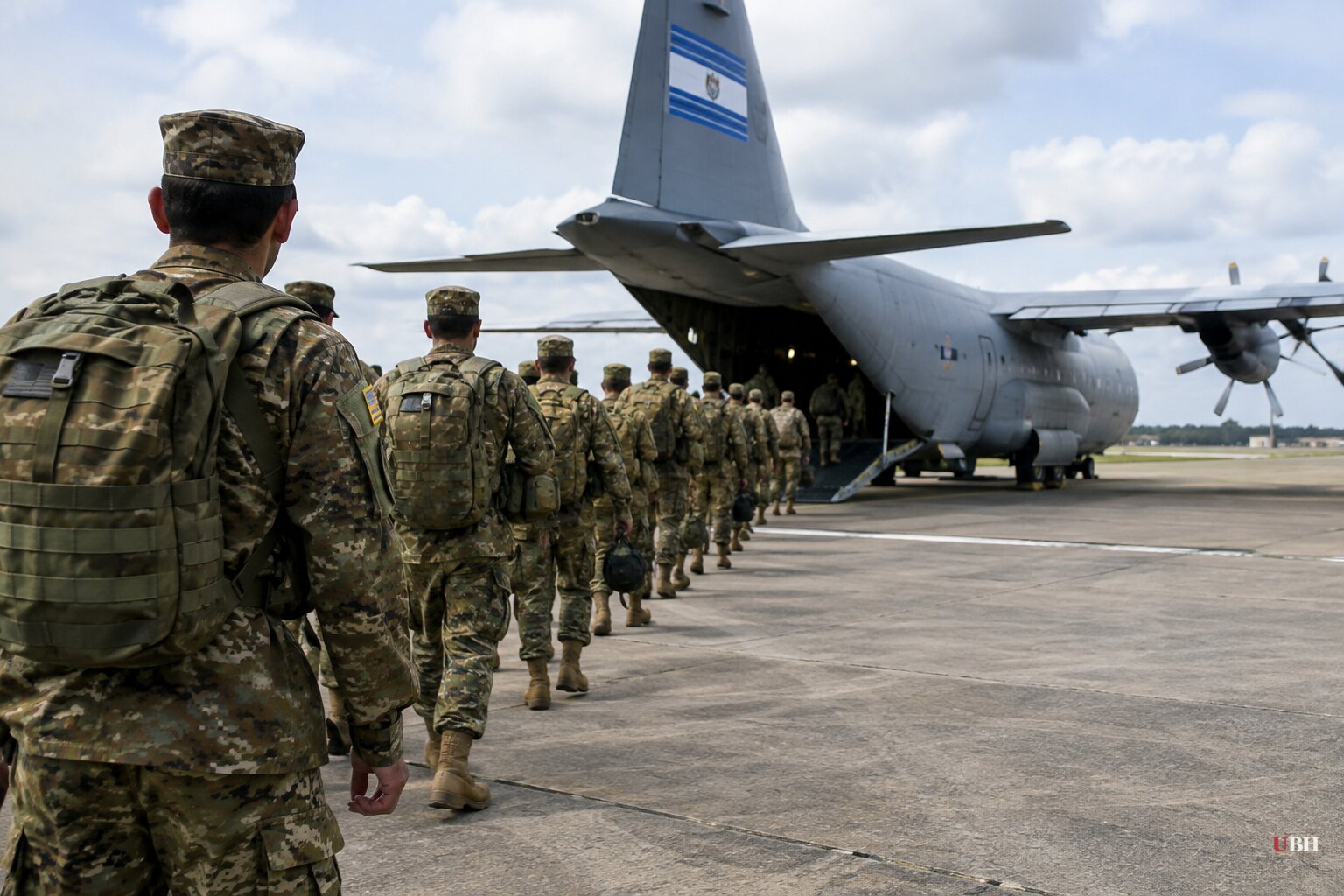
El Salvador is putting more than 2,000 troops on the ground in Haiti. The trigger was an ambush that left four Salvadoran aviation technicians missing; they have been missing since Oct. 18.
The Salvadoran Foreign Ministry announced the figure on Wednesday, Oct. 28, after President Nayib Bukele spoke by phone with Haitian Prime Minister Alix Didier Fils-Aimé. On Thursday, Oct. 29, Bukele said in a post written in Haitian Creole that the deployment of soldiers and equipment was "nearly completed."
How it started
Gangs opened fire on an armored vehicle in the Santo area of Croix-des-Bouquets, Port-au-Prince. It was the first major attack since the U.N.-backed gang suppression force began operating. The four Salvadorans fled the burning vehicle and have not been heard from since.
Salvadoran officials say the men worked with the Gang Suppression Force (GSF) in a noncombat role. Bukele has said El Salvador's mission in Haiti "consists only of pilots and technical personnel" whose main job is medical evacuations, "not to wage war."
On Oct. 21, Bukele posted a warning on X to Haitian gang leaders. "Today's attack is nothing compared to what is coming if we do not get all four hostages back alive," he wrote. He added: "We have already finished with the gangs in El Salvador, and we can finish with you, too."
Several burned bodies were found on Saturday, Oct. 24. Bukele said they were not his men.
The size of the force
The first Salvadoran contingent was described as 100 special forces in one account and as several hundred soldiers in others. The new number is far larger.
CNN's analysis puts 2,000 troops above the size of Haiti's entire army and roughly equal to the current staffing of the GSF. The U.N. envisioned about 5,500 foreign officers for that mission, and until El Salvador sent its soldiers, the force struggled to reach half its optimum number. El Salvador, Jamaica, Guatemala and Chad are among its troop contributors.
Bukele says El Salvador is paying 90% of the cost. "This is not an operation against the Haitian people nor an invasion of Haiti," he wrote. "We are not a great power." He said the aim is to bring the four technicians home and to give the gangs a lesson.
Washington's role
Axios reported today, Oct. 30, that Bukele called President Trump on Tuesday, Oct. 27, to make sure Washington had no problem with the escalation. According to Axios, sources briefed on the call say Trump replied: "Do what you have to do." The exchange rests on Axios's anonymous sourcing.
Axios also reports that Haiti's government agreed to the escalation. Fils-Aimé's office described the call with Bukele in a statement. It said the two leaders "reaffirmed their engagement to reinforce bilateral coordination and operational cooperation in the framework of the Gang Suppression Force." The statement expressed "solidarity with the Salvadoran military personnel and their families."
Open questions
The mission is the open question. CNN's analysis says the Salvadoran command structure has not been established, according to a source close to the matter. It also says the troops were not staying at the main GSF base in Port-au-Prince at the time of reporting.
The same analysis says local sources consider it unlikely the four men will be recovered. In that case, CNN's analysis says, Salvadoran forces would likely seek other wins, perhaps joining one of several existing security forces for an extended push against the gangs.
Romain Le Cour of the Global Initiative Against Transnational Organized Crime told the Associated Press that details of the deployment "remain opaque," including its chain of command. "Are we witnessing yet another model of deployment, parallel to the multilateral framework?" he asked. Humanitarian groups worry that if the Salvadoran troops do not coordinate closely with the GSF and Haiti's national police before engaging the gangs, the risk to civilians could be high.
The security picture is crowded. Port-au-Prince has dozens of gangs and anti-gang groups, including foreign forces, neighborhood vigilantes and mercenaries. CNN has reported on a secretive government "task force" of private military contractors tied to Erik Prince.
The skeptics are not only gang members. Dominican commentator Humberto Salazar said Haiti's gangs are not the same as El Salvador's and likened Bukele to Napoleon heading to his "Waterloo." Gang leaders, including Wilson Joseph, known as Lanmo San Jou, who leads Mawozo 400, posted videos mocking Bukele's threats.
Bukele answered on Oct. 23 in religious terms. "God will grant us victory," he wrote, calling Haiti's gangs "satanic."
Bukele's record at home is the basis for his confidence. His hardline crackdown on Salvadoran gangs restored peace to what was once the most violent country in the Western Hemisphere, though critics highlight mass incarceration and accusations of widespread abuses. Haiti's gangs have operated in a country that has lacked a president since Jovenel Moïse was assassinated in July 2021.
The election clock
Haiti's provisional government has set a first round of elections for July 18, with a second round the following October. Candidate lists are due to be finalized by mid-January. A vote scheduled for Dec. 13 was postponed because of gang violence.
If held, it would be Haiti's first election in more than a decade. Whether 2,000 Salvadoran soldiers help make that vote possible, or become one more armed faction in Port-au-Prince, depends on a mission and mandate that remain opaque.
Sources used for this briefing
6 links from 5 independent newsrooms (syndicated copies of the same report count once)
These are the sources it draws on, linked so you can verify.


