
Unbiased headlines. Facts, not spin.
Unbiased Headlines is an independently owned news organization. We bring you the facts, not opinions, written fresh from 110+ named sources. Sources linked so you can verify it yourself.
 defense
Major Story (8/10)
Pentagon Asks Baltic Allies to Tone Down Russia Warnings, Sources Tell Reuters, as Putin Says Russia Is 'Ready' for War
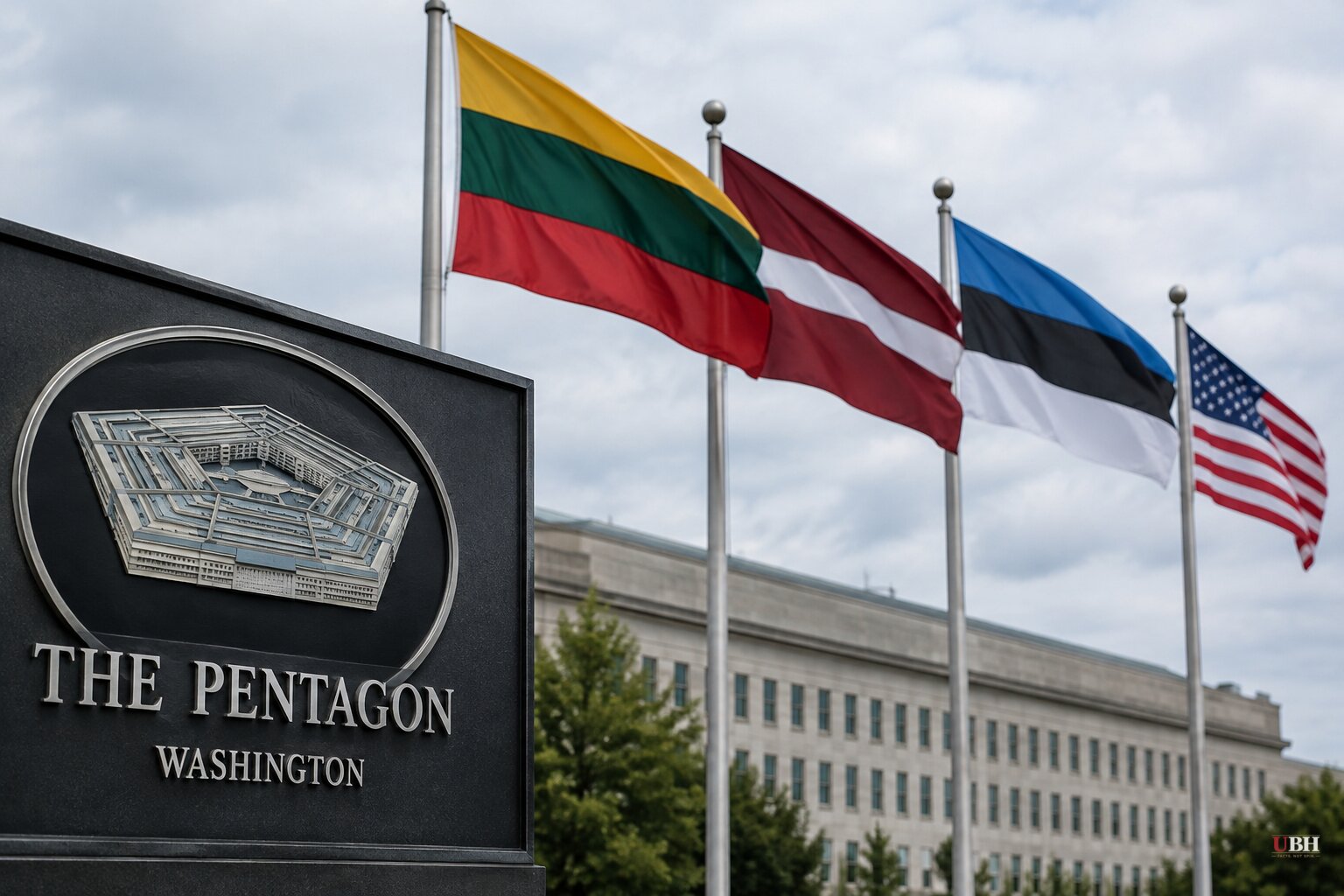
Pentagon officials have privately pressed several NATO allies on Russia's border to lower the volume, according to Reuters. Four people familiar with the discussions told the news agency that the message went to Lithuania, Latvia and Estonia in bilateral meetings over recent weeks.
Elbridge Colby, the Pentagon's policy chief, was among the officials delivering it. One person told Reuters that Colby told a Baltic official there should be no "poking" of the Russians.
The Pentagon did not dispute the account. "Private conversations among allies are just that, so we will not comment on these allegations," a Pentagon official said.
What the Pentagon reportedly objected to
The sources pointed to specific rhetoric. In late September, Estonian Prime Minister Kristen Michal called Vladimir Putin a "rat in a corner." Reuters' sources said U.S. officials dislike public claims that Russia is growing desperate or cornered.
Another European official described the message this way: "We are helping you. The Americans are there. Just don't be loud. Don't make noise." In a separate meeting, the Pentagon asked an Estonian delegation to be "measured," a source said.
The rationale, per the sources, is that aggressive talk could undermine continental security and worsen tensions with Moscow. No named U.S. official has said that on the record.
The European objection
European officials found the request baffling, according to the Reuters account. Baltic intelligence services, they noted, assess a low immediate likelihood that Russia will directly test NATO's mutual defense clause.
Those officials also argue that public candor is how governments justify defense budgets and sacrifices to voters, especially while Russia runs what they describe as an accelerating covert sabotage campaign. Washington's stated concern is escalation. Baltic capitals' stated concern is that silence makes rearmament harder to sell at home.
The request lands while Colby is involved in a review of U.S. force posture in Europe. According to the Reuters reporting, that review could lead to a significant drawdown of American troops as Washington shifts attention toward East Asia, the Middle East and Latin America. Neither the Pentagon nor the White House has announced a decision.
Putin: 'We are ready'
Speaking at a Moscow press conference after the Russia-Africa summit on Thursday, Oct. 29, Putin said: "We are ready, but we do not want any war with Europe." He added that if European states want to prepare, "let them prepare."
He called a strategic defeat of Russia by 2030 "hardly possible." And he warned: "If things go too far, there will be no winners at all. Let no one forget that."
His remarks answered European warnings about the end of the decade. German Defense Minister Boris Pistorius and armed forces chief Gen. Carsten Breuer have said Russia could be capable of a large-scale conventional attack on NATO territory by 2029. Polish Prime Minister Donald Tusk has said Europe should prepare for a possible major conflict as early as 2027. The Kremlin rejects those assessments and says Russia has no plans to attack NATO.
Putin also raised the Baltic Sea. "Does someone want the same situation in the Baltic as in the Gulf or the Strait of Hormuz?" he asked. "We don't want that, but we will respond to any challenge." He did not name a country or describe what response he meant.
The Nordic phone call
Putin also defended Finnish President Alexander Stubb and Norwegian Prime Minister Jonas Gahr Støre over their Tuesday, Oct. 27, call with him. Both governments said the call was their initiative, held in consultation with Ukraine, and that the leaders spoke for their own countries, not the EU.
Stubb called the exchange "frank and substantive." Støre said there were "big differences in views" with Putin.
Not everyone in Europe welcomed it. Danish Prime Minister Mette Frederiksen said European leaders should "stick together" on Ukraine. Swedish Prime Minister Ulf Kristersson said other European leaders had not been told about the talks in advance.
Putin said he considered the outreach right. "There are people in Europe who do not want to inflict a strategic defeat on Russia, as some do, but want to establish some kind of constructive dialogue," he said.
The diplomacy around it
The call followed a week of activity. On Oct. 20, Støre and Stubb hosted Ukrainian President Volodymyr Zelensky and U.S. envoy Steve Witkoff in Oslo, with Jared Kushner joining remotely. Witkoff met Putin in St. Petersburg on Oct. 21 and urged him to resume trilateral talks with Ukraine and the U.S.
Earlier this month Trump announced a deal allowing Russia to export diesel to global markets, which drew attention because of the sanctions regime on Moscow.
The war itself has not paused. Ukrainian authorities reported a Russian drone strike on a railway platform in Dnipro on Thursday that killed and wounded civilians, and Zelensky said Ukraine has intelligence on new Russian ballistic missile attacks being prepared.
What comes next
A U.S.-mediated trilateral round with Russia and Ukraine is expected in early November, but no side has confirmed a date. Finland and Norway had not publicly responded to Putin's remarks as of Thursday evening. The Trump administration has not said whether the posture review will reduce troops in Europe, and the Baltic governments have not said whether they will change how they talk about Russia.
Sources used for this briefing
7 links from 7 independent newsrooms (syndicated copies of the same report count once)
These are the sources it draws on, linked so you can verify.


