
Original briefings. Zero spin.
Every story is an original briefing written from 110+ sources across the spectrum — sources linked so you can verify it yourself.
 politics
Notable (6/10)
August 20, 2026 at 06:22 PM
politics
Notable (6/10)
August 20, 2026 at 06:22 PM
Eighth Circuit Blocks Minnesota Law Punishing Speech on Felon Voter Eligibility, While O'Keefe Group Faces Own Legal Exposure
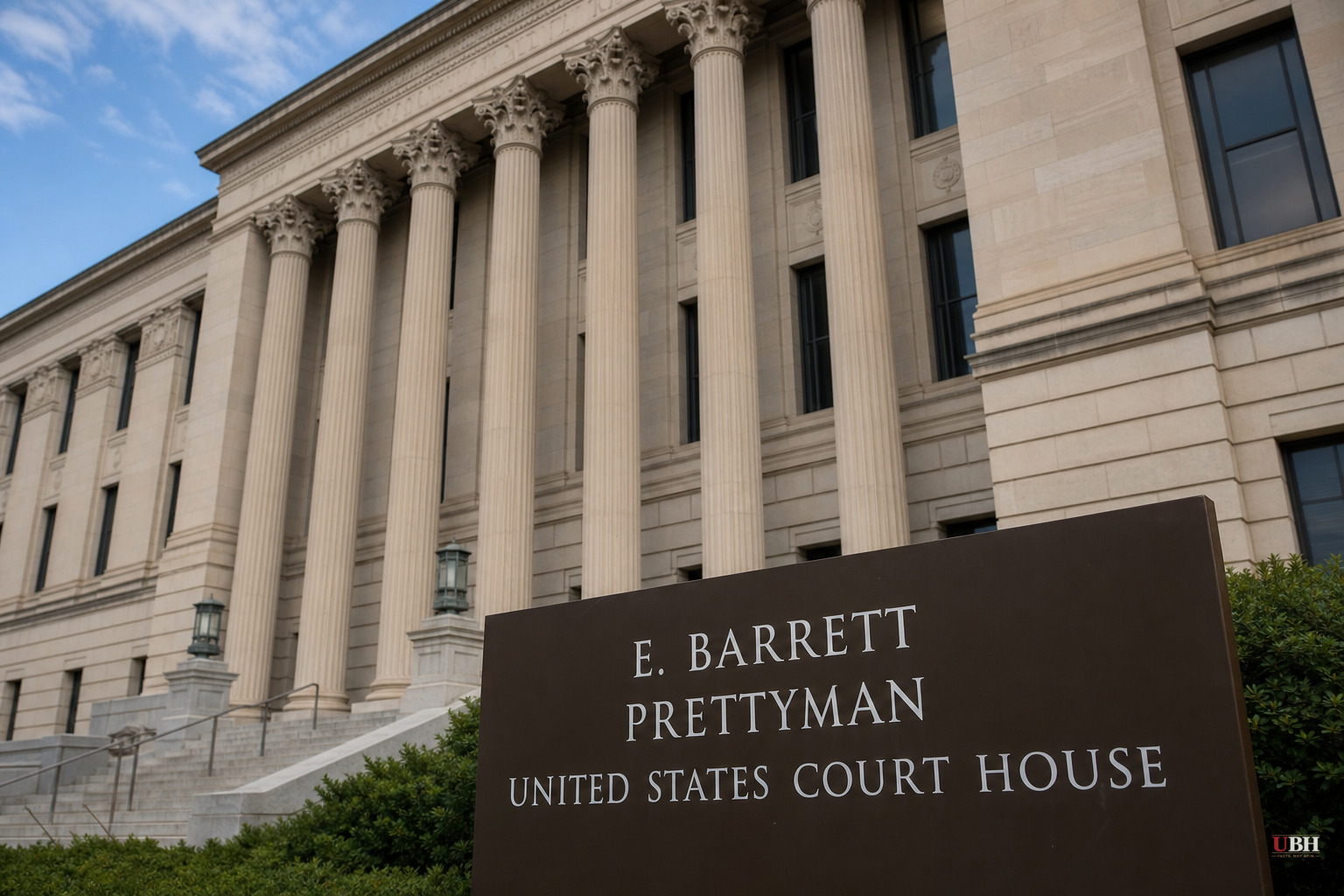
Eighth Circuit Blocks Minnesota Law Punishing Speech on Felon Voter Eligibility, While O'Keefe Group Faces Own Legal Exposure
Minnesota is fighting two separate election-speech battles at once, and the outcomes cut in opposite directions.
The Eighth Circuit Ruling
The Eighth Circuit Court of Appeals partly blocked a Minnesota law that made it a crime to spread "materially false" information about voter eligibility within 60 days of an election. Judge David Stras wrote the opinion, joined by Judges Raymond Gruender and Jonathan Kobes, all three appointed by Republican presidents.
The case, Minnesota Voters Alliance v. Ellison, centers on a narrow but real legal dispute. Minnesota statute allows felons to vote once they're no longer incarcerated, even if they remain on supervised release. The Minnesota Constitution, meanwhile, says felons can't vote until their "civil rights" are "restored." Minnesota Voters Alliance argues that for people still under Department of Corrections supervision, including those subject to warrantless arrest by parole agents, civil rights haven't been fully restored. The state disagrees.
The Alliance already lost this fight once. The Minnesota Supreme Court ruled in 2024 that the group lacked standing to challenge the underlying voting law directly. So the Alliance wanted to keep making its argument publicly instead, and ran into a different law: one banning the knowing transmission of materially false information meant to impede voting, including false statements about "restrictions on voter eligibility."
A district court sided with the state, treating claims about who is eligible to vote as a category of unprotected speech, distinct from advocacy about who should be eligible. The Eighth Circuit disagreed and blocked that part of the law from being enforced, according to court documents from the case. The panel found the distinction the state drew, between permissible advocacy and prohibited factual claims about eligibility, too fine a line to justify criminalizing one side of a genuine legal dispute about how the Minnesota Constitution and Minnesota Statutes interact.
This is a real, unresolved legal question. Reasonable lawyers read the Minnesota Constitution's "restored to civil rights" language differently than they read Minn. Stat. § 201.014's language about voting rights being restored upon release from incarceration. Minnesota Public Radio News reported the case as part of a broader pattern of courts giving the Alliance "leeway to discourage voting by nonincarcerated felons," a framing that captures the practical effect without settling who's right on the underlying constitutional question.
A Separate Fight Over Federal Access to Voter Data
In an unrelated case, U.S. District Judge Katherine Menendez, a Biden appointee, rejected the Trump administration's attempt to force Minnesota to hand over its complete, unredacted statewide voter registration list. The Justice Department sued Minnesota in September 2025, arguing the Help America Vote Act entitled it to the data to check compliance with federal voting statutes.
Menendez wasn't buying it. Her 27-page ruling said the government cannot use a lawsuit as, in her words, a "fishing expedition," demanding broad data first and identifying a specific violation later. She noted the federal government pointed to no evidence Minnesota had actually violated the Help America Vote Act's list-maintenance requirements. Minnesota Secretary of State Steve Simon's office had already turned over maintenance data but withheld the full list, arguing the feds lacked a legitimate legal basis. Courthouse News Service reported this ruling is consistent with how courts in other states have handled similar DOJ requests.
The O'Keefe Video and a Different Kind of Legal Exposure
Then there's the case that has nothing to do with courts yet, but probably will. A group calling itself the Citizen Justice League, which CBS News Minnesota identified as including James O'Keefe, the ousted founder of Project Veritas now running O'Keefe Media Group, filmed themselves during the primary election posing as Minnesota voters. They wore costumes, used fake accents, and had one member falsely identify himself to poll workers as a real, specific Minnesotan named William Pomeranz.
Pomeranz told CBS News Minnesota he found out only after a student alerted him that his identity had been used online. He wasn't harmed. The group didn't actually cast a fraudulent ballot. Poll workers caught the discrepancy and reported it.
The group says it was testing Minnesota's 53-year-old voter voucher law, which lets a registered voter vouch for someone who just moved to the state and lacks other proof of residency. That's a legitimate thing to want to stress-test. Voter ID and eligibility-verification concerns are mainstream, not fringe, and a law allowing one person to vouch for another's residency without documentary proof is a reasonable target for scrutiny.
But testing a law's vulnerabilities and impersonating a specific, real, named voter to election officials are different acts. David Schultz, a constitutional law professor at Hamline University, told CBS News Minnesota that impersonating another voter is illegal under Minnesota law regardless of motive. Secretary of State Steve Simon agreed, saying the video appears to show exactly that crime being committed on camera. Impersonating a voter at a Minnesota polling place is a felony carrying up to seven years in prison and a $20,000 fine.
CBS News Minnesota reported it reached out to the Citizen Justice League for comment and had not heard back as of its story. No charges have been filed against O'Keefe or any other member of the group as of this writing, and no formal investigation has been publicly announced by Minnesota law enforcement. Whether prosecutors treat a self-recorded, publicly posted confession viewed more than 7 million times as probable cause is the open question now sitting with Minnesota authorities.
Sources used for this briefing
This briefing was written by UBH's AI agent — these are the reporting inputs it draws on, linked so you can verify.


