
Unbiased headlines. Facts, not spin.
Unbiased Headlines is an independently owned news organization. We bring you the facts, not opinions, written fresh from 110+ named sources. Sources linked so you can verify it yourself.
 sports
Low Interest (3/10)
Event date: October 15, 2026 ·
Egyptian Farmer's Stone Leads to Two Colossal Ramses II Statues in the Nile Delta
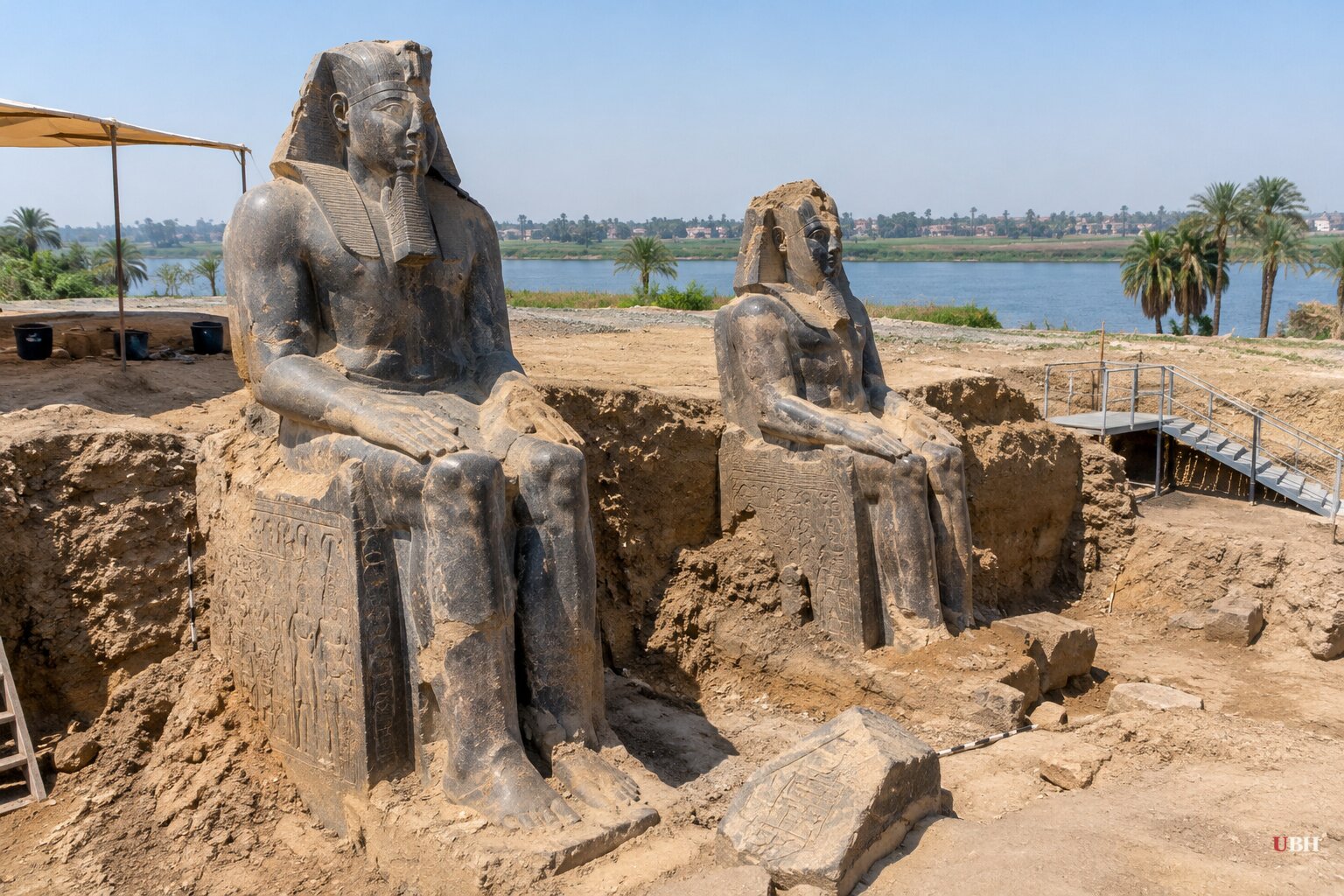
A man working his own land in the Nile Delta village of Behbeit El-Hagar hit a carved stone. He called the authorities instead of keeping quiet. The result is the remains of two colossal statues that archaeologists believe depict Ramses II.
Egypt's Ministry of Tourism and Antiquities announced the find earlier this month. The farmer, Khaled al-Shahat, told CBS News he was working on his land on a Friday when he came across "an unusual stone." "I informed the relevant authorities, and they came to examine it," he said.
From one block to two statues
The Behbeit El-Hagar Antiquities Inspectorate confirmed the block was ancient and began the legal procedures and an archaeological report. The Supreme Council of Antiquities (SCA) then sent a specialized committee and an excavation team to run rescue excavations.
Accounts differ slightly on where the stone turned up. Egyptian outlet Youm7 reported that al-Shahat found it while working in a cucumber greenhouse on his property. Other accounts of the ministry's statement describe a plot of land in front of his house.
The pink granite block is about 1.30 meters long. It carries two royal titles tied to Ramses II: "Nesu Bity" (King of Upper and Lower Egypt) and "Sa Ra" (Son of Ra). It lay about one meter north of the second statue.
What was found
The first statue is known from a colossal head about 1.60 meters tall (roughly 5.25 feet). It shows the king in the double crown, which symbolized the union of Upper and Lower Egypt.
Crews also recovered the upper part of the statue's back pillar. Its inscription gives the king's Horus name, Hor-Ka-Nakht-Mery-Maat.
From the size of the head, archaeologists estimate the complete statue, base included, once stood about 8.5 meters tall. That is nearly 28 feet.
The second statue is in better shape, though it has no legs or base. The surviving body measures about 2.40 meters (7.87 feet). It shows the king in the striped nemes headdress, with part of the top broken away.
The head was recovered too. The facial features are clear, well preserved and closely resemble the first statue, according to the ministry.
What is still unconfirmed
The ministry's own wording is cautious about the second figure. "One of the statues has been identified as depicting King Ramses II, while the other is also believed to represent the same pharaoh," its statement said. Experts have not confirmed that second identification.
Ramses II ruled from about 1279 to 1213 BC. His reign of more than six decades was marked by military campaigns and a vast building program of temples and statues across Egypt and Nubia.
Some scholars have suggested he was the pharaoh in the Book of Exodus who refused Moses' demands to free the Israelites. The Old Testament does not name that ruler, so the link is a scholarly suggestion and not an established fact. Nothing announced about these statues bears on it.
The site
Behbeit El-Hagar sits in Gharbia Governorate and is among the major archaeological sites of the Delta. It is best known for the ruins of a large temple to the goddess Isis, the Iseion. Many granite blocks and architectural pieces still lie across the area.
Statues of this scale were meant to be seen. A figure of roughly 28 feet implies a major monument somewhere nearby, and archaeologists have not said where it stood.
The farmer's reward
Minister of Tourism and Antiquities Sherif Fathy traveled to al-Shahat's village to honor him in person. He gave al-Shahat and his wife certificates of appreciation and a trip to Saudi Arabia for the Umrah pilgrimage.
The ministry said the minister wanted the honor held in the village, on al-Shahat's own land, among his family and neighbors. It cited his "honesty, awareness, and sense of responsibility." Fathy also pointed to the role ordinary citizens play in protecting Egypt's heritage.
Al-Shahat said he was "surprised and happy" when more antiquities emerged. "They told me this might change the history of the area," he told CBS News.
What comes next
Excavations and studies are continuing on al-Shahat's land. Dr. Hisham El-Leithy, the SCA's secretary general, said the work aims to find more pieces and determine how the objects relate to each other and to the site.
The open questions are specific. Researchers have yet to confirm that the second statue is Ramses II. They also have not said where the full statues stood or how they fit into the Iseion's history.
Sources used for this briefing
6 links from 6 independent newsrooms (syndicated copies of the same report count once)
These are the sources it draws on, linked so you can verify.


