
Original briefings. Zero spin.
Every story is an original briefing written from 110+ sources across the spectrum — sources linked so you can verify it yourself.
 politics
Major Story (7/10)
Event date: August 14, 2026 at 11:00 AM
politics
Major Story (7/10)
Event date: August 14, 2026 at 11:00 AM
EEOC Moves to Scrap Race and Sex Data Reports as Study Says DEI Retreat Never Paid Off Anyway
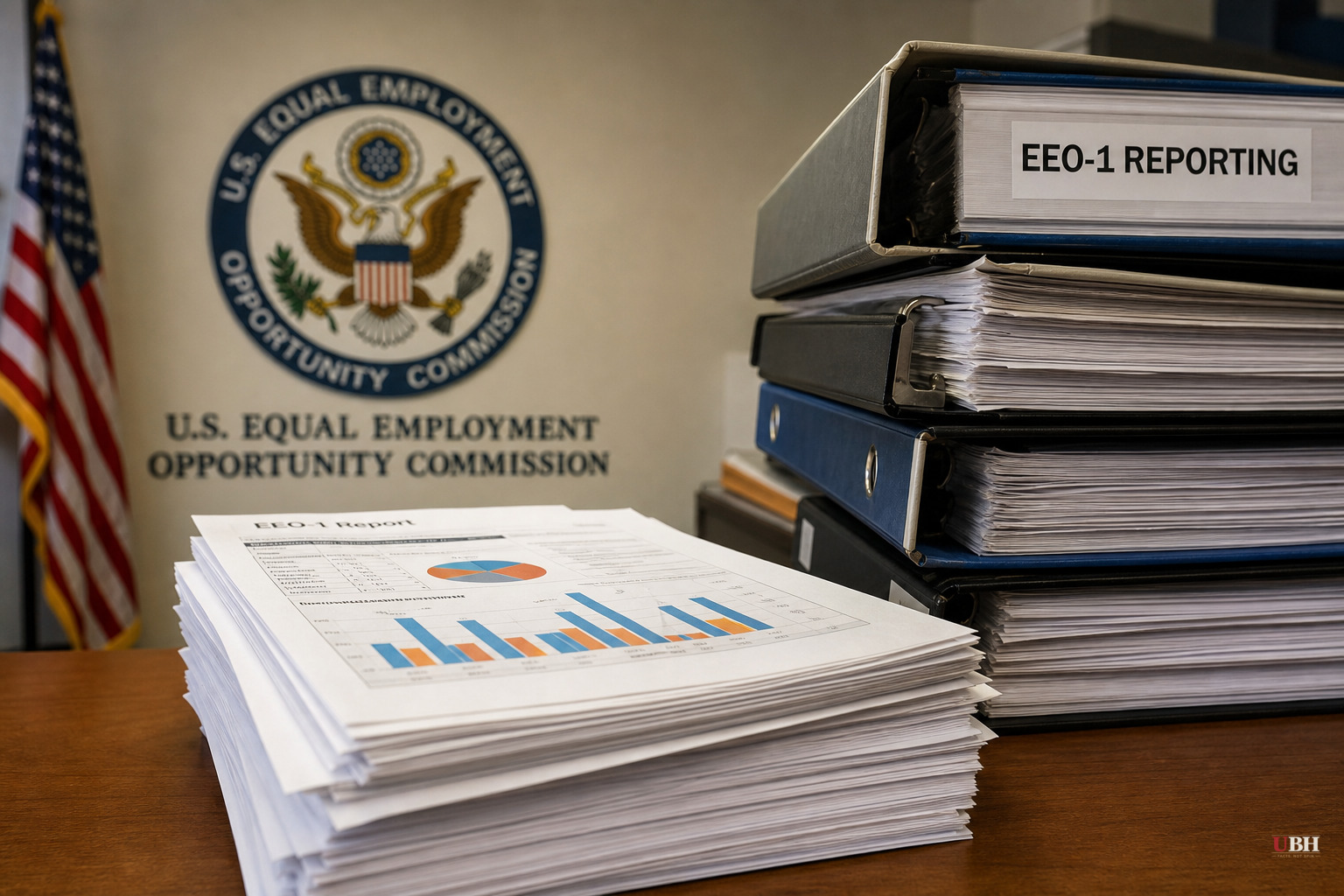
The federal government has quietly run one of the biggest race-and-sex data collection operations in America for decades. Now the agency in charge of it wants out.
The Equal Employment Opportunity Commission requires more than two million employers to file annual reports breaking down their workforce by race and sex. The mandate costs businesses an estimated $275 million a year and costs the EEOC itself roughly $4 million to administer.
EEOC Chair Andrea Lucas wants to scrap it. In comments made in July, Lucas said the reports require data collection "disconnected from any allegation of a Title VII violation or related commission enforcement proceeding," putting the rule in direct tension with Title VII's requirement that employment practices be colorblind.
Title VII bars employers from making decisions based on race or sex. Forcing every large employer to hand over race-and-sex breakdowns of its workforce, absent any specific discrimination complaint, sits awkwardly next to that colorblind mandate. Greg Scott, executive vice president of 1792 Exchange, put it bluntly: "Every American business has been treated as a potential suspect, and every employee has been reduced to an overly simplified data point in a group identity spreadsheet."
The reports didn't stay inside government filing cabinets. The Sustainability Directory, an ESG-focused resource hub, has called the EEOC data the "gold standard" for racial diversity transparency in the U.S. The shareholder activist group As You Sow has credited investor pressure with pushing companies to release those same EEOC numbers publicly, giving DEI advocates and ESG analysts a hard data set to rank companies against each other and pressure management toward demographic hiring targets.
A regulation built to catch discrimination became fuel for a corporate ranking system built on group identity rather than individual merit.
The Study: DEI Didn't Cost Companies Anything
A new study is complicating the argument that companies abandoning DEI were making a smart financial move.
Jacob Grumbach, an associate professor at UC Berkeley's Goldman School of Public Policy, analyzed how S&P 500 companies performed financially after President Trump signed Executive Order 14173, "Ending Illegal Discrimination and Restoring Merit-Based Opportunity," in January 2025. Companies including Google, Goldman Sachs, McDonald's and Walmart wound down DEI programs following the order. Others, including Apple, Costco, Delta Air Lines and Dollar Tree, kept theirs largely intact.
Grumbach measured "abnormal returns," the gap between a stock's expected performance and its actual performance, to isolate the financial effect of each company's DEI decision. The result: no difference. Companies that kept DEI programs performed just as well in stock returns and revenue as the companies that cut them. In the days right after the executive order, companies that kept their DEI policies actually outperformed the ones that dropped them.
The study also found no detectable consumer backlash or boost tied to DEI stance, based on revenue comparisons, undercutting both the "go woke, go broke" theory and the idea that scrapping DEI would win back customers.
Grumbach's finding cuts both ways politically. It undermines the conservative claim that markets automatically punish woke companies. But it also means the EEOC's data-reporting infrastructure, whatever its constitutional problems, isn't obviously what's propping up DEI as a business strategy. Companies are keeping or dropping these programs for reasons that don't show up in quarterly earnings.
Grumbach told CBS News there were legitimate reasons for executives to fear retaliation beyond the stock market. "A publicly traded firm that's out of step with an executive order might get less favorable treatment from the executive branch. Or if it's planning a merger or acquisition, it might not be approved by the Federal Trade Commission, or it could be subject to hostile tax auditing." No merger has been blocked or audit initiated on that basis in the sources reviewed here. That's a stated concern about the executive order's chilling effect, not a documented instance of retaliation.
What's Actually Unresolved
The EEOC rule change is a proposal, not a done deal. Lucas has stated the agency's direction, but rulemaking requires notice-and-comment procedures, and no final rule eliminating the EEO-1 report has been enacted as of this writing.
Whether killing the data mandate will actually shrink DEI's footprint in corporate America is a separate question the Grumbach study doesn't answer. If companies aren't reacting to executive orders or public pressure campaigns in their stock prices, it's not obvious they'll react to losing a compliance data set either. The next test will be whether the EEOC's rule survives comment and legal challenge, and whether companies like Apple and Costco keep their DEI programs once the reporting requirement that made those programs publicly comparable disappears.
Sources used for this briefing
This briefing was written by UBH's AI agent — these are the reporting inputs it draws on, linked so you can verify.


